Healing From Emotional Abuse
Healing From Emotional Abuse is the award-winning podcast helping survivors recognize red flags, set boundaries, and rebuild their lives after toxic relationships.
Hosted by relationship wellness educator Marissa F. Cohen and co-host Sami Litchert, this show explores emotional abuse, narcissistic relationships, gaslighting, trauma recovery, and what healthy love actually looks like—without judgment or expert ego.
What You'll Learn: ✨ How to recognize emotional abuse and manipulation tactics
✨ Setting boundaries in dating, family, and workplace relationships
✨ Healing from narcissistic abuse and rebuilding self-worth
✨ Red flags in relationships (and green flags to look for)
✨ Recovering from sexual assault and intimate partner violence
✨ Communication skills for healthy relationships
✨ Trauma-informed strategies for emotional healing
Why Listeners Love This Podcast: 🏆 Purple Ribbon Award Winner (DomesticShelters.org)
🌍 Top 10% of podcasts globally
🎙️ 130+ episodes featuring survivors, therapists, and relationship experts
💜 Authentic conversations—real stories, practical advice, zero shame
Whether you're healing from past abuse, supporting a loved one, or learning to build healthier relationships, this podcast gives you the tools, community, and hope you need to thrive.
New episodes weekly covering narcissistic personality disorder, codependency, divorce recovery, dating after abuse, consent education, and reclaiming your power.
Your healing journey starts here. Subscribe now.
Listen on:



Episodes
Jan 25, 2021
Jan 25, 2021
57 min
Get Your FREE COPY of my book, 3 Signs of A Toxic Relationship, Now...
Can you heal from abuse? What do I do after leaving my narcissist? What does a healthy relationship look like? These concerns cross the minds of over 20 people every minute; over 28,800 people every day. And the sad fact is, we still don’t talk about it enough. Healing from Emotional Abuse isn’t a bandaid situation. But it doesn’t have to take years either. The lives of millions of other survivors around the worlds have been impacted by their narcissist. Yours doesn’t have to. To show you how to live a free, confident and peaceful life, your host and Founder of the Healing From Emotional Abuse Philosophy, Marissa F. Cohen.
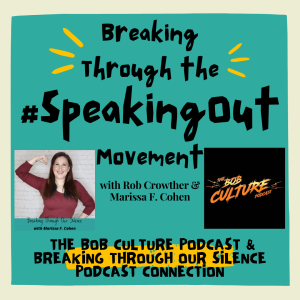
Rob: Alright! Ladies and gentlemen. Welcome back to a very special tag-team episode of the BCP- Healing From Emotional Abuse Podcast Connection! That’s right! We’re teaming up right now to have some very real discussions about what’s going on in this world that I love so much of Professional Wrestling. Combined with the Good Sisters world of Overcoming Abuse right now. Of course that is Multiple Time Amazon Award Winning, Best Selling author, my good friend Miss Marissa Cohen. Marissa, What's up? How are you?
Marissa: I'm good. You always make me blush with your intros! Thank you.
Rob: Well, you know, it's a crazy time right now in my world of professional wrestling. I see this hashtag, growing, #SpeakingOut, #SpeakOut, where indie stars or even a lot of the national performers that we see on TV right now are talking about some of these very uncomfortable, sometimes abusive, inappropriate situations that are going on behind the curtain right now in this Wrestling World. Stories are surfacing from years ago, some of these major stars are speaking out. Or some of these major stars are being accused of these crazy things. So, it's very, very crazy right now. And I thought, who better to reach out and have a discussion about this? Because in 2020, let's be real, we need to have discussions about things. Than Miss Marissa, Cohen. So Marissa, thank you so much for agreeing to doing this. And hopefully we'll do a couple of these and have a great conversation, your thoughts on this whole thing?
Marissa: I'm just honestly happy that you brought it to my attention. To be honest, I'm not a huge wrestling fan. And I know that's kind of a sacrilege thing to say to you. But I'm really not. And I didn't even consider the amount of sexual harassment and sexual assault and abuse in the Wrestling World. So, thank you for bringing this to my attention And I'm really, really happy to be a part of this, even though obviously, I hate that people are being abused and assaulted. But I'm glad that now, #SpeakingOut is coming to light and people are starting to speak their truth and tell their stories. I think that is so important and you're right. It's just starting the conversation.
Rob: Absolutely beautifully said, and we have a special guest with us, Marissa, I'm very excited about this. You know, obviously not excited about the situation. But again, excited to discuss it, break the silence a little bit. And right now, we're excited to welcome to the show former ring announcer, commentator, wrestler, even no stranger to having gold around her race. That's right, a former NWA women's champ herself, formerly known as Daisy Deville. Please welcome to the show. Miss Linda Danville! Linda, what's up? Thanks for a few minutes. How are you?
Linda: I'm so good. Thank you for having me. How are you doing?
Rob: Doing okay, you know. It's, it's been a year. 2020 — it's been a lot. It’s, you know, it's still going with this whole speaking out movement right now going on in the Wrestling World. You know, first and foremost, your thoughts on the speaking out movement going on social media right now in the Wrestling World.
Linda: You know, I hate to say it, I mean, I've been involved in wrestling since I was 17 and 2001. So, I'm like, a fossil right now in wrestling. But I hate to say it, but when it first started to come to light, I was like, Well, I'm not surprised. And that's such a horrible attitude to have, like, I'm not. Wrestling as a giant boy’s club. And I and I wasn't surprised. So, I reactivated my Twitter was looking through something. And I was honestly, like, I was honestly horrified. Like, it goes so much deeper. And you read these girls and even the men’s stories. Women and men’s stories. And it's so much more beyond like, just grab ass in the locker room, or a lewd comment here or there, or somebody's not giving a shit if you're married and you know, approaching you. But it's so beyond that and it's horrifying. Like a lot of these women, you know, this is like your dream and you do anything to get there. And then you get to this grand stage or you get closer. You get promised all these things, and somebody takes something special to you and just shit’s on it.
Rob: Oh, boy, that's crazy to hear. You know, and a lot of people are saying like, yeah, they're not surprised. Like we don't really know what goes on behind the curtain. You know, I've had the opportunity to work with a lot of promoters and a lot of shows, and, you know, be there before the first bell rings, you know, be in the doors before the crowd gets in there. And I've had very positive experiences, you know, I've never been in the locker room but you know, everyone shaking hands, you know, showing respect to some of the legends in the business. It's all been very, very good. So it did you know, obviously break my heart to see all this stuff. But I think these discussions need to be had. Now, you mentioned locker rooms. You know, I know a lot of these shows are in high school gyms or VFW halls and stuff like that. Is it uncommon for you guys to have like separate locker rooms.
Linda: I don't think I've ever had my own separate room because you know on most of these shows it's there's maybe one or two possibly maximum six women on a show. And it gives them their own locker room is like a flipping luxury. There was a place when I wrestled for SWF we would do shows, gosh, I think it was a VFW in Totowa, I forget what it was. But it was just one big, like curtain dock. Like event space, I think. Then it’s kind of had a back way to a women's bathroom, which had like a fitting room or like a powder room or something. And that was like, the most luxurious, I think it's ever been like I've changed in my car. I've had to — there was a VFW in Bayville, where they wanted us to have the locker room like outside in March, which was insanity. So, we ended up taking over one of the extra bathrooms and wrestling is male dominated. So, they use the women's bathroom and I'm in a friggin women's bathroom with a bunch of dudes. Oh, no, you know what there was we used to wrestle for DWA, we had this place in Jackson, that is like a historical horrible monument or like whatever, called Rova Farms. And was the it was like, the locker room was basically a blocked off lobby that had a mens room and women's rooms on either side, and the promoter and the locker room leader, where they would always use the women's room as their personal locker room. And then once I came along, and they started a women's division, we would kind of just move our shit in there and they would get kind of grumpy about it. I'm like, it's the flipping ladies room. So then you kick them out when you want to get dressed, but very seldom, I mean, at least the places I've worked. Very seldom you actually have like a locker room. I think my first show was at one of the brick high schools can't remember which one it was. And they were like, oh, you're going to have your own locker room. But there was like a high school football game that night. And everybody was changing in their auxiliary gym. So, I'm like, 17 And there's a bunch of dudes getting half naked in high school weight room. Oh, yeah. It's super fun, man. I got tales.
Marissa: That's disgusting.
Linda: Yeah, I mean, it's not uncommon. It's almost like when you go to the beach, and you see like surfers, and they basically put on a towel and they get dressed under the towels never really see anything. But like to be at the beginning of my high school senior year, and like, I get to be a wrestler today and I'm going to manage a tag team and everything is great. You walk in and there's just like, sweaty, smelly dude changing under like Garfield beach towels or something stupid. It's, that's, that's fancy.
Rob: I think while moving forward… I mean, again, this is why we have this discussion. I think moving forward. I mean, I think this is a no brainer, but separate locker rooms. That's probably part of the solution right there. So, we see all these crazy, I mean, you shouldn't say crazy. But to see all these surprising, I guess, or maybe not so surprising claims coming out about some of these pretty big names. Some of these people that I've had on my show. I've literally gone back and deleted episodes because of these things. You know, and, you know, everyone obviously deserves, you know, their do justice and all that, you know. Who knows what’s real and what's not. But I believe the stats speak for themselves and I’ll throw this to you Marissa. I think they're saying like, what was it less than 5% of like claims such as the sexual abuse, rape and such are, I guess, less than 5% are false or something like that? Would you know anything about that Marissa?
Marissa: I do. So, the statistic goes between 2% and 8% of reports are false reports. Depending on the demographic. So in certain demographics, obviously, it's higher or lower. But only about 5% of cases are reported to the police. So, in the grand scheme of things, 2% of the 5% that are reported are false. And it's such a minuscule number, but people like to focus on it so much.
Rob: Yeah, it's really crazy. And you see some of these things. And then you see some of these, like, I even really don't want to name names, but like, you see some of these responses. Some of these people that are putting out that are accused and you're like, that's your response? Like you don't have a leg to stand on. Like it's really just it's kind of pathetic, and crazy. Linda, you said you're not really that surprised to see all this stuff coming out. You don't have to get specific or name names or anything like that. But have you experienced, I guess similar things to some of the stuff we're seeing on Twitter?
Linda: So, I would say, I've been and I everything I say is going to sound so horrible one way or another. I have never I've been fortunate that I've never been, let's say, like big enough that I'm traveling out of state. I'm doing all these things, and I'm living out of my car. And I'm like sharing hotel rooms with people. That's when shit gets bad. Like I've seen, like, I've never been so thankful that my career didn't make it. I'll just put it that way. Like, because what are you going to do? Like I said, there's maybe two to six women per show. And I saw somebody’s response on Twitter to someone was like, “Well, maybe you shouldn't be in a hotel room with a guy.” Like, what are you supposed to do? You're traveling. Wrestling is not like, you don't get paid a million fucking dollars, unless you work for Vince McMann. And maybe you're lucky if you make three figures. Like I've never, that's never. It's basically like, a hobby. Most the time, and I'm going to get dragged for saying that, but it basically is. You do it because you love it most of the time. And so, I've never been in a situation where I've had to split a hotel room with somebody, and fear for my life. Early days, I dated a guy that I went to wrestling school with and he was very adamant about, like, we don't want anybody to know we're dating, because that's not what kind of look around you. And I think back to some of the things that we would say to each other. And I'm just like, he was not a good person, but whatever. Um, so we weren't like going out after shows, and like running down to AC with people, which happened often. And we weren't going to bars, we would just like go to the show, go to the diner and go home. So, I wasn't really in situations a lot of time. And then later on, like I, you know, met my husband, and then we had our kids. So, I'm not rocking and rolling all night with the dudes because I'm going home with my family. So, I've never really been in a situation where I've been cornered in a bathroom but have, I been? Have I? I've definitely been hit on. I've definitely had somebody say lewd comments. I've definitely not gotten paid because I was a woman on the show, or because I waited too long to use the locker room to change and everybody was done at that point and then the promoter booked. Like, I don't know if it was necessarily something that happened on purpose. But we had it was like, I want to say, I only had my, my oldest son at the time. I was just restarting and I went to help somebody, they were doing a fundraiser for the Lacey the firehouse one at least. And it was at one of the high schools or middle school or something. And they had me train one of their firefighters who was female and it was supposed to be you know, me and one of the guys that I know Cletus versus two of the firefighters, a male and a female. So, I was basically we all put the match together. Because who doesn't want to see your firefighters that you're raising money for Like wrestle? It was super dope. But then, you know, you kind of have to wait a minute because we shared a locker room and like, I wanted to get dressed. But my van is like, all the way in East-Bumble, so I can’t go all the way to my van. So, I don't know, whatever. So we go to a bar afterwards. And the promoter who maybe ran free shows and is smelly and disgusting and annoying, whatever. He was sitting there like, like, big shit like, “Oh, well, we had a good night we raised money. Everybody got paid.” And I'm literally sitting two feet away from me. And I’m like, “I didn't get paid." I thought nobody was getting paid because it was a fundraiser that's common. And you didn't say anything, didn't offer buy me a beer, did not buy me a sandwich, or whatever. But as far as like harassment goes, it's definitely happened. I've been approached in my Twitter DMSs by a former WWE star that we did a show with, but he was super tall, and he mentioned at the show that I was super tall, and I had really long legs and that's great. He was like you He was asking me questions like, what my shoe size was, how tall I was. If I would, you know spend time with him when he did shows with us in New Jersey. And I was like “Lol I'm married That's funny.” He's married to you, by the way. Not to the same person now. He was married someone else at the time. But he was like, Well, how married are you? I'm like, “The married with children kind. That kind of married.”
Marissa: What kind of question is that?
Linda: I'm like, married — like vows in front of God and I love my husband. He’s had my heart since I was 14. Anyway, but you know, it's like so this man he like messages me and he says that and it's probably one of the only times. But I made it a point on my wrestling Facebook page. Like if somebody contacted me on messenger unless it was regarding a booking, I would just delete it and not pay attention to it. And I would get Messages every now and then like, hey. I'm sure single females or even married female get this all the time I really don't let people know that whatever. I make it very obvious and I don't answer things. But I was starting to get some messages like my, my inbox and I would just delete them and I made a point to mention something on my wrestling Facebook like, hey, clearly stated my bio that I'm married just because I do wrestling doesn't mean like, you can approach me. And a promoter I had worked for was like nobody fucking cares that you're married. Why do you say that all the time? And I’m like, is this how you talk to your wife? Because that's disgusting. And it really struck me like if he asked me to ever work for show for him again. I absolutely never would. He definitely doesn't run shows anymore. But that's like the kind of stuff that you just deal with. And you learn to like laugh it off, I guess. Because and you know, looking back on it now, like that was so stupid. Like, why would I laugh it off? It's so fucking rude and disrespectful. And I'm almost ashamed of like the things that you learn coming up, like, you know, it's a locker room. It's a man's world, basically. I could go on and it wouldn't even scratch the surface because some of these women have been through, men have been through. There are married men who would have a girlfriend and be hitting up. I mean, none of these are my story, but from some of the things that I've seen, like… I know, a wrestler who's non-binary, and she was getting hit up, I guess, because she was different. And the guy was furious. But had a wife and a girlfriend and is now denying everything, which is disgusting because I know this person. I've met her on one occasion and it's just not… like she lives life on apologetically like she wouldn't make something up just to ruin someone. Like she doesn't give a fuck about your life. She just wants to wrestle and be happy. And if she's mentioning something, you know, it's because it happened.
Rob: Even just hearing all that is crazy for me. And, you know, I asked both you guys this, like, you mentioned the DM’s. Linda like, you know, we were very, you know, pro women's wrestling show. We've had a lot of like the great indie stars on our show.
Linda: I've never met her. But I know the guys that are running Titan. alot of those guys were involved with SWF and are no longer. So, and like my guys, like Vinny, and those guys, we're on there. So, I was tuning in from home. She has it. She's going to go very far. And I'm scared for her because she's what, 17? 18? Very young, I'm nervous for girls like her, because there's a very good chance from my experience, somebody is going to pull some shit. And she's not Oh, my God, I'm getting so emotional right now. And she's not going to be able to realize like, what she wants and what she can do. Because it's, more likely that somebody's going to ruin it for her, then she just decides to hang it up early.
Rob: It's, crazy that you bring that up. And again, like, I get what you're saying. For sure it does, it does make you worry, like we always try to, you know, represent ourselves in a good life and have good rapport with these people. You know, I hate trying to reach out sometimes it's the only way through social media. I think that is part of the problem And I'm a big social media guy. A lot of my job involves social media, whether it be my podcast or my day job. I get it. But like, you know, you talk about the DMs and all that stuff. I'm very careful when I reach out on social platforms. I keep it very professional, very respectful. And when we have, you know, a wrestler, especially young, younger wrestlers, or female wrestlers on our show, were very, very respectful. And the respect goes ways, you know, goes both ways. It's all about that. And, you know, we see young wrestlers, you know, you mentioned Mimi, who's fantastic. I do think she's got a great head on her shoulders. You know, way, way ahead of her time. You know, wish her all the best. I will see her on TV, no doubt in my mind. You know, and like we said, hopefully this conversation will be part of the solution. Guys like Casey Navarro has been a great friend of my show, man, he has such huge potential. So, you know, he's just a good guy, a good human. And I literally asked him like, how do you stay so humble? Like, I've seen the stars that he rolls with, you know, during this whole pandemic itself. He just checked in with me, he's like, Hey, man, how's you and your family? I'm like, I'm like, why are you talking to me? Like you're just like, great guy.
Linda: He was like 16 wrestling for SWF. Him and Jordan Oliver. And you just look at those kids and they're so hungry, like they're going to do so well. He get injured a lot though. And every time I turn around like this friggin kid! Come on.
Rob: He's the future. Well, he really is. Yeah. And maybe, you know, maybe these kids like up and coming, like, maybe we're having these conversations now. So, the business will be better for them. Like, it's very hard to tell, Marissa, let me ask you, like, you know, you've explored, you know, all different organizations. You're looking at things that are going on in the military right now. You know, obviously, I was like, hey, Marissa, like, there's this whole kind of abuse and stuff, you know, out online. In the Wrestling World, you know, are you guessing you're not surprised by this? But do you kind of see a lot of this in maybe like sports and stuff like that?
Marissa: Unfortunately, yeah. And a lot of sports or professional organizations don't handle it very well. So, like you said, I'm working kind of with the military and not with the military, I'm going to correct that. I'm working with an organization who wants to be a third party to military sexual assault investigations. Because the internal abuse of power is so corrupt, and horrendous, and they treat survivors of sexual assault with such disdain and disrespect, that it ruins a ton of people's careers. And so, when you approached me with this for wrestling, I, it was hard for me to say that I was surprised, like, I wasn't surprised. Because for the same reason as the military or police. It's an abuse of power. You know, you have these, these children or these very young people who have these big ambitions and want to do amazing things. And you literally have their destiny in the palm of your hand. Right? So, these promoters, and these agents and the people who have a name or have an established brand, have such power over the younger generation, right? So, it's easy to exploit them. It's easy to manipulate them or coerce them. If you've ever seen the TV show, and this might be a really bad analogy, but if you've ever seen the Amazon Prime show The Boys …
Linda: Oh, man, I had to not watch it. I found out like that baby dies or whatever, something happened with the baby. And it was right when I'm like, in the middle of nursing my son, Oh, I can't watch it. I was like, Oh, my God, look at that pumping being represented on TV. And then I'm like, Oh, no, I can't watch this. I'm going to be good for my emotional.
Rob: It's crazy.
Marissa: But in that show, in the very first episode, I forget what character was but the fish guy, right? He has the power over this brand-new person who's so eager and so excited. And he basically says, if you want to be anything, you have to give me a blowjob. And so, she feels compelled to do that to keep at her dream, without realizing the consequence that she's going to feel. And I feel like wrestling and any organization like it, I mean, any athletic organization, any organization where people have power over each other, the younger ones or like the newer guys are susceptible to that. And they're so often abused, and it's never ever addressed It.
Linda: Wrestling is unique in the way that there's not really many other sports or organizations like that, where you're going to mix men and women. Like you have a card and it might have up to 10 matches on it, you might only have one woman's match, or you might have one female ring announcer. Or you might have one female taking this tickets even, or manager, or valet. It's not, there's not a lot going on at one show. And there are things that for years, you just accept as okay, because you don't want to step on any toes. And if there's ever been like, anything that you've been super passionate about. Wrestling is really big on respect, which is really fucking funny in the current climate. Yeah, like you come in, you shake everybody's hand. Everybody. Like if a wrestler’s wife or kids are there you shake everybody's hand. If there's something you don't like, you shake their hand. And it's a very specific, like the wimpiest handshake ever. I actually shake hands a little bit rougher because I needed to assert dominance. Just because I'm a woman, like, don’t F*** with me, this is my handshake. It's a real handshake. So, there's that. But it's like, if you there's so many unspoken rules that you have to follow. And if you do them, I'll just write and listen to all the right people like you can go far. And if you say the wrong thing… I was actually reading, one of the girls that came up a little bit before my time from North Jersey was on Twitter the other day, and I remember back to like my early days of, Yahoo groups and all these things, you'd see all these women from different areas around New Jersey that you might actually wrestle one day. There was a database, a website for women, independent woman, and it was called Glory Fantastic. That was great. And it comes in every year. And you see all these girls like, you might wrestle them one day, and then you hear through grape. I'm like, Oh, well, this one is a rat, which is like a wrestling groupie. Like, this one's a rat, and she was all these guys, or this one given blowjobs. So, she could get the title. And at this point, like, I'm questioning everything I was ever told in wrestling in my early days, because it's like, those are not real stories. And people would spread rumors like that, so people wouldn't go far or so you would get a bad reputation. And they were really big on pitting women against each other. And it just wasn't healthy, like beyond the things that men would do. The women were horrible to each other too. And it was basically just like, what, what you were taught. And like that was it. And you hated everybody and that was it.
Marissa: And it's so interesting, like you mentioned that there's such a culture of community respect, right. But behind closed doors, and under all of it is abuse and rumors and pitting women against each other. And pitting humans against each other. Like, I think that's so horrific. I understand the concept of wrestling. And I'm not saying that they should you know that there shouldn't be competition, but to exploit people and spread rumors about things that they did to further their career, when chances are that wasn't the case. Like that's so twisted.
Linda: It's hard because you don't know what sometimes. That's because that's what wrestling is like, you’re not supposed to know what's real and what's fake. And it's not just the storylines, or how strong somebody is, or their character. It's literally the people themselves. You don't know who to trust, basically. And, you know, not things I ever thought about until like, this weekend, and I'm just like Jesus Christ. Like I know so many people that right now are thinking of giving up because they've just completely lost faith in wrestling. And that it's so sad, like, now is not the time to give up. Like if you're mad that people are being shit humans, like that's more reason for you to stay. That more of a reason for you to stay and take care of the young kids. Because you're the one that needs to change it. Like you're the person that somebody who's fresh out of wrestling or 16. Beyond being like a seven-foot-tall human like that. So, they want to go to you because they know like, you'll believe what they say. If you're like hey, a Marauder says that if I don't follow a whole closet with him, like I will get a championship. And that man will be you Act. That's the guy you talk to, cause he'll help you. But it's just so fun and the handshake thing too. Like I said, it's not a regular like standard, like Welcome to the business lunch handshake. It's like two fingers. You're supposed to show everybody in the locker room, that you're going to work. Like you're not going to stiff someone. So like, you're not going to put them in like a chokehold and legitimately choke them. Like you can trust that like,
you're supposed to be able to trust people in wrestling with your body and the fact that you can't trust people to be alone in a room together without fearing for your fucking life is disgusting.
Like, I shake your hand this way. So, you don't hurt me in the ring. But then the same people that you're showing you won't hurt you in the ring, like okay, this is a nice handshake, but you have to worry about them like grabbing your ass or like touching you wrong in a match. Or making a really fucking rude comment. Like oh my god, I'm fired up right now. I haven’t ever said any of this out loud. Like it just fucking astounding that you have to worry about that when you're literally showing someone that you can trust them and they can trust you and then they just throw it out the fucking window.
Rob: Wow, that's a soundbite right there. Like you put it perfectly like you trusting these people with your body like midair. Mid flip. Picking you up. Jumping over the rope.
Linda: Like, you know, it's like how can I trust you? You can put me in a like me, an almost six-foot-tall woman who was not like I will trust you to put me in, like, an overhead maneuver and throw me on the effing ground. I will trust to do that. Or to chokeslam me, or do something. But I have to go to my fucking van because I can't change here. Because that's me like fucking asking for it?
Rob: And I think you summed it up perfectly. Like, I never thought of it that way. You know, I've been behind the curtain a few times. My experiences and the promoters that I have been able to work with have been super positive. It's so great to see and all this stuff breaks my heart. But you know, I do remember people coming around and shaking my hand like, Why are you shaking my hand? Like, you know, I'm just a journalist, you know, you know, but yeah, but that's how I learned you shook everyone's hand like hey, I'm so and so I'm like, I know who you are. I've seen you on TV. Like, you know, why are you shaking my hand? To me it was just like magic. I see people running the ropes like it was really, really cool. And I'm all about it. But at the same time Like, what do we do to change things? You know, like, we talked about the separate locker rooms, like, you know, we have these big stars, these big shows these big events and conventions, where, you know, we're having some of the indie wrestlers going to pick up these big names from the airports, you know. And that's where we're hearing a lot of these stories happening. I have seen some, you know, organizations making some changes to some of these, like things, you know, I understand people have to pay their dues, you know, whether it be setting up the ring, or like picking up people. But maybe this, you know, maybe some things need to change here. And I'm curious, your thoughts on some of the things such as that that might need to change moving forward?
Linda: You know, I don't know. It's just, it starts with knowing right now, that if somebody has a problem that their voice will be heard. But at the same time, I don't even know, because it's so something so simple as, hey, you're new, you're still training, whatever, instead of setting up the ring, because I know you probably hate it, because everybody hates it. But then whatever, you either hate it, because you don't want to do it, or you hate it, because you're very particular about how you're going to set up. But instead of setting up the ring, or putting together chairs and go to the airport to pick up who the Eff ever, formerly known as … on the on the card today. And imagine like somebody who's like 16, or 17, and maybe 18, even 20, whatever. And they're just like, holy shit, like, my idol is on the show. And not even not only am I going to be in the same locker room with this human, I'm going to go pick them up from the airport. And I've heard the only thing I've heard is like, there was always a story about like, Oh, so and so picked up like I'm Adela page and he made him go to wall and get them free stuff and then he didn't eat them. Like, your weird things like that But I've never heard of somebody getting assaulted. But now somebody's going to have to worry about that like. So I go pick up this big purse like, like, when I was in SWF that was a little bit more of one of the companies that would book the bigger names like something like UWC. They're more about their own talent and their fans basically enjoyed that brand. And not necessarily wrestling in general. They have a very specific fan base down there. But something like SWF, like, Oh, we have formerly known as on the show today, can you go get them? And I remember doing a show with and I'm going to use a name just because it wasn't a negative influence whatsoever. It was probably the only time in a locker room that I've gotten starstruck. It was at that one room bathroom and Badass Billy Gunn was there. And I am a huge DX fan, which is interesting in the climate because they were very graphic. They're like, the reason why I got into wrestling. I thought it was so funny. Like all the stuff they did in between. And they weren't wrestling and going out and being either a good guy or the bad guy. They were making fun of everyone. And they were just doing whatever the hell they wanted. And I thought it was spectacular. And then on top of that, they work really well as a unit. And they were amazing wrestlers. So, a couple years ago Badass Billy Gunn was at the show, and I'm like, oh my god, like my first AOL screen name was ANewAgeOutlaw. I was like, I’m really going to shit a brick. And everyone's like, oh, why? Because you want to go …Oh my god, now it's turning into a horrible memory. So everyone's like, Why? Because you want to you want to go like suck his dick? Like No, I'm not going to… like I'm not … just because I like enjoy a certain wrestler like, it's from a pure place. It’s from like a 14-year-old girl watching wrestling and thinking this is the shit. And one of the reasons why I got into a ring was because of DX. And I'm literally three sinks down from Badass Billy Gunn. And that doesn't mean I want to hold up in a locker room or like a bathroom stall with him. It means Holy shit. You're Billy Gunn, you're an amazing wrestler. You bump like nobody's business, this is the fucking best day of my life. Have a throat lozenge. I almost passed out. But whatever and everybody assumed it was something weird. But anyway, I don't know where I was going with that. I am chatty and lose my train of thought. I blame children for whatever. But you know, everybody just assumed something. It was awful. So my reaction to that. Okay, here we go. Like if somebody said to a young Me, “Hey, can you go to the airport to pick up Billy Gunn?” And I was like, oh my god, I sleep in a DX shirt every day. I wear the extra training because it's supposed to bring me good luck. These are the reasons why I do what I do. And I get to pick this guy up at the airport and put it in my fucking car and let him change the radio to whatever he wants because he’s my fucking idol?! That would have been me, and somebody is going to be in that situation and probably already has and then not saying Billy Gunn because he's a treasure. But another person will have another wrestler likely from this era or you know, one of the guys that's recently let go, like you get to go to the airport and pick up this name. And they're like, oh my god, do I wear a different wrestler shirt? What do I wear I'm driving my car. Do I go the speed limit or will they think I'm a dork? Should we stop at Wawa and then that wrestler, who you worry so much because you want to impress them, and you are literally starstruck, they encroach on your space and touch you uninvited, and they literally kill every dream you've ever had in five minutes. Like, somebody is going to be put in that situation, and that's fucking horrible. So, what do we do we send an Uber like, I don't know.
Marissa: What about I mean, as silly as it sounds, but like, what about the buddy system? Right? So, if we implement a sort of buddy system in events. Where younger people are not like, I'm trying to think of a better word than chaperoned. But what if they have somebody with them? That that can keep them safe? And can monitor situations? That's not like a bodyguard, but like a friend? Is that reasonable? Or is that like a silly dumb thing to say?
Linda: So, it's not dumb and it's not silly. But I also don't think, and it's always going to be negative, like, somebody is going to get ragged on. Somebody's going to pull over somebody. Somebody's going to do something and they'll be like, Oh, look, a 16-year-old Joe. He's got his fucking mom with him. But like, no, it's my truck. But like, it's such a testosterone fueled thing, that having somebody there to look out for you, you'd never hear the end of it. You're literally supposed to have a locker room leader. There's supposed to be somebody running the locker room, who is monitoring the matches, making sure people aren't sneaking out to the bar and get drunk before their show. Nobody's sneaking out into the parking lot to like blow lines of coke, because things happen. Like, you're supposed to have somebody looking out for things. But you can't monitor everybody all the time. And there should be somebody who's designated I believe And I was talking to, actually I think Tommy the Moose told me he was supposed to be on your show next week.
Rob: Oh, yeah, we love Tommy.
Linda: Tommy. Friggin Uncle Tommy the Moose. He got Oswald few little onesies when he was born. So, Uncle Tommy the Moose, He is just pure delight. Yeah. Speaking to me about like, he's like so and so was running this show. And me and Risa Pappas, Tommy’s girlfriend, she's a Ring announcer as well. We've had her on she's great. I didn't she fantactic? She gives NO FUCKs. She’s like racists suck and gross men suck. I’m going to bring it up that I love her a million times. They’re such an unlikely pair And I love it so much. So, he was telling me that they were talking about how they should probably have somebody (and this wasat the end of the weekend before all this came to light, really.) And it was like, they, you know, they don't know what they're doing with this. So, they should have somebody run, you know, the women and your name came up? And I'm like, well, it's not feasible, because I don't, you know, I don't My job is like, you know, when I'm not furloughed, is it's a weekend job. And when I when I'm not weekending, I have my kids. And my hours are weird. And it's, you know, it's not feasible to get that kind of mom time, you know. Like, my version of a knitting circle or whatever. But I've been thinking about it, and I'm like, you know, that would be so great. And usually the locker room leader is somebody on the card is a veteran, somebody who's been with the company or even one of the trainers from the school or a promoter somebody was like, money mark, or whatever. You should 100% have someone and it should be somebody who's not really doing anything else on the show. Like you should have like a dorm have an RA. Like, I don't know, like a prep school would have like a prep school mom or like somebody monitoring people. And it shouldn't be someone who's involved in the show in any other capacity. I don't think, other than helping reading the storylines, and making sure everybody sticks to their times, and telling people who's up next and you know, basically babysitting the locker room.
Rob: I like what you're saying. And Marissa, that was a fantastic question. In fact, I've seen like people, certain companies and to me, like the people that always like, you know, speak up right away, like that shows me something. Recently, something happened in AEW and AEW, like, we’re doing this with this person. And this is happening. Like companies that just like come out and say something or address it head on. I feel like that's the best way to go about things. You know, just acting and I've seen companies, a lot of the indie companies saying like. Alright, for the airport pickups, we are going to have two people go. So, Marissa, you hit that right on the head. Like we're going to have two people go. There's a lot of different things, I think that we can change moving forward. And I think just having this discussion like, you know, you don't need to go hire a human resources department. But I like what you're saying Linda, like I've seen some companies already adopt this. Having a someone in charge of the women's locker room, you know, preferably like a woman, you know. That would make a lot of sense. And you know, same thing for the men's locker room. Let's have separate locker rooms, let's have, you know, not necessarily human resources, but some someone appointed to have that role. Like a wellbeing, you know, make sure everyone acts appropriately. Something like that would be really cool. And I think that's part of the solution right there. Also, you know, not just having these conversations, but I'll ask you guys, this. You know, I've seen this a lot in the music industry, this is a lot different, you know, like the local band and stuff. But I think ego is a huge part of the problem. And I can see that absolutely see that a lot in the business, Linda?
Linda: Oh, my God, it's like one guy has a security role on WWE, or like a fake doctor or EMT. And then they come back to a show. They've started going tanning, they've got new gear. They're all baby-oiled up. And they're like, “Well, you know, uh huh.” And it's like, that's what it looks like I've wrestled here. I've wrestled this person. So, you know, show me respect. Like, what the fuck did you do here to earn respect? Like, Oh, my God, the ego. It's just you have the guy in the back who's like, man-spreading in his chair, takes up a whole fucking corner with his water jug. And it's just like, you know, I'm King shit and you're like, No, bro. But yeah, so much ego.
Rob: Yeah. And I think that's why people think they can get away with doing these horrible things. I'm so and so I've been on this, or I've this many accolades. And that doesn't excuse it, we've seen a lot of big names that have just kind of disappeared off of Twitter right now. And organizations that I can think of one or two right now that just no longer exists, because of this whole thing. It's crazy.
Linda: The thing in New Jersey too, is, there's no real Athletic Commission. So somewhere like New York, you have to have a license to wrestle, and you have to have a license to operate. In New Jersey, as long as you got a permit for where you're wrestling. Like if it's in a field, or you pay the VFW, the right kind of money, and you have insurance. Anybody can fund and run a wrestling show. So, there's not really a whole lot of accountability, because anybody can do it. Which means anybody's going to do anything and then that anybody is going to run the show and be like, well, I'm the promoter. Or I'm Booker, or I'm the locker room guy, or I'm a veteran, because I've been wrestling for four minutes, and you've been wrestling for two minutes. So let's run a show. And it's like, there's no, like, nobody knows what they're doing. because anybody can fucking do it.
Rob: Yeah, it's crazy right now. But I'm really glad that we are having this discussion. And, you know, Marissa’s so big on obviously Breaking the Silence right now. Question for you, you know, you know, Linda, we do see names like Keith Lee, you know. He says, I don't know if you guys saw he broke his story where, apparently, he was, like, drugged and woke up in a hotel room. And, you know, still to this day, he doesn't know what happened. You know, someone he was involved with, I guess, in a show in Texas, or something like that. So, this can happen to anybody. Anybody. Anywhere. Absolutely. I've seen some people recently on social media saying like, hey, yeah, I have some stuff. But I just don't want to talk about it. I don't want to share that, you know, Marissa, I’ll throw this to you first. Your kind of thoughts on this. You know, because, you know, I truly, I mean, again, not to pressure anyone, but I do really think, you know, like we always say like you were saying your books Breaking the Silence is that first step? And I think in a way, you're also freeing yourself in a way, your thoughts on that?
Marissa: Yeah, no, I 100% agree. You're doing a lot of good things by breaking your silence. And of course, it's terrifying. You know, you're opening yourself up to vulnerability and judgment. And especially in a community, like wrestling where I assume everybody kind of knows everybody. Just because it's such a like a niche interest, that you could be opening yourself up to negativity or backlash. But the positives that come out of it are, you're finding your voice again, and you're releasing this weight that you've been holding on to for so long. And you also don't know who you're helping by you breaking your silence, you could be helping somebody else, find relatability and find comfort and support. You can be that person for somebody. So, I understand and respect if you are not comfortable breaking your silence yet, and you should never feel pressured to do that. But if you have the urge to share your story or to start healing. You know, breaking your silence is the first step.
Rob: Yeah, big, big part of the healing. Very well said. Linda, your thoughts about people speaking up right now?
Linda: I think it's so fantastic. I think honestly, best thing that's ever happened in wrestling. Because first you have it goes from like, WWE had their Divas went to you know, they had the Women's Revolution. And that was really like the minute that they stopped referring to women as objects. Like when I first started, you were either like the one that wrestled or the hot one, I work for an all-women’s company that would literally hire strippers and teach them how to wrestle. As well as having women who've gone on and been very established. I did like some shows with them and then my boyfriend at the time was garbage. So, I listened to him and didn’t work there anymore. But whatever. But now you have women who are coming up who watch wrestling, and they’re young, and they're in the age of like, YouTube makeup tutorials, and you can be really pretty and be an awesome wrestler. Or you can be an awesome wrestler and that's it. And nobody's really like, you're the funny one, you're the pretty one. And you're the powerhouse. Like now it's like, you can be whatever the fuck you want, which is great. So, it started there, I think like actually respecting the women's work. But then a lot of people took advantage of that. And they're like, oh, you're really good. Let me show you a few moves, and that’s when they take advantage of you. But I think being able to just anybody who ever wanted to do it is now respected. And it's not like Diva’s photoshoots in Tahiti, it's like just go wrestle, because that's what we care about. Now that gave, so that gave people the opportunity to be there. Now, that I think is giving them confidence or giving women confidence to come forward. And if you notice, a lot of these stories aren't like last week at a show in Oklahoma, Somebody drugged me in a bathroom at a bar. It’s five years ago, 10 years ago, 15 years ago, 17 years ago. And you see a lot of people reacting negatively, which I just want to fucking slam them all right in the face. Like, “WeLl, WhY aRe YoU bRiNgInG iT uP nOw? Because 17 years ago, you couldn't fucking say anything. Because then you get a reputation and then would never go anywhere. And thought like, and if you love wrestling, like the worst thing that could happen is not making it. So shut up! And you do what you have to do, which is horrible but that's the reality of the situation. Because you're listening to all the wrong people and when there's 10 of them on a show when only one of you, You know, that's just kind of what it turns into. But I'm so proud of everyone. Like I said, I'm fortunate enough that nothing hardly major happened to me. But people speaking out, made me realize, like, some of the things that happened when I was younger, I listened to really terrible advice. Or I listened to the wrong thing about one woman or when one of my friends was booked somewhere. And I asked him why he wouldn't bring me on a show. But then he gave me shit for not trying to get him booked on my show. Like those kinds of things are all those are our own stories. Or, you know, when I was dating the guy and I would wrestle in like a skirt, but I had like, literally opaque stockings, and then fishnet and then socks and then like this, and then a bodysuit, and then a pair of shorts. And then this he would always be like, what are you wearing under that? Why did you take a picture with that guy? That's also a form of abuse. And I didn't even realize it at the time. Like, oh, he's just worried that somebody's going to see my skirt. Like, what an asshole. He doesn't talk to me. And it's like, he's just controlling what I'm wearing. And he's controlling who I'm talking to. And he's doing all these things. And I think his fear was, I would make it and then not bring him with me. And, and just that kind of stuff happens too. And it's like, I've had an interesting few day just thinking about things that I've always ignored and always thought of like, Oh, that's just how it is. Like, no, that's not how it is like, that absolutely isn't how it is. It shouldn't be like because I'm super friendly to a wrestler at the beginning of a show, like, oh my god, I like your ringer robe, or I like your scarf, or I like your gimmick, and they're really nice to me. In the end I'm an innocent mind. Honestly, I have a potty mouth, but an innocent mind. I just think like, I think everybody thinks like me. Like, if you're being nice to someone, you're being nice to them. I'm not being nice to you, because I want to suck your dick for booking later. Pardon my French. But like I've been at a show where I was so excited to be there. And then afterwards, you know, we're at a bar and we're having drinks and then I find out later that they're asking all these questions. And like two dudes, and they were asking me all these questions. And somebody was like, a week later, like, Oh, yeah, right after you have that dude, or right after you shook his hand, he was like, she's going to suck one of our dicks later. And I just thought somebody was being nice. Yeah, that's what happens when people fall for that kind of shit and that's trash. Like absolute trash. And I don't even think about those things but now people speaking up and you’re seeing these things. Like, holy shit. I was fortunate in that situation that day. That was one of the real first like, Five Guys days. And like Tommy was there and I think Pat was there too. I don't know. But like, I felt protected. Like when I was with Five Guys at SWF, we would joke around and make fun of people and you do whatever, but not one of those guys ever made me feel uncomfortable. Like Vinny, and Tommy, and Preston, I never felt like somebody was, you know, they were being nice to me just because they want to get with me. They were all happy outside of work. If anything, I felt like they would hover near me to make sure nobody else would screw with me. I always felt very safe with them. And it made that run and wrestling very fantastic for me.
Marissa: So, I think you saying that kind of just, didn't solve the problem, obviously, but kind of offered a solution to create maybe a small group of people that you trust and surround yourself with. You know, I know, it goes back to when you said before, that you don't really know who you can trust because everyone's kind of their fake persona. But what if, what if? No, there were like, almost clubs created, so that, you know, you have a group of people that if something happened to you, you know, you can go to and trust them, and they'll give you the good advice, and they'll take care of it. Is that feasible?
Linda: So that's honestly, it's like it and all sounds great. And what sad is, is that's what you think from the beginning. Like what we said earlier, like, you're supposed to trust somebody with your body from not break your bones, but you can't trust somebody with your body to the point where they're going to physically assault you. But I don't know how to how to verbalize it. Oh, but um, I don't know I mean, Rob, you probably have heard of her. Oh my god, I can't even think of a wrestling right now. Damn. What the hell is her wrestling name?
Rob: Indie wrestler?
Linda: Yeah. Terra Calaway. Terra Calaway. She, I've noticed on Twitter and on Facebook and you know, we found one or two shows together. I think she's a fantastic human. Her husband is Jeff Cannonballs. He is also fantastic. Two of the most genuine people, they like… She is super affected by this right now. And I'm pretty sure she's looking to put a group together. I don't know how they're trying to look to it, I only just saw it briefly. I'm pretty sure she's trying to put together a group. Like she had put it on Twitter. Like, if you are going to a show and you feel uncomfortable, I will go with you. I will read you on. I will make sure nobody hurts you. And I think after they got married, I think she stepped back a bit. I mean, she's still doing wrestling with depression, she does fundraisers or with Dropkick Depression. She is fantastic. She's very aware of mental health. And from what I see has a stepped up and he's trying to make sure you know, either herself or a group of people will, you know, make wrestling safe again, or for the first time really.
Marissa: If you could connect me to her, that would be awesome. Because I could definitely work with her through my nonprofit to do something.
Linda: She is an A plus human. And she could probably also break anyone's face.
Rob: And wow, this has been a great conversation. And I thank you guys again for a few minutes, I think we really tackled some things. You know, like I keep saying we did pull back that curtain, you know. There's a, there's a lot of good that that comes out of this Wrestling World. There's a lot of charities, a lot of really, really good people that have certainly helped me in my career. And I'm so thankful for that this is all this stuff breaks my heart. And there's also a lot of just terrible, terrible things that are just unacceptable that we don't want to see. Let's get rid of this right now. Promoters, it's your job to make sure this stuff doesn't happen. Veterans, you know, be a leader, you know, lead the right way. For the younger talent, you know, obviously, you're growing up, you probably grew up really, really fast in this business as I've seen. You know, just be careful, you know, surround yourself with good people. You know, try not to be naive, you know, try to have a good head on your shoulders as best you can. And everyone else look out for those younger talents. Before we get out of here. Ladies, anything else that you just want to say to wrestlers or anyone in this business that may you know, find themselves in a bad situation, anything they can do to kind of just be safe.
Linda: I just want to say like, it's not all bad. And what I what I fear right now is that people won't follow their dreams, because they're worried somebody might hurt them. I will point anybody in the right direction of the right people to train with. I am really inspired, like I said, by Terra. Like, if you need a mom to go with you, and knock somebody out or to make you feel safe, like I was talking earlier about the buddy system. Marissa, like, I'm all about that. Like, if I can get to a show, I will do it. If I can't get there, I will find somebody who will make you feel comfortable because there are really good people in wrestling. There are people that care about your talent, they care about your success, and they care about you as a person more importantly. And I will do whatever I can and make sure the right people are running shows. The right people are working shows, because the last thing you want to have to worry about this. Like I mean not my oldest son is going to be 12 and in a couple of years, he's going to be the same age as I was when I went to my first wrestling show with my friend. And if he wanted to go to a show, I don't want to have to worry like, well, is he going to the right show with the right people or somebody's going to take advantage of him? Is somebody going to hurt him? And like, the worst thing is, you know, fearing for your children's safety at a place where they're supposed to feel safe.
Marissa: And I think snowballing off that is to be situationally aware. Now, that's not to say that sexual assault or rape or anything is the survivors fault, ever. It is never under any circumstance, the victim’s fault, or the survivor’s fault. It’s always the perpetrator that chooses to hurt the person; that makes the decision to offend. However, situational awareness goes a really long way. If something doesn't feel right in your gut, don't do it. Do what you need to do to stay safe. And if somebody is making you uncomfortable, or you're alone in a room with someone and they're approaching you, or scream. Do whatever you need to do to get out of the situation, and keep yourself safe. Don't be intimidated, because they are a higher level or well-known. You know, just do whatever you need to do to be safe. And I know that you're not always able to do that, but just whatever you need to do you situationally aware and keep yourself safe.
Rob: Wow, really well said. I think it's got some, you know, had a great discussion here. Some powerful things said and hopefully, you know, this is the first of many steps moving forward. Marissa, I think we're going to keep doing a couple of these if you're okay with that. I think we had a great conversation here today.
Marissa: Oh, I totally agree. I'm down to do this as much as we can.
Rob: Awesome. This was great, Linda. Thank you again, so much. For a few minutes. You were the perfect first guest for this and maybe a little teaser here Maybe down the line. You know, maybe we'll see a little Daisy Deville back in the ring again. I don't know.
Marissa: I'll come to New Jersey for that.
Linda: I'll make it fantastic for you.
Rob: All right, guys. Everyone. Stay safe. Take care of each other. Look out for one another. And yet, we'll see you guys soon. We're out.
If you enjoyed this podcast, you have to check out www.MarissaFayeCohen.com/Private-Coaching. Marissa would love to develop a made-for-you healing plan to heal from emotional abuse. She does all the work, and you just show up. Stop feeling stuck, alone, and hurt, and live a free, confident, and peaceful life. Don’t forget to subscribe to the Healing From Emotional Abuse podcast, and follow us on Facebook at www.facebook.com/marissafcohen, and instagram @Marissa.Faye.Cohen. We’d love to see you there!
narcissist, narcissism, overcoming narcissism, toxic relationship, toxic people, ways to heal, how to heal from emotional abuse, living with a narcissist, good friends, healthy relationship, intimate partner violence, intimate partner relationship, healthy relationships, self love, confidence, self esteem, low self esteem, self esteem activities, confidence exercises, breaking through the silence, what does emotional abuse do to you, what does it mean to be narcissistic, what being with a narcissist does to you, what emotional abuse does to you, learning how to trust myself again, i trust myself, i only trust myself, in myself i trust, trust myself, Can you heal from abuse, narcissistic relationships, What do I do after leaving my narcissist, What does a healthy relationship look like, narcissistic women in relationships, narcissistic personality disorder in relationships, covert narcissism in relationships, being in a relationship with a narcissist, empath narcissist relationship, narcissist in love relationships, vulnerable narcissist relationship, narcissist mind games, narcissistic mind games example, mind games narcissists play, mind games of a narcissist, covert narcissist mind games, mind games played by narcissists, mind games of narcissist, narcissist and mind games, narcissist playing mind games, mind games narcissist, narcissists and relationships, wrestling, wrestling world, nwa, nwa wrestling, harassment in wrestling, world of wrestling, national wrestling alliance, daisy deville, terra calaway, wwc wresting, world wide wrestling, online wrestling, women in wrestling, women and abuse in wrestling, women and speaking out, speaking out wrestling, wwe women, female wrestlers, ladies wrestling, gorgeous ladies of wrestling, Women in wrestling and sexual harassment

Jan 21, 2021
Jan 21, 2021
9 min
Get Your FREE COPY of my book, 3 Signs of A Toxic Relationship, Now...
Can you heal from abuse? What do I do after leaving my narcissist? What does a healthy relationship look like? These concerns cross the minds of over 20 people every minute; over 28,800 people every day. And the sad fact is, we still don’t talk about it enough. Healing from Emotional Abuse isn’t a bandaid situation. But it doesn’t have to be a five year process either. Millions of other survivors around the worlds entires lives have been impacted by their narcissist. Yours doesn’t have to. To show you how to live a free, confident and peaceful life, your host and Founder of the Healing From Emotional Abuse Philosophy, Marissa F. Cohen.
Happy New Year! And welcome to the totally refreshed and revitalized, Healing From Emotional Abuse! Overcoming narcissism and healing from emotional abuse are so important to your mental health and to living a life of freedom, confidence and peace.
First, what is a toxic relationship?
A toxic relationship can range across various types of relationships, to include romantic, platonic and familial. Toxic relationships are generally recognized as romantic relationships, but these are not the only ones. You can also have toxic friendships and toxic familial relationships. “Toxic” means that the person is controlling, manipulative, abusive and narcissistic. Someone who is harmful or damaging to you physically, emotionally, verbally, or sexually.
What makes a toxic relationship is a person who uses tactics like gaslighting and manipulation to make you feel insecure, belittled, demeaned and upset. A toxic person wants you to feel as uncomfortable as possible so they can maintain control over you, your friendships and relationships and your surroundings.
Toxic people, toxic friends and toxic partners do whatever they have to, to isolate you from other people who might have influence over you. They make it difficult for you to trust anyone else, including yourself. They work to make you feel alone, so they are the only people that you rely on. They teach you how to damage yourself emotionally and damage outside relationships, giving them full power over you.
What does a toxic relationship look like?
Like I said, toxic relationships come in different packages, and they play mind games so you don’t see it.
For example, a friend who is overly clingy, doesn’t like it when you spend time with other people, or makes you feel guilty for spending time with other people. Manipulates you into spending time with them. They might even go as far as to pretend to be suicidal or upset to get you to spend time with them. They are exhausting, but you feel like you’re the only person that they can count on or trust, usually because they tell you that as a means to manipulate you. Being around them doesn’t make you feel good. They are energy draining, but you are the person that they depend on.
Do you have a friend that does this to you? Think about the people you hang out with. Do you feel refreshed and alive when you’re with them, or do you feel drained and exhausted? They might be toxic.
An example of a toxic family member is someone who was raised being forced to meet unrealistic expectations. Toxic parents will generally force their children to cook, clean, do laundry and handle situations that you are not mentally or physically capable of. Sometimes, these chores and activities would interfere with school work or sleep. Toxic parents also force their children to provide emotional support to them, as if they were the parent, and the parents were the children. A lot of times, toxic parents will harshly criticize their children, as opposed to constructively redirecting behavior, or having the punishment match the crime. The punishments would be outrageous in comparison to the behavior or action that was committed. They are always right, and will harshly judge other people that you bring into your life, in order to maintain control over your surrounding and influence. And, children of toxic parents will feel that their needs aren’t being met. That can mean not being hugged or shown love and affection. It can be not providing the necessities like food, clean clothes and education. And it could be not setting or creating boundaries, which in turn, influences the way the child interacts and creates boundaries in future relationships.
Outside of the immediate family, toxic people can be in the extended family. Aunts, uncles, grandparents, cousins. These toxic people will be more likely to use passive aggressive narcissism to make you look and feel bad in front of other family members. They will usually compare you to other family members who aren’t comparable to you. They’ll get jealous and try and compete with you, regardless of age gap or difference in personality. They overreact to things you do or say, creating a toxic situation and uncomfortable family environment. They are the people that will always play the victim. If they start and argument or a scene, somehow, they’ll make it seem and feel like it’s your fault. Like it’s something you did to create the problem. They will always be right, no matter what and will often use ultimatums in order to secure their control around you. They might use other family members to hold against you. For example, if you have a toxic aunt, she could use her children as pawns to influence you to behave a certain way or do something for her, or you won’t get to spend time with your cousins.
Do you ever feel drained leaving a family event? Why? Think of the people in the room. Who is it that makes you feel insecure, or always seems to have a problem with you? They might be toxic.
Toxic partners are awful. We as humans are so drawn to connection and love that we can overlook a lot of abusive and narcissistic behavior because we want to be loved. Toxic partners use the love you have for them against you. They use it to create distance between you and other people, including friends and family. They use it to make you feel guilty for making them upset, even when it really isn’t your fault. And they use it to keep control of you. They show it in a lot of ways, some more covert than others. Sometimes, it’ll be in the form of being clingy and over-affectionate. Other times it will be gaslighting you, and telling you that their anger and issues were caused by something you did or said. They will instill you with self-doubt and demean what you say, in an effort to keep you where they want you. And they will continue to push boundaries and isolate you until you leave, or worse.
So let’s get you to a safe and healthy place. Last, how to get out of a toxic relationship. Leaving is the most dangerous part of being with toxic people. They don’t like when we take away their control, so be prepared for backlash and a lot of negative energy and verbal attacks, unfortunately. Parents and partners especially can be really mean when you’re trying to leave. They will reaffirm how much you need them, that you’ll come crawling back. That they need you and you’re letting them down. And it can waiver from loving and apologetic to hatred and nastiness really quickly. The point is to keep you confused and coming back. Be strong, and know that these are all just mind games.
If you are feeling unsafe and need help figuring out a safe way to leave, follow this link for a safety planning guide. Leaving is the strongest and boldest thing you can do for yourself, but it is also the most vulnerable. The best way to leave any toxic situations is to leave with a plan. Make arrangements, find a place to stay, whether it be a shelter, with someone you know, or your own place. Be sneaky. Don’t let them know you’re planning to leave because there will most likely be backlash.
With toxic friends, the best thing to do is start limiting time with them. Start setting boundaries. They will try even harder to get you over there, but be prepared. If they are the type of person who feigns suicide when you aren’t available, then know that a call to the police for a wellness check is a way to stop that kind of behavior. If they are suicidal, the police will bring them for a psychological evaluation and keep them safe. If they aren’t, and are using that as a way to draw you back in, it will show them that you’re not falling for it anymore.
Have a plan. Be ready for the backlash, and most importantly, trust your instincts. Although you’ve probably learned to doubt yourself, I’m telling you to trust yourself on this one. Leaving a toxic person behind is the best way to start your own healing.
Hey! If you enjoyed this podcast, you have to check out www.MarissaFayeCohen.com/Private-Coaching. Marissa would love to develop a made-for-you healing plan to heal from emotional abuse. She does all the work, and you just show up. Stop feeling stuck, alone, and hurt, and live a free, confident, and peaceful life. Don’t forget to subscribe to the Healing From Emotional Abuse podcast, and follow us on Facebook at www.facebook.com/marissafcohen, and instagram @Marissa.Faye.Cohen. We’d love to see you there!
narcissist, narcissism, overcoming narcissism, toxic relationship, toxic people, ways to heal, how to heal from emotional abuse, living with a narcissist, good friends, healthy relationship, intimate partner violence, intimate partner relationship, healthy relationships, self love, confidence, self esteem, low self esteem, self esteem activities, confidence exercises, breaking through the silence, what does emotional abuse do to you, what does it mean to be narcissistic, what being with a narcissist does to you, what emotional abuse does to you, learning how to trust myself again, i trust myself, i only trust myself, in myself i trust, toxic relationship, toxic partner, toxic person, toxic people, trust myself, Can you heal from abuse, narcissistic relationships, What do I do after leaving my narcissist, What does a healthy relationship look like, narcissistic women in relationships, narcissistic personality disorder in relationships, covert narcissism in relationships, being in a relationship with a narcissist, empath narcissist relationship, narcissist in love relationships, vulnerable narcissist relationship, narcissist mind games, narcissistic mind games example, mind games narcissists play, mind games of a narcissist, covert narcissist mind games, mind games played by narcissists, mind games of narcissist, narcissist and mind games, sexual harassment, narcissist playing mind games, mind games narcissist, narcissists and relationships, toxic relationship, toxic partner, toxic person, toxic people, Reclaim Your Life, Healing Steps, You’re not alone, I’m a survivor, physical abuse, emotional abuse, verbal abuse, mental abuse, financial abuse, sexual abuse, sexual assault, spiritual abuse, how to get out of a toxic relationship, how to leave, leaving my narcissist, how to leave my narcissist, how to leave a narcissist, leaving a narcissist, how to leave a narcissist, once you leave a narcissist he will, leaving a covert narcissist, how to get out of a toxic friendship, how to leave a narcissist marriage, how to get a narcissist husband to leave you, how to get out of a toxic marriage, how to get out of a toxic relationship when you live together, when you leave a narcissist, how to get a narcissist to leave you alone, what happens when you leave a narcissist, how to get out of a toxic relationship with a child,
Jan 14, 2021
Jan 14, 2021
4 min
Get Your FREE COPY of my book, 3 Signs of A Toxic Relationship, Now...
Hey Everyone. My name is Marissa Faye Cohen, my website is MarissaFayeCohen.com, and I wanted to introduce myself before we start on this journey together. For the past 11 years, I have worked closely with thousands of survivors of narcissistic abuse, emotional abuse, sexual assault and harassment around the world of all sexualities and genders. I’ve published three best selling books The Breaking Through the Silence Series, and Healing From Emotional Abuse: the Three Keys for Overcoming Narcissism, all about how to heal from abuse. In these works, I use my 11 years of research and personal life experience to share my philosophy to overcoming narcissism, in order to help other survivors feel relatable, find healthy relationships, and boost confidence. That has become my life mission. To help as many survivors heal from their emotional abuse as possible. Between my books, the Breaking Through the Silence series, coaching programs and my Healing From Emotional Abuse Philosophy, I have created a system to help anyone suffering heal from emotional abuse.
On this podcast, the goal is to answer the questions and concerns that survivors have in terms of overcoming and healing from their abuse. Can you heal from abuse? Narcissist definition. Is my partner a narcissist? Healing from narcissistic abuse. Steps to healing from abuse. Confidence Exercises. Confidence. Self Love. and Self Esteem. Healthy Relationships. What are toxic relationships? And much more.
I know that what you’re feeling right now is difficult, disheartening and it feels like the pain will never go away. But it will. I have worked with over a thousand survivors of emotional and narcissistic abuse, and created a philosophy to legitimately healing from emotional abuse. And it can and will help you overcome your narcissism, and live a free, confident and peaceful life.
Right now, imagine that you’re standing on a cliff, and across a deep deep canyon, is the happiest version of yourself. You see yourself smiling, surrounded by healthy relationships and good friendships. You see yourself having fun, and laughing. What are you doing? I have built the bridge to get you from here, where you’re standing now, to the other side. All you have to do it let me guide you across the bridge. If you’re ready to feel free raise your fist and say YES! If you’re ready to wear confidence, raise your fist and say YES! If you’re ready to live peacefully without fear, raise your fist and say YES! Awesome! You’re ready to start Healing From Emotional Abuse
Your abuse doesn’t define you. It’s the steps you take to heal that will determine the rest of your life.
Nov 11, 2020
Nov 11, 2020
31 min
Get Your FREE COPY of my book, 3 Signs of A Toxic Relationship, Now...
Can you heal from abuse? What do I do after leaving my narcissist? What does a healthy relationship look like? These concerns cross the minds of over 20 people every minute; over 28,800 people every day. And the sad fact is, we still don’t talk about it enough. Healing from Emotional Abuse isn’t a bandaid situation. But it doesn’t have to take years either. The lives of millions of other survivors around the worlds have been impacted by their narcissist. Yours doesn’t have to. To show you how to live a free, confident and peaceful life, your host and Founder of the Healing From Emotional Abuse Philosophy, Marissa F. Cohen.
Marissa: Welcome back to Healing From Emotional Abuse. Today I'm thrilled to be talking to Todd Boczkowski. He's a child survivor of domestic violence and homicide. His father murdered his mother, got away with it, and then four years later murdered his stepmother. He would be convicted of killing both of them. He was on death row until his death sentence was converted to another life sentence. In 2018, he was paroled for his mother's murder, but is still serving another life sentence. Todd has been featured on a handful of crime shows such as Forensic Files, and some media outlets believe his father is a serial killer. He served in the military for over 14 years, including two combat tours to Iraq and Afghanistan. Since the military, he's been a best-selling author, speaker and entrepreneur. Now, Todd's goal is to help domestic violence survivors turn their pain into an online business. Oh my gosh, Todd, welcome on the show. And dang! You had a crazy childhood, huh?
Todd: Thank you. Thank you. Thank you for having me. And yes, it's, it's definitely something you:
Don't exactly hear about too often. And
You kind of wish that your childhood was dramatically different, right?
Marissa: I can imagine. Oh, my goodness. Okay. Well, please share your story with us. I'm so intrigued.
Todd: Sure. So, you know, as you kind of alluded to, in the introduction. So I was only a child when all of this happened. I do have two older siblings. I was born and raised in Pittsburgh, Pennsylvania, but I believe I was about one or two. And my father had his own entrepreneurial kind of endeavors. And he decided that he wanted to move my family and I to North Carolina to start an ice cream business. So that's where he moved us from Pittsburgh to North Carolina. He was busy building up his business. And in the meantime, you know, underneath it all my mom and my dad's marriage, I guess for lack of a better term, it started to fade. It started to kind of unravel. We were far from any kind of family support. My mom was the disciplinarian. So they're starting to have some issues within their marriage. And of course, you know, being a little kid, that was unbeknownst to me and my siblings. And then it was around fall of 1990. My parents set me and my siblings down, and they said that they were going to be separating and headed towards a divorce. I was five years old at this point. Yeah, I had no idea what that meant. I had no idea, you know, what a divorce meant. And for all intents and purposes, everything else was still the same in the house. But my parents lived two separate lives at that point. My father was working at a job, like a night shift as like a telesales company. And my mom was doing stuff with us during the day. So, you know, nothing really kind of changed, except they flip flop schedules. But then in the winter of 1990, it was early morning in November, I, you know, thought I heard screams, or I thought that I was having a nightmare. And I realized that the screaming was actually coming from inside the house. And so the next thing that I really remember is being outside of our house, pretty much directing the paramedics, to our place, and my dad rushed me and my siblings to a neighbor's house. My mother was taken to the hospital; she would later be pronounced dead. And then, of course, you know, the next day I, as a little kid, I mean, you don't know what's going on. There's all kinds of confusion. I'm trying to figure out what happens. You know, my dad sat me and my siblings down. He explained to us that, you know, my mom had passed away. And of course, again, being that young, I had no idea what that meant. But I just thought it was a terrible accident. You know, up to this point, there was no abuse signs, anything like that going on in the household, that I can really recall. And unknown to me that the authorities were suspicious of, you know, the events that happened that night, but they didn't have anything to really go on. After a few months after, you know, my mom passed away, my father decided to move me and my siblings back up to Pittsburgh. My father was, you know, trying to get things back on track with his life. And, you know, soon he started dating someone else. And that woman, her name is Marianne. And she looked very, very similar to my mom. And for me, that was actually a comfort. So it was almost as if, you know, my mom had passed, and in a way, like reincarnated into this woman that, you know, came into our lives. So she became part of, kind of like our group. They started dating: my dad and this woman, Marianne. They ended up getting engaged. They ended up getting married. This woman, Marianne, she adopted me, my brother and sister. From the outside looking in, you would not have believed that she was a step parent. I think that step parents can sometimes have kind of like a negative connotation to it. It was nothing like that, you know. We took her in just as well, and just as fast as she took us in. And then, again, things were kind of back to normal. We were living in a nice, new house, in a newer development in the suburbs of Pittsburgh. I was missing something. And then I was getting that back. Another November night, this was now in 1994, something happened. And I didn't really realize it until the next day. The next day, I went to school, and you know, me and my sister, we were in elementary school. We left later than my brother. And every morning, we would kiss our mom, goodbye. And she always wanted to make sure that we were dressed appropriately for school. And of course, you know, being a kid, you know, you try to pick out your own clothes. That's the kind of parent that she was. She wanted us to look presentable. And, you know, we were such in a hurry that morning, we forgot to give her a kiss goodbye. And later on that day, a relative picked us up from school. And that was a little odd, a little peculiar. We went out to dinner. And then later on that night, we were supposed to go home. And, you know, we weren't even allowed to get out of the car. My grandmother was at our house; she told us to go to her house. I saw a news van across the street. So at this point, you know, things started popping up in my mind, like, what is going on? Like something's not right. We get to my grandparents' place. My dad is there. Everybody is there, except my stepmom. So, kind of questions start to loom. Like what is really going on here? My dad sits me and my siblings down. Pretty much tells us that they were in the hot tub, our family hot tub. And, you know, there's an accident. And our stepmom was in heaven with our mom. Now I'm older. I'm four years older now. So I'm nine. And I just couldn't believe it. It's really just indescribable as to what I was feeling. I didn't know what to say. I didn't know how to react. Later on that night, I would see my father up on the news. You know, I started wondering and thinking like why? I'm nine years old. I don't understand what's going on around me. But my family's story is on the news. And then on my 10th birthday, which was a week later, my father was arrested for murdering my stepmother. Yeah, I again, I didn't know what that meant either. I didn't know what charged and arrested. You know, there's so many adult type-of-words being used and I have no idea what's going on. But yes, he was arrested on my 10th birthday. He was taken to prison, and he would be charged with murder of my stepmom. Two weeks later, they reopened the investigation of my mom's death and they decided to charge him with murder for her death. A couple years later, his first murder trial was actually in North Carolina was actually my mom's murder. He was convicted and he was sentenced to life in prison. A couple of years later in ‘99 he faced his second murder trial here in Pittsburgh. He was found guilty of that. He was convicted and then sentenced to death by lethal injection. And he was on death row up until 2004. So, something about one of his appeals, they were able to kind of get that through and they converted his death sentence to another life sentence. And then during the two trials, you know, I bounced around from relatives to, you know, foster care. So some of my relatives were no longer able to take care of me and my siblings. My siblings and I were bounced around from foster home to foster home until the courts were like, “Hey, look, these kids are bouncing around, we need to find, you know, kind of like a more permanent kind of solution.” And the one thing that my siblings and I were absolutely adamant on, was, you know, we didn't want to get split up. At this point, I'm the youngest, I believe I was like, 11 or 12 years old at the time. You know, we started to realize the permanence and the absolute atrocities that are just ripping through our entire family. And the simple fact that we have to stick together now. Like, it's just us. So that was the one thing that we are adamant on. And so it was difficult finding a foster home. It's one thing to take in one foster child as it is, but pretty much asking someone to expand their family by three teenagers, overnight, is a really tall order. So, you know, they were having trouble finding a family who is willing to do that. They asked us if we wanted to go a little bit more public with it. We kind of knew at that point, like, look: they're having trouble finding a place for all three of us. So it's either go more public with this, or we face the possibility of getting split up. So that's what we did. We were on the news here in Pittsburgh, they did a story on us for the paper. Then the story kind of caught wildfire. It generated a lot of interest. And from there, my siblings and I, we were able to kind of visit families. And we were able to make the selection, which is actually not very typical. We selected a family that we're comfortable with. All three of us moved in, and all three of us stayed there until we aged out at 18. And, so yeah, that's pretty much my story in terms of me growing up. I joined the military straight out of high school. So at 18, actually, literally three weeks after I graduated high school, I was in boot camp. I was in the Air Force for 10 years active duty, and then another four years in the Air National Guard.
Marissa: Wow, that's an incredibly traumatic childhood. I'm so sorry that you went through all of that. But how are you doing as an adult?
Todd: I take one day at a time. My military experience, I was actually a military police officer. So, up until I joined the military and kind of getting into 18, 19, 20 years old, I was under the assumption that my father didn't do it. There is, like I said before, there is no real sign of abuse. From what I can recall from what I remember. And joining the military, it really kind of gave me some kind of direction. Being in the military was the first time that I was able to be completely on my own, away from any kind of outside influences. I went through a law enforcement type of training. That was, you know, my job. And I really started thinking more like a cop. And the more and more I thought about my story and what had happened, like there was just some things that, it didn't make sense to me. At one point, and how I kind of like to describe it is, my heart was really being pulled in two different directions. On one end, you know, I thought my father could never do this. Because, let's face it, who in their right mind wants to ever believe that their own parents, that their own father, is capable of doing something like that? That was on one end. And then the other end was, it doesn't make sense. My first few years in the military, it was a struggle. And I even went to visit my father a few times. And I kind of started to see a different side of him. I witnessed his manipulation firsthand. He's highly, highly manipulative. He's also very intelligent. He's someone that read books on how to manipulate and control people. Just a lot of incidents that kind of makes you scratch your head, literally. I have in my possession a book that he used to own. It was something about criminology. One of the chapters that are actually bookmarked, it talked about how if you slip someone a drug and mix it with alcohol, it can basically make it undetectable. You know, especially for my stepmother’s death, he was really kind of heavy on the point that, you know, she was an alcoholic, that she drank a lot. You know, she had a high blood content during her death. So just a lot of things that really make you question who this person really is. And after I started to see and started to witness some of these odd behaviors, did I really start to really, truly believe that he did it. And that played an effect. You know, as I started to grow up and mature over time as well, you know, my military experience. So, you know, I've been deployed to both Iraq and Afghanistan. I've been exposed to other types of traumas. And the thing that they say about trauma is the more that you're exposed to, the more susceptible you are to develop anxiety and PTSD kinds of thing. And that's pretty much what has happened with me. I started to notice things. I guess, in a way, you could say that some of my military trauma that I've been exposed to, kind of opened up Pandora's box, if you will. In terms of you know, trauma and healing. I not only am trying to heal from those things, but you know, from being as a child. I could honestly say that, as a nine year old as a 10 year old, I had PTSD, I had symptoms of it. My family wasn't really aware of it. I wasn't aware of it. But I definitely showed some classic PTSD type behaviors. And, you know, growing up and kind of learning some things, I realized that whenever I was five years old, I was actually physically present in the bathroom where my mother was killed. And the person that actually confirmed that to me was from the horse's mouth. My father actually told me that I was physically present. But to this day, I have absolutely no recollection; it was almost as if I completely blocked it out. Whether if it's because of trauma, or because I was so young, I don't know. But in a way, I can say that probably did help me. It's difficult to have some of those things, I guess, in a way kind of like, mess with your mind if you can't really remember it. Even today, I am still healing from the fallout of everything. They say that, you know, going through something like this, it's not something that you get over. It's a lifetime of healing. And it's so true. So, I'm at a point in my life, where I've actually have outlived my mother. And next year, I will outlive my stepmother. I think I'm in a place now where, you know, not only have I had life experiences, the same kinds of life experiences that are the maturity level that my parents were at that age, I feel like I can speak on that. I can understand it. And not only that, but I think that's my story, because of how it has kind of unfolded over the years, I feel like I really want to use it for something and something good. For many years, I feel like I've kind of ran away from my story. I've been on a handful of crime shows and whatnot. And how that kind of came about was not really my doing. I was still a kid whenever my story was kind of thrusted into the media spotlight. And it kind of snowballed from there. Here we are 20, 30 years later, you know, it still gets brought up. I still get approached to do, you know, documentaries and shows. And I'm at a place in my life where I feel like, by sharing my story, it will have an impact for others. And especially because it's been in the spotlight, I feel like I'm finally ready to actually step into that role. I feel like I'm ready to kind of step into that spotlight and fully accept, and I have fully accepted my story for what it is. I own my story, and everything that comes with it.
Marissa: That's incredible. I mean, what you've overcome is insane and amazing. I want to touch on a couple points that you made, just to drive them home because I think you brought up a couple really awesome things. The first thing that you said was when you are traumatized as a child, whether it be domestic violence or sexual assault or something else, you really are almost opened up as like a target for re-victimization. So that is a really good point that you brought up and I'm happy that you did because a lot of people don't understand. Why does this keep happening to me? I wish I could explain it better, but we just have this air about us, and abusers will smell it on us, right? And so we end up getting re-victimized over and over again until we start healing. And then you said that your trauma response was to block out those moments of when you were in the bathroom with your father and mother and things were happening. And that's so common, because our brain goes into survival mode. So if we have to just forget or dissociate from our reality, to keep us safe, that's what our brain does. And that's a totally, totally normal response. And sometimes, bringing up those memories isn't always a good thing. So I always try and urge people not to try and dig up that stuff; it's almost not worth knowing. Because it's, again, going to re-traumatize you.
Todd: Exactly, exactly. And actually, I had people ask me, you know, this isn't something I'm very vocal about. I'm starting to a little bit. Maybe it's because, you know, I have accepted and started to accept, you know, everything about my story. But there are some red flags in terms of sexual abuse, possible sexual abuse. I don't recall anything. I don't have any proof. I don't have any evidence. I don’t remember. But there are some red flags; there are some suspicious types of behaviors that were going on at that point in time. So, that's all that I can say is that I have my suspicions. And I just leave it at that. And when I sit back and think about it, if someone is capable of taking someone's life, they're capable of anything. So the probability of that happening is very high. And I've had people ask me, well, would you want to go under hypnosis? Or use hypnosis therapy or something like that? And I'm just like, “No, no, no, no, no, no. You're messing with something.” We can sit here and debate whether or not a hypnosis is acceptable or not as a therapy treatment. But you're absolutely right, re-victimization. If you don't remember, there's a reason why. I think that if you actively go and search for it, and if you want to find out, you're kind of, in a way, playing with fire, because you don't know how you're going to react. So you brought up a great point night, and that's something that I do believe in. If I know from how I am today, that if, as a child, if I was able to recall some of those things, I'm not so sure that I would even be here. And that's how powerful some of those recollections can have on someone's psyche. It could drive you over the edge. But yeah, you're absolutely right. And not just having multiple traumas, but you're more susceptible to having some kind of additional health related issues: anxiety, PTSD, things of that nature. I mean, I can sit here and say that for a long time, I didn't have such a problem with any of that stuff. And it wasn't until I actually started going through the VA, to get some help with some of the stuff. Actually, ironically, one of the therapists, he asked me almost incredulously. He was like, “So have you ever, given everything that you've been exposed to, have you ever been through some kind of trauma therapy or trauma treatment?” And I would, my response was, “Well, I've been in and out of therapy pretty much my whole life.” And he was like, “No, no, no, no, no. That's not what I'm talking about. I'm talking about specialized actual trauma therapy.” And when I sit back and think about it, and the answer to that is just no. So I never had gone through an actual specialized treatment.
Marissa: Is that something that you have an interest in doing? Moving forward, working with trauma specialists to help you move past the things that you have experienced?
Todd: Oh, that's, that's definitely an area of interest. You know, for me, getting out of the military, I really kind of felt alienated, if you will. I didn't really feel like anyone could really understand me. Entrepreneurship, for me, became an outlet, kind of like a coming home. The challenges, the trials, the tribulations of entrepreneurship, in my opinion, are very, very relatable to me. Some of the challenges, some things that you have to overcome and how you approach challenges are very similar to how I've approached those challenges in my own life, if that makes sense.
Marissa: It absolutely does. What do you do, as far as entrepreneurship? You work with domestic violence survivors to help them create effective online businesses? Tell me about that.
Todd: You know, over the past six years, I've been a digital marketing consultant. I've consulted with dozens of small businesses. I've even consulted for a publicly traded company. It was all about, you know, helping them with their digital marketing efforts, helping them grow their business, growing their bottom line, helping them sell their products and services that they have. Especially nowadays, you know, we live in an era where being a quote unquote, social media influencer is a legit profession now. And that's something that I know an awful lot about, you know. That's kind of like where I kind of want to mesh the two; where I want to help domestic violence survivors, if they have the want and the need to actually build a business, have the same entrepreneurial kind of spirit. And that's actually kind of quite often, not just in domestic violence survivors, but trauma survivors overall. And this is kind of like what I was talking about before where, you know, you kind of feel alienated, you know. You don't really feel like you are accepted in like a typical work-like setting. So, you know, we live in a world now where you can literally work from home. Not because of a pandemic, but because of the capabilities. And one of the proponents, for me to really start to share my story was, actually, about a year and a half ago, I was approached to do another documentary story about my story that was recently aired on the ID channel. Shockingly, I was actually talking to the production and to the crew, they have the same capabilities that I do. So I think that when you look at survivors and wanting to share their story, a lot of people want to write a book, right? A lot of people don't really know this, but when you write a book, you're essentially starting a business. I think that there's definitely a lot of room there for teaching and passing down some of the things that I know, the skills that I have, and that I can help people with. And pass that on to a group of people that I feel deserve it for one and two, it can make an impact with.
Marissa: That’s awesome. And you're totally right. The second you write your book, you're branding yourself. I mean, that's exactly what happened to me. I wrote a book about my stories: my first book, Breaking Through the Silence: The Journey to Surviving Sexual Assault. And, I mean, people started turning to me, in the next moment, telling me about their experiences and how I can help them and how they can help others. We do, we have this spirit after we are abused, and we start healing, we just want to help others because we know where they were. We've dug ourselves out of the trenches, and we want to help others, too. And give a hand up. So I commend you so much for what you're doing. Thank you very much. Because I think that that's phenomenal, wanting to help your own and make our community thrive.
Todd: When I think about my story, and what it has kind of snowballed into over the years... Which, by the way, I was still in high school, when a relative of my stepmother decided to write a book. So there's actually already a book out about my story. But it's not from me. It's not from one of my siblings. It's from somebody else. Quite frankly, they didn't exactly have the best intentions. And, you know, that's kind of common. The whole quote unquote, True Crime genre. It's a business in a sense. But what I see from that aspect is that there's not a lot of people actually impacting; they just want to share the story. And, of course, you know, these TV shows, they do it for a reason, too. They're not doing it for the impact, you know. They're doing it because there's money in it. As I sit back and think with the story that I have, I could really use that as a platform to really help people. And yes, it is a little awkward, and it's a little weird, but that's something that I'm learning to deal with myself. But when I sit back and think of my mom and my stepmom, that's the kind of people that they were. They were two women who really helped others. They were heavily involved in their church. They both helped other people in their own unique ways. And so when I think about my story and how I can move forward with it, I think that that's the best way to also honor them as well.
Marissa: Thank you so much. Last question. Do you have any advice for survivors of domestic violence or sexual assault that want to build a business?
Todd: Yes. Come join my Facebook group, Domestic Violence Business Builders. We'll get you started. And you can even take part of my free training that I have, as well. So, and any advice, I guess just for any domestic violence survivor or any trauma survivor actually, is don't quit. That's probably a phrase that I live and breathe by. As long as you have that, there's hope.
Marissa: Thank you so much. That's awesome advice. I really appreciate you being here today, and sharing your story, and giving this amazing advice and insight to other survivors. I think that it'll be very beneficial for a lot of people.
Todd: All right, well, great. Thank you so much for having me on and looking forward to connecting with you and your group and what you do here as well.
Marissa: If you are a survivor of domestic violence or sexual assault, and you're interested in writing a book about your story, or sharing your story in a book format, visit my website at http://www.marissafayecohen.com/publishing-services. I've made it my mission to publish the stories of survivors who want to speak their truth and get their story out and publicized. And as Todd mentioned, this would be a really good way to start your business. Once you have a book you're branded. So feel free to reach out to me either on any of my social media outlets, my email or through my website for more information about my publishing services. But I would be beyond thrilled to work with you in jump starting your business and publishing your book.
If you enjoyed this podcast, you have to check out www.MarissaFayeCohen.com/Private-Coaching. Marissa would love to develop a made-for-you healing plan to heal from emotional abuse. She does all the work, and you just show up. Stop feeling stuck, alone, and hurt, and live a free, confident, and peaceful life. Don’t forget to subscribe to the Healing From Emotional Abuse podcast, and follow us on Facebook at www.facebook.com/marissafcohen, and instagram @Marissa.Faye.Cohen. We’d love to see you there!
narcissist, narcissism, overcoming narcissism, toxic relationship, toxic people, ways to heal, how to heal from emotional abuse, living with a narcissist, good friends, healthy relationship, intimate partner violence, intimate partner relationship, healthy relationships, self love, confidence, self esteem, low self esteem, self esteem activities, confidence exercises, breaking through the silence, what does emotional abuse do to you, what does it mean to be narcissistic, what being with a narcissist does to you, what emotional abuse does to you, learning how to trust myself again, i trust myself, i only trust myself, in myself i trust, toxic relationship, toxic partner, toxic person, toxic people, trust myself, Can you heal from abuse, narcissistic relationships, What do I do after leaving my narcissist, What does a healthy relationship look like, narcissistic women in relationships, narcissistic personality disorder in relationships, covert narcissism in relationships, being in a relationship with a narcissist, empath narcissist relationship, narcissist in love relationships, vulnerable narcissist relationship, narcissist mind games, narcissistic mind games example, mind games narcissists play, mind games of a narcissist, covert narcissist mind games, mind games played by narcissists, mind games of narcissist, narcissist and mind games, sexual harassment, narcissist playing mind games, mind games narcissist, narcissists and relationships, toxic relationship, toxic partner, toxic person, toxic people, Reclaim Your Life, Healing Steps, You’re not alone, I’m a survivor, physical abuse, emotional abuse, verbal abuse, mental abuse, financial abuse, sexual abuse, sexual assault, spiritual abuse, consent, what is consent, Todd Boczkowski, can narcissists kill, do narcissists kill, would a narcissist kill, can a narcissist kill, will a narcissist kill me, will a narcissist kill, can a narcissist kill you, will narcissist kill, can narcissist kill, will a narcissist kill you, do narcissists murder, is my abuser going to kill me, narcissist murder, do narcissists murder, narcissistic personality disorder serial killers, narcissistic serial killers, my father is a narcissist, my father is a narcissistic serial killer, my narc father killed my mother, my dad is a narcissist, my father is a narcissistic bully, my dads a narcissist, my father is a narcissist, i think my dad is a narcissist, my father is a covert narcissist, my dad has narcissistic personality disorder, narcissistic abusive father, my dad was a narcissist,
Nov 4, 2020
Nov 4, 2020
26 min
Get Your FREE COPY of my book, 3 Signs of A Toxic Relationship, Now...
Can you heal from abuse? What do I do after leaving my narcissist? What does a healthy relationship look like? These concerns cross the minds of over 20 people every minute; over 28,800 people every day. And the sad fact is, we still don’t talk about it enough. Healing from Emotional Abuse isn’t a bandaid situation. But it doesn’t have to take years either. The lives of millions of other survivors around the worlds have been impacted by their narcissist. Yours doesn’t have to. To show you how to live a free, confident and peaceful life, your host and Founder of the Healing From Emotional Abuse Philosophy, Marissa F. Cohen.
Marissa: Welcome back to Healing From Emotional Abuse. Today we have an awesome special guest September Burton. She is a fertility expert and abuse survivor. September is a champion for women survivors of domestic violence and narcissism. After years of emotional abuse, verbal abuse, physical abuse, and abuse of power, she's finally managed to break free. September started her career as a US Navy personal chef to four-star admirals stationed in Sicily, Italy. She has since shared her expertise and passion for nutrition as a recurring guest on KCMJj 93.9 radio show, Happy News Now, and developed a six-week eating for fertility nutrition plan for prospective parents. That's awesome. She's the founder and CEO of 4 Months to Fertile, working with couples and mothers struggling with primary or secondary infertility, and is the organizer of the first ever Colorado fertility conference. September is passionate about living a life of purpose, sharing her knowledge on the healing power of food, and freeing women from the debilitating shame and guilt that often accompanies domestic violence and narcissism. “There's a magic that happens when women heal together. For every woman who speaks she empowers 1000s of other women stand with me speak with me heal with me.” —September.
Welcome on the show. I'm so excited to have you.
September: Thank you so much for having me, Marissa, I'm really, I'm super excited to be here. So, thank you.
Marissa: Of course, I just have to say in the last year, I want to say I've had so many women who have experienced sexual assault and domestic violence reach out to me about infertility issues and miscarriages. And I never really related the two things. So, I'm excited to hear more about that. But if you wouldn't mind, would you first tell us your story?
September: Um, yeah, of course. So, my story is, I'm learning more and more. The more I speak out, and the more I, you know, I'm on Twitter and Facebook and all of the social media platforms talking to other survivors, the more I'm realizing that my story is not that unique. It's a story of a narcissistic abuser, who literally just has no moral compass whatsoever. And is willing to do absolutely anything to destroy me. So, we met and started dating and like, the first six months together, were just phenomenal. But looking, but knowing what I know, now, you know, the red flags were definitely there. You know, there was the love bombing. And there were all kinds of grooming going on that I had no idea of. I didn't know any of this, you know, when it was happening. And so, after the first six months, I actually broke up with him six months into the relationship. And the reason that I think that's so important is because I had been divorced previously. So, this was kind of my second, you know, real marital-type relationship. And so, I had after that divorce, I had adopted a lot of self care techniques. When the first husband who was also in the army, when we split up, I was pregnant, and I was very early in a pregnancy with my fourth child. And so, I didn't really have much of a social life. I definitely wasn't dating because I was going through pregnancy. And then I was taking care of a newborn and things like that. And she stayed with me 100% of the time for the first nine months. So, I didn't have much of a social life. So, what I did was I really went inside and started healing myself and started taking care of myself and really, you know, studying. Using nutrition to heal my emotions, which that's huge. You can use food to heal your emotions, and but also like learning things like meditation, and a lot of self care techniques. I did a lot of studying my ancestors. I've got American Indian in me. And so, I did a lot of studying about the culture and the history, and where I come from. Things like that. And so, I really grew as a person during that time period. And so, after that, for six months, when I broke up with him, we were separated, I think it was about a three-week period that we were not together. And during that three weeks, I gave it all up, and then went back to him. And so, I think that something in me intuitively knew that I couldn't be with him and take care of me. So, I gave up all of my self care practices, and went back to him. And then we were together for another four and a half years after that. And it was just, you know, horrific abuse throughout the rest of the duration of the relationship.
Marissa: That's really insightful. Like that's really self aware that I mean, even looking back now to be able to say, oh my god, I knew in my gut, in my soul that like I couldn't take care of myself with him, wow. Can you expand on that a little bit?
September: Well, I, I don't know how much I can say about it because it was more like you said, just an intuitive knowing. And I definitely was not aware of it at all at the time. It wasn't something that I really figured out until after the separation and actually, fairly recently to be completely honest. And the reason that I figured it out is I've been using a lot of poetry to heal my soul. That's one of my, you know, healing mechanisms right now — both writing poems and reading a lot of feminist poetry and things like that. And so, I wrote a poem one day, and it was about the meditation. And I went back to meditating a few months before he left the family home. I knew I was not okay, I lost my shit. Because you know, you do go crazy when you're with a narcissist, they that's part of their, you know, abuse tactic is to make you feel like you're completely insane. And so, I knew that, like, I wasn't crazy, but I thought I was crazy. If that makes any sense, whatsoever. So, I had to get back to doing something that would make me feel like me again. And so, I started meditating again, and I made it a priority again. And so, you know, at least once, sometimes twice a day, I would do like a 20-minute-long meditation. And he pretended to meditate with me some days. He would sit down, and while he would lay down on the bed, and, you know, be there with me, I guess, physically while I was doing meditation. But that with the poem that I wrote, says, you know, the meditation made him out, the meditation made him angry, the meditation made me cry. But it wasn't the meditation, it was that the meditation was waking me up to what was actually going on. And so, it was I needed, like to get my head clear, and to get my head straight again. And it took many, many, I mean, I'm a year and a half out of that relationship now, and I'm still, you know, getting my head straight again. So, it's not like I'm done at this point. But I definitely used the meditation as it woke me up. It helped me to see what was really going on. So, I can't really answer your question. I wouldn't have known at the time, when I did that. I had no idea what I was doing.
Marissa: That's totally fair. And that was probably an unfair question to me to ask, I was just so intrigued by it. So, let's talk about healing with food. Statistically, a lot of people who experience sexual assault or domestic violence, narcissism or both develop an unhealthy relationship with food as a coping mechanism. And it there's a lot of underlying reasons for it. One is comfort. Two is changing your appearance to become less attractive, unconsciously. I mean, there's just so many reasons. So, can you talk about how you had a healthy relationship with food after abuse?
September: Yeah, well, you're absolutely right, people definitely use food to make themselves less attractive, so that it's less likely to happen again. There's the comfort aspect of food. I mean, the energetics of food is a fascinating topic that I really, really love to dive into. And just a couple of little things, like, when you look at lettuce, any sort of green lettuce, it grows upwards, right? And so, it's growing up like it's going towards the sky. So, if you eat more of those green foods, your spirits are going to be lifted up, and you're going to be just a little bit happier. And it's very subtle differences at first, but you know, cumulated, over time, it actually becomes a huge difference. And it just, it changes your whole world. So, there's things like that, that you can use. One of the more powerful things that I like to do though, when people are getting started is to use something called amino acid therapy. And amino acids, what I mean by that is things like tryptophan and tyrosine, and things like that. And the reason that those are so powerful is because they're the precursors for all of your neurotransmitters. So, your serotonin, your dopamine. You know, your feel-good hormones, or neurotransmitters, right, the things that put you in a good mood. And when you've experienced trauma, and you know, like, I have a diagnosis of C- PTSD from all the years of abuse. And so, when you've experienced that kind of trauma, and you've developed like that PTSD, your brain just simply doesn't fire in the same way that it did before. And so, I use these amino acids, basically, to help boost your mood quickly, easily, in a way where you don't have to use a lot of willpower, because a lot of times changing your diet, you know, there's a lot of willpower involved. And there's just so many emotions. So, if you lift your emotions at first, then it becomes easier to focus on the diet and to eat the things that are actually going to be healthier for you.
Marissa: I've never looked at it that way. I've always looked at dieting is okay, so I either can't eat stuff, or I have to restrict the amount that I eat. But I've never thought of that. So that's really smart. Do you per-chance have like a short list of foods with high amino acids?
September: So, when I'm doing amino acid therapy with somebody, I use supplements. Just because it's easy to pop a pill. And we live in a pill popping society where that's it's easy. And so, if that's going to boost your mood, let's pop the pills for a little while. And it works very quickly, within a day usually start to feel a little bit lighter, a little bit better, you know, you're walking a little bit better and things like that. But as far as the foods that have those amino acids in them, a lot of proteins. You know, your meats have been high in those amino acids. But you need to be able to break down the protein properly once you eat it. So, this, this is kind of going to go down a whole different rabbit hole if we go this way. But you need to be able to break down the protein properly, and a lot of our digestive systems are off. And so, we're not actually properly breaking down those proteins in order to get those free-floating amino acids out of those proteins. So, there's, there's a whole system and a whole program that you kind of have to get into. But that's why I start with the pills. I say just go buy the supplements, they're cheap, they're easy to take, and they'll shoot really quickly. And then we can have a more rational conversation and start moving in the direction of a healthier diet.
Marissa: That makes sense. Okay, so now let's kind of shift over to domestic violence and fertility, have you in your work seen any sort of connect between domestic violence and fertility issues.
September: So basically, what we're figuring out more and more, I don't know how much research there is, or scientific data there is to back this up yet. But from anecdotal evidence that's coming out, A lot of women who are in these types of relationships end up developing an autoimmune disease. An autoimmune disease basically means that your, your immune system has kind of turned on your body and is attacking itself. And it can do it in so many different ways. That that's what Fibromyalgia is, that's what Hasimoto’s is. That's what MS is. There's so many different things, different ways that it can manifest. But an autoimmune disease just means that your immune system has turned on your body and is now attacking your body. Like I said, a lot of women who are in these abusive relationships, they really develop these autoimmune diseases. And autoimmune diseases are huge, with infertility, because they affect your hormones. Your immune system is critically important in your ability to get pregnant, you have to have a very strong immune system in order to be able to carry a baby. So yes, there is definitely a correlation between being in an abusive relationship and being able to get pregnant. Another side of that would be that when you're in an abusive relationship, even before you realize that you're being abused, and you come to terms with that, you are in survival mode. And you know, at the end of the day, we are mammals, we are animals, and our bodies are designed to survive first and reproduce second. And so, if you're in survival mode, you're not going to reproduce, because your body is very intelligent, very intuitive. Your body knows what's going on. Your body knows that there's a constant threat there. And so, when there's a constant threat, you're in that fight or flight state, then you're just not going to be able to reproduce. So, there's definitely a correlation there for sure.
Marissa: Thinking about it, and thinking about the people that I've worked with, that makes a ton of sense. I knew that obviously, there's like a survival mode and that your brain goes into survival mode when you are in crisis, or in an abusive relationship, and you're in the cycle. But I didn't realize that you could only be in survival mode, or have like a fully functioning reproductive system. I just find that so interesting.
September: Our bodies are incredibly, incredibly smart and intelligent, like you said and they know. One of them messages that I want to get out to women more and more is, learning to trust your intuition. We live in this patriarchal society where our intuition has been shunned. It's been called crazy. It’s all of this stuff. And we have got to get back to trusting our intuition, because we are women, and we were blessed with intuition for a reason. And that's just like, there's nothing more to it than that. Trust your intuition.
Marissa: Yes, preach. But it's so true. You know, I'm not anti-men. I'm a feminist. And I believe that women are blessed with such incredible gifts. I mean, we have the gift of life. We have the gift of foresight that's stronger than any man could ever wish for. You know? We do we have these tells. And we're more self aware. And we are incredible beings. And I truly do wish that society wasn't so afraid of that.
September: Yeah, for sure. And but it's it is challenging, and I will be the first to admit that it's challenging. Because I'm in hiding right now. And the reason that I've been hiding is because I trusted my intuition. And I know that had I not fled when I did, I would not be here to be doing this podcast right now I would have been buried a long time ago. There's truly there's a mountain of evidence that police just won't investigate, but that's a whole other rabbit hole right there. But because they are choosing to turn their heads and ignore the signs and ignore all of that, they just branded me It's crazy. Like they just said, Oh, she's crazy. Like, let's just blow her off and forget about her because she must be crazy. And I'm like, you know what, I could have gone back, or I could have stayed. I could have handled it that way. But I would be another sad story if I had handled it that way. So, I chose to trust my intuition. And I chose to flee and go into hiding. And I don't know how long I'll be in hiding for it. But I know for certain, and it's been validated in a couple of different ways that had I not fled, I would not be here to be giving this podcast right now. I would be another sad story right now. So, you know, that's one of the challenges with trusting your intuition is you get labelled crazy. And they do it so easily. And it's just it's such a cop out, you know, because they just don't want to face anything. So, they just label you as crazy.
Marissa: Well, I'm for one, I'm really glad that you trusted your intuition. And you left. I mean, it's unfortunate that you're hiding but I'm glad you're safe. And I think that going through any abusive situation like you had mentioned earlier, they gaslight you and make you think you're crazy. The abusers that's what they do. They install us with self doubt, because it helps them maintain control over you. So, we have these intuitions, and then we're led to believe that, No, those aren't real. I can't trust myself. I'm stupid. I'm crazy. I'm dumb. You know? It's scary, because they're literally robbing us of our survival.
September: That's very true. I mean, how many women have died? Who knew? You know, there was a there was a case close to where I'm from. A year before I decided to flee and, you know, he'd been stalking for months and months by this time, and I knew that I was getting things in my gut saying it's, you know, it's time to go. But I was I was in a session with my therapist one day, and we were talking about this woman who had been murdered. And he had, you know, taken a baseball bat to her and that kind of a horrific situation. And the conversation between my therapist and I was, she said to me, she said, I wonder if she knew, I wonder if we could call her up from the grave? If she would say, Oh, I knew I saw it coming. And why, you know, if she did, why couldn't she be allowed to trust her intuition and to get herself and her child out of there and be safe? It's so sad. It's so sad. And I think that women do know.
Marissa: We're very perceptive beings, you know, and especially people who, like I said, who go through abuse or assault. We become hyper vigilant of everything. I mean, anyone you talk to who's open about having been abused will tell you they see everything. You know, that myth that moms have eyes in the back of their head. I mean, obviously, biologically, that's not true. But I can tell you that I notice every little thing in my surroundings. I'm always situationally aware, and I'm the first one to jump in when I see something going on. Even if it's 30 feet behind me, I'm aware of it. That's not like a superpower. It's a fortunate side effect of having been abused.
September: And why I think it is a superpower. It's a superpower that was developed from an unfortunate situation, but it's still a superpower.
Marissa: So, I know you're the Founder and CEO of 4 Months to Fertile, and you work with couples and mothers struggling with primary or secondary infertility. So, can you expand on that a little bit just like about what you do and how you help people?
September: Yeah, so it's all you know, I'm all nutrition based. I do try to I definitely encourage people to seek therapy, because whether you're in an abusive situation, or you're going through infertility, they're both processed as traumas. And so, either way, you really need to get some professional support. So, I'm a huge advocate for finding a really good, not all therapists are good, you've got to find a good one. But if you find a really, really good high-quality therapist who can support you through these things, I'm a huge advocate for that. But as far as like my program, I have two different things that I offer. There's the 4 Months to Fertile, which is a four-month long plan where we work together. It's based on the concept of Chinese medicine and how they see infertility. And so, in Chinese medicine, they see your fertility organs as your heart, your liver, your kidneys, and your spleen, which you know, is not what you think of when you think about fertility. But if you think about it, those are your survival organs. If any of those are not working, then your body is in survival mode. And so, it's not going to go into reproduce mode, like we were talking about earlier. So, in the 4 Months to Fertile program, we really, really focus on nourishing those organs and getting those organs back up to 100%, or at least as close as possible. So that you're It goes out of survival mode and relaxes and can get into reproductive mode. And then the other thing that I offer is with through Hawaii Surrogacy, I was a case manager for Hawaii, Surrogacy for a little while, and then I had to leave Hawaii. So, when I left Hawaii, what we did was we put this six-week program up on the website. And so, you can go, you can just go to boys surrogacy.com/nutrition, and you can get access to that six-week plan, it does give you individual access to me as well. You get to meet with me a few times, during those six weeks, while you're going through the program. That's how you get a hold of that one. If you're interested in the 4 Months to Fertile the more intensive program, then, you know, you just reach out to me. But if you're interested in the six-week program, the best way to do it is to go through the Hawaii Surrogacy website.
Marissa: That's awesome. So, I grew up in a very holistic household where we use a lot of Eastern medicine. And I was never a fan of acupuncture because I'm afraid of needles, but like my mom is big on acupuncture and Reiki and homeopathy. And so, it's not quite what you do. But Chinese medicine and Eastern medicine is, really a big part of my heart. And I think that it's way older than Western medicine. I'm trying to say that way, because the doctors are great, too. You know, there's something to be said about Western medicine. But I think that Eastern practices can and have been way more effective for an extended period of time. So, looking at it from that perspective, that it's the heart, the liver, the spleen, that’s such an interesting perspective. But I get it, because your body is connected. It's all one.
September: Yeah, it is. And I completely agree with what you're saying about Western and Eastern medicine. I mean, Chinese, I think Chinese medicine is the oldest, isn't it? It's older than Ardeveda, I think. But yeah, you're so blessed to have grown up in that type of a home. That's like, wonderful. But yeah, and acupuncture does so much for infertility. You know, I'm a huge advocate, definitely for acupuncture, chiropractic care, all of those different things. But the difference is, is that, you know, in western medicine, we essentially look at like the liver, okay, delivers not doing well, let's give you a pill to make the liver function better. And it's like, well, wait a second, why? Why is the liver not functioning very well? Like, what's the underlying problem? Like, why don't we get to the root of the problem, and then treat that and then all of a sudden, the liver starts functioning at a much more effective rate, or in a much more effective way. And that's kind of the concept. The Eastern medicine stuff is that it sees your body as a whole system. And that includes your emotions, that includes your brain and all of those, like every piece of you. And it includes your soul, and you know, all of those different things, too. So, it's that's why I think it's so much more effective.
Marissa: I totally agree. So please, plug, how can people get in touch with you, because I'm sure this is something that my listeners would be really, really eager to work with.
September: Yeah, so I'm easy to find. I've got a very unique name, which is kind of one of the blessings of having a unique name. I'm easy to find on the internet, September Burton. So, if you go to any of the social media platforms, Instagram, Facebook, Twitter, LinkedIn, like any of them, I'm on their September Burton. My website is SeptemberBurton.com. The better one to go to those Septemberburton.com/home/blog. And that's where I really share my abuse story. And I've got a lot of evidence and a lot of stuff up on that. So yeah, that would be that's the best way to get in touch with me.
Marissa: Thank you so much. What advice do you have, for survivors that are in an abusive situation? Or are trying to leave an abusive situation? What would you tell them?
September: Find people who believe you and really, really get your tribe. You have to be surrounded by people who believe you there's always going to be people who don't believe you. And that's fine, let them not believe you. Don't worry about them. Find the ones who do believe you and create a tribe, create your support system. Find a good therapist who can help you work through some of the traumas and things like that. But really, I think at the end of the day, it's about having that support system in place. Find people who believe you and if that's me, I will believe you. If that's Marissa, I'm sure she will believe you, too. So just find people who believe you.
Marissa: I will, I'll believe you, too. Thank you, again, so, so much for being here today. Oh, my gosh, you are a wealth of knowledge. And I love your spirit. You know, I really, I feel for you for having to be in hiding, but I'm so happy that you're safe and you've found your niche. And I just hope it all works out for you in the way that you want it to.
September: Well, thank you for that. I really appreciate it. And it's always an honor and a privilege to be able to talk to your guests and your listeners out there. Thank you.
Marissa: If anyone is interested in working with September, I 100% recommend it because she's knowledgeable and she is. She's has such a good energy.
If you enjoyed this podcast, you have to check out www.MarissaFayeCohen.com/Private-Coaching. Marissa would love to develop a made-for-you healing plan to heal from emotional abuse. She does all the work, and you just show up. Stop feeling stuck, alone, and hurt, and live a free, confident, and peaceful life. Don’t forget to subscribe to the Healing From Emotional Abuse podcast, and follow us on Facebook at www.facebook.com/marissafcohen, and instagram @Marissa.Faye.Cohen. We’d love to see you there!
narcissist, narcissism, overcoming narcissism, toxic relationship, toxic people, ways to heal, how to heal from emotional abuse, living with a narcissist, good friends, healthy relationship, intimate partner violence, intimate partner relationship, healthy relationships, self love, confidence, self esteem, low self esteem, self esteem activities, confidence exercises, breaking through the silence, what does emotional abuse do to you, what does it mean to be narcissistic, what being with a narcissist does to you, what emotional abuse does to you, learning how to trust myself again, i trust myself, i only trust myself, in myself i trust, toxic relationship, toxic partner, toxic person, toxic people, trust myself, Can you heal from abuse, narcissistic relationships, What do I do after leaving my narcissist, What does a healthy relationship look like, narcissistic women in relationships, narcissistic personality disorder in relationships, covert narcissism in relationships, being in a relationship with a narcissist, empath narcissist relationship, narcissist in love relationships, vulnerable narcissist relationship, narcissist mind games, narcissistic mind games example, mind games narcissists play, mind games of a narcissist, covert narcissist mind games, mind games played by narcissists, mind games of narcissist, narcissist and mind games, sexual harassment, narcissist playing mind games, mind games narcissist, narcissists and relationships, toxic relationship, toxic partner, toxic person, toxic people, Reclaim Your Life, Healing Steps, You’re not alone, I’m a survivor, physical abuse, emotional abuse, verbal abuse, mental abuse, financial abuse, sexual abuse, sexual assault, spiritual abuse, consent, what is consent, health, wellness, health and wellness, Chinese medicine, holistic, holistic healing, soul healing, emotional health, wellness centre, health and wellbeing, health and wellness center, emotional wellness, healing the soul of a woman, wellfirst health, women wellness, women’s health and wellness, behavioral health and wellness,
September Burton: Facebook: September BurtonInsta: @SeptemberBurtonTwitter: @SeptemberBurtonSeptemberBurton.com/Home/Blog
Sep 30, 2020
Sep 30, 2020
6 min
Get Your FREE COPY of my book, 3 Signs of A Toxic Relationship, Now...
Can you heal from abuse? What do I do after leaving my narcissist? What does a healthy relationship look like? These concerns cross the minds of over 20 people every minute; over 28,800 people every day. And the sad fact is, we still don’t talk about it enough. Healing from Emotional Abuse isn’t a bandaid situation. But it doesn’t have to take years either. The lives of millions of other survivors around the worlds have been impacted by their narcissist. Yours doesn’t have to. To show you how to live a free, confident and peaceful life, your host and Founder of the Healing From Emotional Abuse Philosophy, Marissa F. Cohen.
Be A Good Advocate
Hello, Hello and Welcome back to Healing From Emotional Abuse! Being a champion and overcoming our abuse is only a part of our journey. We are a community, and should be the best champions that we can be for ourselves, but also, the most empowering advocates that we can be for someone else. Today, let’s talk about the 3 best ways to be an empowering and supportive advocate for the champions in your life.
First and foremost, you have to learn to listen. We are inherently healers, and we all want to help. And that’s an incredible gift that we have as humans. We just want to help people. But sometimes, the best way to help is to just listen. Being an active listener to someone who is trying to unknot the mess that narcissists and narcissism leave behind can be more helpful than actually solving their problems.
Sometimes, champions just need to vent to someone that wants to listen. They don’t want advice, they just want to be heard and validated. And that’s okay, and it’s normal. It’s up to us as their advocate to be supportive and give them the control of that situation.
So, listen. Listen, and validate. Tell them that you believe them, and what happened isn’t their fault. Encourage them to speak, and trust you, and feel comfortable and brave for speaking their truth. Being the person a champion confides in, is big responsibility, but also a huge honor.
The second piece of advice for you is, meet them where they are. I don’t mean physically, I mean emotionally. The best way to make them feel comfortable is to match their tone. If they are being quiet and calm, you should also remain quiet and calm. If you get hyper and they are being quiet and calm when they speak, it will most likely make them want to shut down and not talk about it again. The first time I tried to talk about my rape, I was in my college student government office with who of my colleagues. We were alone, and I brought up that my boyfriend and I had had sex for the first time, but I really didn’t want to. And I didn’t feel good. And both of them, in support of me, flew off the handle and became loud and explosive in tone and in mannerisms. They told me that what happened wasn’t right and it shouldn’t be like that. But all I could hear were loud noises and yelling. So, I retracted everything I said and didn’t talk about it again for 6 months.
Looking back, had that moment been handled differently, and I seriously don’t blame them for anything because they didn’t know, the healing process would have been much different for me.
Bottom line of advice number 2, meet them where they are. Observe their mannerisms, tone and body language, and mirror that. It will make them feel more comfortable talking to you.
The third piece of advice I have for you is to Ask for consent. It doesn’t matter what your relationship to the champion is. It could be family, best friend forever, professional help. Always ask for consent for everything during the conversation. When someone is abused or assaulted, their control is taken away. Our job is to give them the confidence in themselves to be able to make the decisions in situations. If I’m working with somebody in person, I don’t touch them in any way unless I ask. “Can I hug you? Can I put my hand on your shoulder? Would you be comfortable if I held your hand?”
And if I’m on the phone and they are talking to me, I ask, “Would you prefer I listen or would you like me to give you some advice? It’s up to you. Is it okay if I make a comment here?”
If they’re talking to you about their experience, you’re obviously a person they trust. This isn’t something that people are generally open about. And for that, you should feel great honor. I just want the situation to feel as safe and secure for everyone involved as possible. And to do that, they have to remain in control of the conversation.
It might feel like a lot of pressure to keep these three things in mind. Don’t be nervous. If you accidentally slip and start giving advice, just stop yourself and ask if that’s something they want. All of this is human nature. We want to help. We want to hug. We want to coddle. But the very best thing you could possibly do is giving them the control back.
Thank you so much for being a phenomenal and informed advocate, and helping this community rise up and overcome narcissism.
If you enjoyed this podcast, you have to check out www.MarissaFayeCohen.com/Private-Coaching. Marissa would love to develop a made-for-you healing plan to heal from emotional abuse. She does all the work, and you just show up. Stop feeling stuck, alone, and hurt, and live a free, confident, and peaceful life. Don’t forget to subscribe to the Healing From Emotional Abuse podcast, and follow us on Facebook at www.facebook.com/marissafcohen, and instagram @Marissa.Faye.Cohen. We’d love to see you there!
narcissist, narcissism, overcoming narcissism, toxic relationship, toxic people, ways to heal, how to heal from emotional abuse, living with a narcissist, good friends, healthy relationship, intimate partner violence, intimate partner relationship, healthy relationships, self love, confidence, self esteem, low self esteem, self esteem activities, confidence exercises, breaking through the silence, what does emotional abuse do to you, what does it mean to be narcissistic, what being with a narcissist does to you, what emotional abuse does to you, learning how to trust myself again, i trust myself, i only trust myself, in myself i trust, toxic relationship, toxic partner, toxic person, toxic people, trust myself, Can you heal from abuse, narcissistic relationships, What do I do after leaving my narcissist, What does a healthy relationship look like, narcissistic women in relationships, narcissistic personality disorder in relationships, covert narcissism in relationships, being in a relationship with a narcissist, empath narcissist relationship, narcissist in love relationships, vulnerable narcissist relationship, narcissist mind games, narcissistic mind games example, mind games narcissists play, mind games of a narcissist, covert narcissist mind games, mind games played by narcissists, mind games of narcissist, narcissist and mind games, sexual harassment, narcissist playing mind games, mind games narcissist, narcissists and relationships, toxic relationship, toxic partner, toxic person, toxic people, Reclaim Your Life, Healing Steps, You’re not alone, I’m a survivor, physical abuse, emotional abuse, verbal abuse, mental abuse, financial abuse, sexual abuse, sexual assault, spiritual abuse, consent, what is consent, how to be a good advocate, how to become a good advocate, how to be a successful advocate, advocate, ally, advocating for survivors, abuse survivors, how to support abuse survivors, best ways to support abuse survivors,
Sep 23, 2020
Sep 23, 2020
57 min
Get Your FREE COPY of my book, 3 Signs of A Toxic Relationship, Now...
Can you heal from abuse? What do I do after leaving my narcissist? What does a healthy relationship look like? These concerns cross the minds of over 20 people every minute; over 28,800 people every day. And the sad fact is, we still don’t talk about it enough. Healing from Emotional Abuse isn’t a bandaid situation. But it doesn’t have to take years either. The lives of millions of other survivors around the worlds have been impacted by their narcissist. Yours doesn’t have to. To show you how to live a free, confident and peaceful life, your host and Founder of the Healing From Emotional Abuse Philosophy, Marissa F. Cohen.
Marissa: Welcome back to the Bob Culture Podcast — Healing From Abuse Podcast Connection. I'm Marissa and I am the host of Healing From Emotional Abuse. And I'm here with Risa Pappas and Jen Casale, and Rob Crowther from the Bob Culture Podcast. So let's go around and introduce ourselves just so everyone knows who everyone's voice is.
Rob: Ladies first please.
Risa: Yeah, you said my name first. I'm going first. Risa Pappas. I'm a Wrestler, Pro Wrestling Commentator, ring announcer and all around non idiot.
Jen: I love it. I'm Jen Casale. I am over here at the CWC Academy. I am head of HR over here. And I have been in wrestling the Wrestling World for about, I guess, 5 Years now.
Rob: I am Rob Crowther, host of the Bob Culture Podcast, senior editor at the pop break calm and super major mark that Risa and Jen are probably very sick of
Risa: Impossible.
Marissa: I was going to say, and Marissa. Just kidding.
Rob: No, just yeah. You're mostly sick of me.
Marissa: That's not true. So I'm actually really intrigued, Risa and Jen brought up an interesting point to Rob and I one day about custom wrestling matches — to which I have never heard of, but apparently is really big in the wrestling scene. So we're going to talk about that, and how that can lead to sexual assault and sexualization of female wrestlers. So I would love if Risa or Jen would start us off because I don't even know where to start here.
Risa: Well, Jen, I think I think you have some kind of insights into maybe the somewhat history of it. And so far as we're aware.
Jen: Yes, but I kind of wanted to get just, you know, a little bit of your viewpoint on it. Because customs is something that is, it's a hush subject, it's something that like no one wants to talk about, that no one kind of knows about. And as I was saying, kind of earlier that you can do a search for custom wrestling matches on the internet, and nothing comes up. So it's something that is not really talked about until you either get into the Wrestling World. And, you know, someone approaches you and says, you know, as I know, it happened to you Risa. It was like, hey, do you want to do customers wrestling? And yeah, you're like, Well, I don't even know what that is? All right.
Risa: Yeah, I can I can talk to about that experience. Maybe by way of introduction, because I was I was initially clueless, as I'm sure a significant portion of your audience would be. So I was in a locker room, I was approached by somebody who gave me a handout. And they said, do you know how to take bumps? And I said, Yeah, sure. And for the uninitiated, taking a bump just means, Can you fall down in the ring without hurting yourself and make it look like someone hit you? So I said, yeah. And I kind of made the assumption that they were asking because they wanted to maybe put it in some kind of a storyline. So I was ring announcing, so I thought maybe they were going to be an ultra-bad guy. And knock me out as the ring announcer which is kind of a no-no. Only really awful bad guys do that in wrestling, because normally, you know, referees and ring announcers, we're kind of off limits. So that's what I assumed they were asking for. And then they handed me this piece of paper. And they said, No-no, this is for customs. And they gave me a handout. And it basically just had a bunch of categories of like, things that I would consent to do in a wrestling match on camera. And I did I still kind of didn't understand. So they finally said, like customs and I was like, Oh, and I immediately became very defensive and withdrawn, and much skeeved out. And I just said, Oh, no-no thank you, not interested. And prior to that, my only knowledge of customs was like, basically, you know, the rumor mill that is all professional wrestling, indie wrestling. It's very, it's very chatty. It's very like caddy for being male dominated. It's very much like everybody talking smack on everybody else. I heard so and so does customs on like, well, I don't know what that means. Like custom matches. Custom matches being things that people are paying money for, and therefore dictating what goes on in those matches and they're not for anybody else. They're just for the person who pays for them. And I would say, I leave it up to your imagination, because that's really essentially what it means. It can be completely innocuous, it can be just like, Hey, I really want to see these two people specifically have a match, and I'm gonna, I'm willing to pay to have to be the only person who has that match. Or it can, you know, it can range from relatively innocuous to basically full on pornography. I've only ever been approached about this one time. That was it. And I said no. And it was never brought up again. But that's, basically my personal experience, only. And I very much assume that as a non-wrestler, I'm not the general person who's being asked that. So Jen can probably speak to it from a wrestler’s perspective, because they're much more the ones who are being asked to do these custom matches.
Jen: Yes, and I think, you know, the one thing about it, that is a little bit, you know, it's a little bit strange. Especially, there's so much more nuance to this, like right now, especially with the COVID-era that we are now in, because there is a lot more stuff that's just going directly to tape because we can't have audiences. So now what customs wrestling is, is almost like a whole lot wider, because there is a lot more. There's like actual custom wrestling matches kind of wrestling going on. That is completely innocuous. And even in the customs world, you have that it does range everywhere from you know, where most of the time, even in the matches that are very, very oddly specific, like, let's say, Oh, I want to you know, it's a match full of pile drivers. And the girls will still just wear, they'll wear a lot more than they would wear their gear. They'll wear you know, sweatpants and a T-shirt. It's a really weird, weird kind of world. But to me, it was very fascinating. And I kind of wanted to understand a little bit better how it got to be that way. So, I kind of looked into the history a little bit, and I wanted to kind of take like a bird’s-eye view of wrestling. And I looked a little bit more specifically on the women's wrestling side. However, I think it's really important to note that the business for men's custom wrestling match is just as strong as it is for women. So there is no, you know, beating around the bush that this is, you know, just something that is a women's thing, I can only bring you, a woman's direct perspective of it, because that's what I am. Um, but so I really looked back into, you know, you look all the way back into the golden era of wrestling, which is like 80 years ago, at this point. You have people like Mildred Burke and May Western in the 40s, and the 50s. They even challenged men at that time, which was like really crazy and different for the society that they were that we were living in, which was very kind of stringent at that time. But then I think a lot of people have heard all of the stories about Mola to who has kind of gotten a much more of a bad rep in the more recent years. Where they say that she was sending people out to have private matches at people's houses and things like that. Um, and then that was going on back then. I wasn't there. So I can't say if it was or not. Like I said, those are certainly some of the stories that you hear and that you see in print. But it was also I think, part of the industry certainly at that point, especially with Mullah and how lady thought kind of made in wrestling at that time. Then you move into like the 60s in the 70s. And in the 70s. They were trying to kind of save the magazines because the business were all the magazines were dying. So in 73 Stan Weston, he had the sports review wrestling magazine that was like on the brink of collapsing. So he started this thing called apartment wrestling, which was featured in his magazine and it was women and scantily clad, or they were in there, um, they were in lingerie, and they were wrestling. And of course this sold like hotcakes. Um, so I think that when I'm looking at this, I'm like, Okay, this seems like something that's very close to what, you know why people would want customs because it's in an apartment. It's close to your house. It's you know, that's like a personal thing that you just have. And so in that way that that's where I'm like, I'm I kind of see this in that. And the ironic thing is that for WWF at the time, it was Vince Sr. was in charge. And He did not like this He was trying to cut ties with the magazine. Because he thought that it was just, you know, he thought that it was smut and smut and whatever. And didn't want anything to do with it. Um, but then we move on to looking at WWF into WWE going into you looking like the Attitude Era and the Aggression Era. So from like, 90s to 2000s, where it was very much adult entertainment on regular TV. Bra and Panty matches were standard fare. So this was in everyone's living room. And, you know, not just in wrestling, but like Jerry Springer was very popular, and shows that nature. So I think, when you come into this viewpoint of like, Oh my God, this, this is like very sexual and crazy. Like, why would somebody be doing this and wrestling today, this is like, totally out of whack? Well, if you look back some years, this was just like, totally normal on your TV, a couple of, you know, regular TV a couple of nights a week. And things didn't really change until it went very family, you know, things started to get more TV-PG. And you know, of course, we always refer back to WWE, because they’re, especially at that time, there was really no competition. And it wasn't until I think they went PG in 2008 or 2009. Um, and then things started to like, settle down, there's less blood people got some more clothes on. Nobody's like ripping somebody else's clothes off into their underwear or having a mud wrestling match anymore. Things are starting to settle down a little bit. And then, you know, we didn't have the Women's Revolution until 2015. So if we're looking back in something that has an 80 year 100 year history, to only go back five years to when things got to where they are right now, it's hard for a lot of younger people to see that like things weren't always the way that they are right now. So I think something like customs can look very shocking, when really, I think a lot of customs, you know, that going on is very similar to, you know, regular wrestling that you saw on your TV, you know, 10-15 years ago. Which is not to be like hey, that's great. It definitely not the kind of wrestling that you know, is for everybody. But it was for some people and some people still want to see that so there's definitely a market for it. And like I said, I you know, I'm looking at it from the women's perspective, but from the male perspective, like I said, that market is really big and I think the problem with why it continues to be around, and really continues to be a thing, is that there is a lot more money in it for a lot of wrestlers than there is for them to go and work a regular indie show. And I think that's like the big kind of crux of the issue to me.
Rob: That's very interesting. So I'll play the dummy because again this is a lot of this is very news to me / devil’s advocate. I'll come at you guys this way. I'm trying to find the line here because when I hear about like even I feel like the word customs right now like it like it's just bad like negative all the way through and through but Risa mentioned like hey you know sometimes there is a story or there's you know some match that people want to see like for legit like storyline reasons. Jen, no stranger to being in a faction what happens to factions again this is purely storyline, what happens to factions they break up or someone turns or you know, that Seth Rollins chair shot from behind. And then you know, you want to see those former tag partners face each other. And Jen, you also brought up we're living in this 2020 COVID world right now where Hey, let's face it, the indie you know, it's hard to do indie shows, we're lucky to have these driving shows that we've had, we're lucky to have these bring your own chair shows. I'm so thankful that I've been going to these shows, I really need her I know, and I’m super appreciative to the indies. That has just been so great to me. But my question for you guys is, is it all bad? Where's the line? You know, you know, obviously, like the stuff you guys mentioned about it getting very weird and perverted. You know, obviously, that's a no-no. We've interviewed people on the show. No, I'm not name dropping right now. But we've heard some really weird things that they get in their DMs some very, like strange stuff. So where's the line? From someone who's in the business right now that is trying to put food on the table and have like, face a former tag partner or face a former faction member? And then, you know, obviously, this very darkweb kind of stuff that you mentioned, like, where’s the line?
Risa: The line is at the comfort level of every individual performer, but unfortunately, that line is in a different place for everybody. And so, it's infinitely complicated because there are infinite amounts of wrestling personalities out there, and some of them totally fine with sex work. Some of them like me. I was very bothered that I had even been approached for that. I was very offended and immediately incredibly uncomfortable. And if it hadn't have been a woman that was asking me, if it had been a man, that approached me, I would have knocked him the fuck out. And I'm not, you know, trying to be badass or anything like that would have been my reaction because like how dare you? Because it was a woman I was just immediately uncomfortable. Because to me being approached by a woman is basically a woman being like, Hey get in on this, and I’m vouching for this. And even if that's the case, and I'm sure I'm really honestly sure that there is plenty of custom stuff that is done in an environment where it's actually safe. And in a place where you don't necessarily have to ever speak or be in contact with the person who's asking for it. Like you can, put all of those like checkpoints in. But for my personal comfort level, any approaches too much, because to me, that's not what I'm here for. I'm here for wrestling. What customs is, to a large extent is sex work. That's not what I'm here for. So some people are totally fine with that. And it makes a ton of money makes. It a ton more money than any wrestler is ever going to get. Hotdogs and handshakes is a used to be at least a pretty frequent payment. But it's very difficult to say where that line is. And it's I think I was kind of bothered by how normalized it was being kind of a person who hadn't been involved for a very long time. Like there are people who've been in the business for years. And like, to your point, Rob, you'll hear you know, the people that you're interviewing will tell you like the things that come into my inbox; the things that people request of me. And to them. I don't think that that's not the mentality, they're just like, I'm gonna shoot my shot and see what happens. I'm gonna just ask, and maybe they'll say yes. And that's as far as they'll think about it. Because to what to Jen's point, a lot of these people tend to be tend to be older, because if you're young, you probably don't have the money to be making this ask. So it tends to be, you know, a slightly older crowd that watched wrestling for years and years when it was Bra and Panty matches. So now they're not seeing it anymore. And they're like, Well, why can I see the Bra and Panty stuff anymore? And so they're like, well, I'm gonna ask, because the older you get, the bolder, you get. And so they're like, well, I'm not gonna not ask, because that's what I want. But they're not thinking about the implication of what asking, even does. I mean, I'm in my 30s. I was, I was not cool. Very not cool with being asked. But I'm okay. Like, it's not remotely the worst thing that's ever happened to me. But imagine if you're, like, 17-18 years old, and you're going to wrestling school, and this is your whole world. And then somebody asks you that, and tries to, make it seem like, it's no big deal. That would that would have rocked my world as an 18 year old. And so, you know, a lot of this talent really, really young.
Jen: Yeah, I think that's a great point, um, especially for the young people. And the new people in the business is that, like, we're seeing. This is such a sort of, and I've never had anybody talk about it, or approach it in the business in a way where it was like, undercover or trying to get anybody to do something that they didn't want to do. And I think, in a lot of ways, it's, it is wonderful that it is at your own personal discretion. That's the great thing about things being, you know, an independent contractor is that, you know, if you're like, hey, that's not my jam, then you don't have to do that. But I think money is very alluring to people. And I think also, like, you're saying, this is an environment where things are your whole world. So, it can often you know, and they conversations that people talk about getting into things that that are specifically sex work, is that sometimes that can be a very slippery slope. And before you know it, you know what, you know, what are you doing for what? But I don't want to, you know, say that, like all customs of sex work, because I think there are those things that are very innocuous and are fine. But there's not really like, you know, like you're saying, like, just as having this conversation is going to shed a lot of light on this subject for a lot of people. And I think we all just need to be focused on taking care of each other because that's best and the right thing to do. So I think things need to be honest, and I think those conversations need to be like really clear with people that are new and coming into the business.
Risa: Yeah, I don't think it's like a dirty little secret or anything. Everybody is so used to it. Everybody is so jaded about it. People are being like, there's people who have told me that they get people who message them and it starts out just like, “I'm really a big fan." It starts out really innocuous. And then it ends up being like cyber-wrestling, which is apparently a thing that they're like, “Oh, yeah, put me in a chokehold baby.” And it's like, Oh, God, get the fuck out of here. Come on. Sexting, basically. But it's like wrestle sexting. But it's, I don't know it. It's such a broad spectrum. And it's definitely not all sex work. A lot of it is just like, hey, especially, you know, Jen was talking earlier, like, we're in a COVID time right now, there's not a ton of actual shows running. So if I'm a person with a couple 100 extra bucks, and it's just like, hey, if you two are comfortable getting into a room with each other, I would love to pay you just to see a match, because there's just, I mean, if you've been watching, WWE lately is not so great. The quality, the quality of what we're left with is not super great, right now, unless you get to go out to an actual show. In which case, you know, performers like Jen are working their asses off because they know, like, Hey, we might be the only wrestling for a month. So I'm gonna make it count. You just you just really want to be there and you really want to be involved. But it can really be a slippery slope kind of situation. And people don't know who they're asking when they're asking these things. They don't know the trauma that people might have had. And unfortunately, a lot of, you know, girls experience, you know, some kind of trauma in their life. And being asked and being put into that position or being, I don't think anybody's I really don't think anybody's being coerced by anyone in the industry. But if your inbox is constantly filling up with guys saying disgusting stuff to you, oh, I'm going to pay you for this, I'm going to pay for that. Like, that's gotta affect you. You know, like, that's got to, you know, mess you up at least a little bit.
Jen: So, and then there, I think because I definitely had my fair share of those inboxes people, and also, you know, for big cosplay, too, that was definitely a big thing. And, you know, people are kind of, there's people that are willing to do anything for money and people that are willing to pay you for anything. And I hate to say something like that. That’s the way the world goes round, but sometimes unfortunately, it is. Um, but I think, my thing that I think is that we have this kind of opportunity, right now with the COVID era, to, you know, to turn this into a great thing. I think we can really turn it into, like we're saying, there is stuff going on out there we have, We Want Wrestling is something that I'm involved in. Qhich is a taping that goes on and beyond used to do tapings that are similar to this. And now they're a nice healthy company. Um, but you know, there's we have tapings of matches that are organized by one of our trainers here. And then they're put on Patreon for people to subscribe to, but there are different levels of that too, whereas like you can if you know, if you're one of the top tiers of subscribers, you can write in and request a match. So that is really, you know, that is a custom match at that point. But what we're doing is organized and it's being, you know, overseen by someone who is, you know, a trainer here with us. So we know that we're in that safe space.
Risa: And by the way, it's gotten the possibility of doing this kind of stuff has only gotten safer over time. There's like an old adage that like the porn industry and like the sex work industry tends to be ahead of the curve on technology and whatever. I mean, now, every time I'm on Facebook, and I'm looking at wrestlers, profiles and stuff, there's like now there's OnlyFans accounts popping up. And what's there's another one too I can't remember the name of it, but there's like, two main ones now where people can just, there's like literally platforms now for transactions that used to be done in very underhanded and confusing and inappropriate ways. Now there's literally platforms for it. So by talking about it, I hope that it can be something… it just was one of the many things that the culture of silence in wrestling was covering up. And to Jen's point, this could be a healthy thing. This could be a good thing this could be this could actually be okay, as long as we're not like covering it up anymore, so that people are only finding out about it when they're being taken by surprise like me. Or when people start in boxing me and making really disgusting requests and stuff. Like that's not the way. It was like You know, when your parents sit you down and give you the talk you want, you want their parents to sit you down and give you the talk, you don't want to find out a horrible way in school. You know, and I mean, it's, I would rather us be kind of bringing it out in the open and having a healthy discussion of it and saying, like, Look, this is what it, this is what it can unfortunately be. But on the plus side, this is something that if you feel empowered to do it, and you feel well adjusted to do it, and you have very clear lines of your own, in which you're in control, you can do whatever it is that you want. But not being exposed to it in the right way can be traumatizing, whereas being open and honest about it. And being more pragmatic about it can actually be beneficial.
Rob: Absolutely. Real quick. So I'm thinking about this and to Jen's point, again, as I found out many times my life, very ignorant. But I you know, when you when we talk about these, these matches, where it's, you know, we can have one person versus the other person, or we can make these matches, you mentioned Patreon. You mentioned, we want wrestling, I think I saw recent I think it was we were wrestling, I saw a matchup that I was like, oh, cool, like these guys are finally, like fighting. That's really cool. And in this, like, we keep saying in this 2020-era, where we don't really have live events, we don't have as much wrestling. Luckily, here in New Jersey, I've been going to like a show every weekend, you know, safely of course. But I've been very fortunate. I've seen some really cool things and had some cool opportunities. But I think also the way that I looked at it, when we started on this topic was like, “Hey, this is a way for fans to get the pencil.” I've rarely had the opportunity to get the pencil. I know a lot of indie wrestlers, like want to get the pencil, you know, for their, for their character for their career, all that kind of stuff. We all do. So that's the way I've always looked at it. Um, so you guys kind of mentioned this, you know, I asked where the line was, but what is the healthy way to do this? Because like, I feel like now this word has like such a negative connotation. Like, we do have Patreon we do have We Want Wrestling, like what about like, just like the fans that just like wanna watch like, two guys fight or two chicks fight or guy fight a chick or whatever it is storyline wise?
Jen: It's hard to say because it was it we don't have, like, we don't have a ton of things that are structured, and you kind of don't know what is what, at this point. And you also don't know the quality of what you're getting, unless you have, you know, like a preview of it. So you have something where you're like, hey, go watch, this is what you know, this is whatever it is, and companies stuff, like, you know, go take a look at it. And then you're like, oh, okay, I can see that this is wrestling. Or okay, I see that this is two chicks rolling around in their underwear or two dudes that are sitting in holds for an uncomfortably long time. That's really, a good way to identify it. So I think we're really right now we're on the cusp of this just starting to happen, where people and companies are kind of getting the spark, and the idea to go out there and do this and like an awesome way. To go out and do this and make it good. And there's, you know, there's also like the rise of, you know, I'm obviously very passionate about theatrical matches. And that's something that's happening. There is one of the companies that does this, I think they're called Philly Street Fights. They're on YouTube, and they do some theatrical matches that are kind of fun. There's lots of theirs, I think opportunities for things to be done really, really well, kind of using the same format and using the same platform. I don't think that it's ever going to go away. That people are going to, you know, want things for their own gratification, whether it be like, you know, very outwardly sexual, or if it's just a matter of like, a weird control thing. Like a kink. Yeah, like, that's always gonna be there. And I don't think that, you know, I don't think that our action should be to, like, Oh, God, we got to stamp this out, because I don't necessarily, I haven't had the experience where I've known where the it's been really hurting anybody. But I think like I said, open honest, conversation is always the best way to kind of, like, get stuff on the table and just make people aware of like, Hey, this is a thing, you know, be aware of it, watch out for yourself. Watch out for each other.
Risa: Right. We kind of have as much as COVID blows, obviously. We kind of are now in a in an interesting and unique place where all the stuff that you always wished you could do, but you couldn't necessarily do it in one match in part of a nine match card, where specific beats have to be hit at specific times. And specific storylines have to happen. I mean, if you strip all of that stuff away, and you go I just really want to do a match where this happens. Like to Jen's point about theatrical matches and stuff like you can you can actually do that now and just do it as a one off. So I think if we kind of start looking at wrestling a little bit more broad-mindedly, where we're not thinking about it in the traditional, you know, there's going to be a nine match card, and there's going to be an intermission in the middle. If we kind of rip away that structure and just go okay, but what do we actually want to do? Well, what do we really just want to do if we didn't have any of those construction. Like, you have the potential for some really cool stuff. And you know, what? As much people who are, "In the business,” love to talk crap about people who are not in the business. Oh, they're just a fan. Oh, they're just a fan. I've never subscribed to that. I think it's elitist bullshit. Because you know, what, everybody who's in the business started as a fan. So to talk shit on people who are just trying to be where you are, and they are currently where you were, that's kind of I always found that to be mean-spirited and shitty. So I think, yeah, the fans, right. And the fans are now in a position where you know, you could be taking that money and go, I'm a huge fan of a Mother Endless, I'm going to give her money to do whatever she wants. I just want to be able to let her do it. I'm gonna fund her Patreon. And make sure she can just put on whatever match because I love her. And I think she's so cool. I don't care what she puts together, because I know it's going to be awesome. Like, we're now in that kind of era where we can we have that flexibility right now, because there are so many shows not running, which is the potential for that is really amazing.
Jen: Yeah, amazing. That's a good point. Like there is nothing, and I say this every time I have put a team together in business and lead a group of people in a business, is that there is no business without the customer. And that's what fans are. The fans are the customers. So there wouldn't be as much as people love wrestling. There wouldn't be any wrestling if there wasn't any fans. And now there's just needs to be that kind of different way to reach the fan. And I think those platforms are there. And it's just kind of like the customers is almost kind of paved the way for this really cool thing that I think is we're you know, is going to be the dawn of kind of the new thing in wrestling.
Marissa: How do you think it would affect the wrestling community and the fans and the wrestlers in the industry, If there was like a strict no sexual objectification policy, or some sort of some sort of, I don't know, way to implement the lack of sexualizing people and put it into practice? Do you think that that would affect the industry?
Risa: Well, I don't think that's honestly possible, because the unfortunate flip-side of there's no rules, and we're now in the Wild, Wild West of wrestling, where we can all just propose whatever we want. And if we have the money, we can do it. Unfortunately, that leaves the door wide open for people to just continue to inbox you crazy shit. When we talk about all the matches that we could potentially be doing without the constrictions of doing it for a specific Wrestling Federation. Like that's the really good freedom. The adverse freedom is people with these new platforms, with people having Patreon and OnlyFans accounts, and you know, cameos, and all this kind of stuff, is that people now feel more empowered than ever to make really inappropriate asks. And so I don't know that there's a way that you can just cut that out. I think realistically, the only thing to do is to try to change wrestling culture from the inside, to not put up with that kind of shit as much anymore. And to kind of try to be more protective of each other because you're never going to have fans stop saying disgusting stuff to you. It's just unrealistic to try to control fans. But in terms of actual wrestling, like any organization, the change kind of comes from the top, we really kind of need… You know, if WWE wants to continue to be top dog in the Wrestling World, they really got to get their shit together and start really modeling the behavior. Like it or not, they're old and they're dinosaur-ic, and a lot of people have a problem with them. And AWS, the future. But WWE is still on top, and that's the reality for as long as it is. So until it stops being the reality. They are the standard bearers. So if they're not acting, right, which they're not right now; if they're not acting, right, I cannot foresee everybody else suddenly getting their shit together. Maybe on an individual Federation level you'll have, you know, like, you know, Titan Championship Wrestling. They're trying their hardest with the Goddesses Of War. They're trying really hard to be above board. They have improvements that they could always be making. You know, any smart Federation will be aware of that and will be constantly working on, but they're trying as hard as they can to make sure that they're creating a safe environment for the talent. On an individual Federation level, that's great. But I can't assume that everybody is going to take that accountability on to themselves without being prompted in really unfortunate ways. Such as what happened with the, you know, SpeakOut, #speakingout. So I think a lot of it is, we need to, you know, I've never not been vocal, but, you know, remain, you know, people like Jen and I need to remain vocal about these things, try to be action oriented. Try to be solutions oriented, and make people feel like, you know, this is not the hardest thing in the world to do, because it's not. But we need, WWE and AEW, and Impact. I mean, they're the ones on TV, so as long as they're the ones on TV with big multimillion dollar contracts, and whatever they're going to be looked to. So it's a, you know, like any organization trying to make cultural changes, it's modeling from the top and grassroots work from the bottom, and hopefully it meets together and then you have a better culture. A more inclusive culture.
Jen: It's weird, because there is definitely, like a kind of, like, an unfair standard and stigma that happens with the customs where, you know, I had people say, Well, don't do customs, you should never do customs, you know, it's not good for your reputation in wrestling. And then the same person turns on the TV and is looking at, you know, Charlotte Blair and talking about, you know, like, how, you know, expletive, expletive. I just like to get in there. You know, so I think that people just, you know, and in the same breath will like, sexualize somebody. But at the same time, condemn somebody for kind of being… there's a disconnect. Yes. That's like, I was like that when I had that experience when that happened. And so and somebody was like, No, no, no, don't do customs. And then at the same time, was watching, you know, WWE and sexualizing somebody. I was like, Man, this is this is just what this shit is.
Risa: And some further record some a lot. A lot of people have done customs work. Your favorite wrestlers have probably done customs work. That doesn't mean that they've gone full on pornographic. But I can nearly guarantee you that the people that you idolize your top 10 people, probably at least two of them have done some kind of customs work. Seth Rollins has done customs work. You can find it, it's on YouTube. Okay, it's there. I'm not giving anything away, you can look them up and see pictures of his dick too. I mean, it's just out there. He's okay with it. At this point, he makes millions of dollars, he's fine. But that's what it's like when he was younger. And when he was hungry, and when he wasn't signed yet. And he was just a semi-popular indie guy, that's when that's when they're hitting your inbox the hardest. Is when you're a rising star. And for him, he didn't do anything gross. It was just a really awkward looking match with very inappropriate ring gear. That's all it was. Um, but that was, you know, that was his decision. He was very young, maybe he would say now that he was too young to have made that decision. Only by being really open about this and bringing it up and kind of having these sort of conversations with these younger talent, that's the only way that they're going to come out of it unscathed or not confused or not traumatized. I mean, if you're getting asked to do weird stuff, and you say yes to one thing, but you're young and impressionable, then the one thing can quickly become Yeah, but would you also do this? Yeah, I mean, the possibility for escalation is high, the younger you are and the more vulnerable you are. So there's nothing at all wrong with sex work. There's nothing wrong with it at all. It's a very honest way to make a living. But the point is, how you are introduced to sex work has a lot to do with whether or not sex work is good for you specifically. And so that line is only something that only you can determine as an individual. And that's something that only you can determine, when you're in a place where you feel like you're not being coerced, or hassled, or, you know, pushed into it in any way. So, only by being very open and honest about it as a culture, are we going to be able to equip these young wrestlers to be able to handle it when they ask does come. Because it's going to come.
Marissa: So what gets me, and I agree with you on everything that you've I mean, sex work is very honest. You know, you, your hearts literally on your sleeve. But, you know, I guess my concern is that the people who are so young and so new and so hungry, will be lured in by the money. So I guess, like you said, it's about setting that boundary. How do we teach the newbies the youngins, the people who are going to be approached and will most likely not be equipped with the strength and boldness to be like, hell No, that's not my thing. You know, how do we equip them with those boundaries, setting confidence tools?
Rob: Literally the same brain Marissa. Literally same question.
Jen: I think that goes back to our education and something that when I talk to young people, old people, and old people about sexual harassment, one of the things that I always talk about is setting boundaries. And how to do that with someone in a way that's like clear cut, and dry. And just like straight across. Sorry, there's a loud car going by. My apologies. But yeah, so setting, people need to know how to set their boundaries in wrestling. And that's not just a conversation in wrestling notes about something like customs, but it's a lot of times about something like safety, too. So it's been a very important conversation that needs to be had with wrestlers is that how do you tell people that you're not comfortable taking a move, because you don't want to look like you're not the cool guy by not taking their big move. But if you're not sure that you can take that safely, you need to be able to have that conversation with them. And you need to have that confidence to set your boundaries, or you may end up very severely injured. So in exactly that same way, you're going to have that same talk about something that you wouldn't be comfortable doing. And that's the same thing with angles too. Because a lot of times, you might get put in an angle in a regular show that you might not be comfortable in it, whether it be a sexual thing, a political thing or anything else. It's really important. Because what we do in wrestling is entertainment. Things can be so up in the air, and they can be so different than things that you would encounter in a school environment or business environment. So, just teaching people how to have those conversations. And one of those being comfortable being uncomfortable things and learning how to say no and a polite way that sometimes you're not like hell no, oh my god, why would you want me to do that? That's disgusting. Or just like, Hey, you know, that's not really for me. Um, but it's about finding, I like to teach people how to find information, how to ask open ended questions of other people. So if somebody approaches you, like, Risa had that experience. When somebody approaches you like that how to ask, what is this? Because it isn't, it wasn't very clear, until you looked at the paper and saw all those things. But how to ask those open ended questions of people when they are approaching you with things so you can find out exactly what you're getting into there.
Risa: I think it needs to be taught in the wrestling schools, honestly. I think that that needs to be part of the spiel of when you're a new student, or whatever. And your training, because just in the same way that any good wrestling school will prepare you about how to network and how to put yourself out there as a performer and make connections. Okay, but what are the implications of making those connections. Not all of those connections are going to, you know, not all of those encounters are going to go the way that you want them to go. And the more popular you get, the more unfortunately, in demand, you're going to be in ways that you did not anticipate. So I think, yeah, I keep coming back to it. But in all ways, I would say this to fans, as well as to fellow performers. It's just be considerate and be kind and don't assume that you know anything about what the person that you're asking or talking to is going through. And can you can you be helpful to them instead of harmful to them at any given time. Because a lot of it, fans just really want to connect with the performers that they love. And they're not necessarily going at it in a in a way that they think that they're being bad. Because why would they want to do that they wouldn't want to hurt the person that they care about and they look up to and whatever. They wouldn't want to hurt that person's feelings. They're not always aware it disconnect sometimes. Rob, did you hear about the whole thing with Sonia Deville how a fan broke into her apartment and tried to kidnap her, like last week?
Rob: Yeah, I saw the thing and I'm sitting there I read the story. I'm like, Oh, she could she could handle it. She's touchy. But then I saw like he had weaponry and all this stuff. And it's very crazy and crossing the line. And obviously, you know, thought, you know, thoughts are with Sonia and I think Mandy was there at the time, as well, or roommates or nieces and nephews involved as well.
Risa: Yes, somebody was there and they and they peaced out in the car and called the cops. But that's how you can tell that he was not in his right mind. He was still there by the time the cops showed up. He didn't even have the mental wherewithal to, like get out of there and not incriminate himself. He admitted to everything. He's just so deeply obsessed with her. And you know, these things that start out really innocent can turn really, really bad sometimes. So, you know, I will gladly tell someone who says things that are inappropriate to me to, you know, go screw or whatever. And there are varying degrees of niceness that I will deploy depending on how they come at me. But I don't know that I always am getting through. So I think a lot of this, female wrestlers and female talent are not nearly the only people being asked these kinds of things. I think that they probably get hit more often for these kinds of requests. But men, all male talent get approached about this kind of stuff eventually, as well. So it's men and women that are being asked, but the people asking overwhelmingly are men. And so I feel like male talent, who are looked up to a lot, like, you know, women shouldn't be the only ones having to field these kinds of requests, and like, figure out what to do about them. Like, we need, we need as many allies as possible. And it goes both ways as well. Like if you know, there are a couple of people, a couple of younger guys that I know who are in wrestling, and if they ever were uncomfortable, and they came to me, I would try my best to help them. And I would like to think that it goes both ways. But you know, we really have to look out for each other. And men, like if I'm on Facebook, and I'm being harassed, there are several male wrestlers that I feel like I can tag in and be like, this person's being really awful, can you like help me out here? And unfortunately, a lot of the times, you know, it takes one guy talking to another guy to be like, “Hey, bro, that's really not actually appropriate, you're really making that person uncomfortable.” They really kind of have to hear it from another guy a lot of the time. So Rob, we know that, that you're an ally, and I feel like I can tag you in if necessary on things. And I feel like you would, you know, you would have my back. And there needs to be more there need to be more people like that. And, you know, if you're a male ally, you know, be super vocal about it. Because we need to know where you are, when the chips are down or being like made to feel very uncomfortable or whatever, like, we're just looking for a friendly face. So more vocal about it, you can be in the more visual about it, you can be, that goes a long way.
Jen: Yeah, and one of the things that I tried to do is, also I tried to talk with the younger guys that are here. We do some logic experiments in you know, all share with them like too, you know, if it's not something that's like, too, super inappropriate. But like, hey, this is what was put into my inbox, or, you know, how would you field this, if this came to you? And then we have those open and honest conversations, because I think guys viewpoints from what I've experienced, and the feedback that I've gotten from a lot of the younger performers, is very different, I think, from the girls. And I think that just goes to, you know, kind of chauffeur society where a lot of the guys are like, Oh my god, yeah, I don't care do that for whatever amount of money. Like, that doesn't bother me at all. And then, you know, for me with a thing that I like to do with them is, you know, we talk about it like, Well, you know, let's think about how you would feel about this five years from now. How would you feel about this? If your mom saw it? How would your grandma feel about this? How would your father, your uncle or your teachers? What would they say if they saw this so that you cannot just get it's not just a condemnation of this is right, or this is wrong, but really helping people find out where their boundaries are and where their moral compass is on it. So it's not just a like, let me jump at this money kind of situation.
Risa: I watch a lot of really terrible movies like, you watch them because it's like, it's great, how bad they are, like, here's how not to make a movie. And I actually used to teach a film class where one of the classes was I would show a really terrible movie and then have the class discuss what about it made it not a good movie? And occasionally in those really awful movies, you see, like a girl with her tits out and I'm like, Man, bet she regrets that now. I bet she does. And it's those kinds of that's the kind of decision she's young and perky. And she was probably coerce. And now, you know, its 30 years later, and there's a VHS to digital transfer of her boobs, on the internet forever. Like, these are the kinds of things that people are being approached about at a very young age. And, you know, thank God that we have people like Jen, in the locker room and at the training school helping these people out and asking these kind of questions. but there needs to be a Jen in every locker room.
Marissa: A Jen and a Risa.
Risa: So yeah, we can't be in every locker room at one time. So we, we need, we need a lot of people to, to kind of step up and say that there'll be that person that they'll have those kinds of courageous conversations.
Marissa: That's awesome. I had something I wanted to say, and I don't remember what it was now. So sorry.
Risa: I know. I'm sorry. We're like throwing so much stuff at you guys. Rob. I did. I did want to bring something up to you, Rob. Because when we initially started having this conversation, I feel like you were kind of gob smacked that this was a thing that was happening. Like, did we ruin wrestling for you at all?
Rob: No, I mean, I mean, you hit it right on the head. I think both of my questions initially kind of summed it up. But it was like, oh, yeah, I want to see this guy fight. This guy. Like, that makes a lot of sense. You know, like, they used to tag together. Like, that's cool. It makes a lot of sense. It's 2020. We can't really have shown like putting food on people's table. Yeah, no problem. And then it got weird. I learned something today.
Marissa: So we need a Jen and Risa and every locker room, and we need more wrestling fans like Rob.
Risa: Yeah. In the crowds. Yeah, yes, definitely. I think if I could just make one plea to fans, if any fans are listening, please. Especially now in COVID times, like, please don't assume that you can just run up and give me a hug. Just because you spend, you know, hours like sifting through the photos I have on Facebook doesn't mean that I have any idea who you are.
Rob: I apologized for that, Risa.
Risa: Man, it's what I'm saying. Like there is there can really kind of be a disconnect between the dialogue you have in your head. But you know, unfortunately for guys, the way that that really that hyper, you know, obsession is sometimes it can kind of turn really weird and awkward and potentially very inappropriate. And in the case of the guy who's obsessed with Sonia Deville, potentially even violent. Whereas I think women just like write fanfiction. Like they're very much more chill about their obsessions. I think guys could kind of take a page out of their book in terms of fandom, like go on Tumblr and see what like, healthy and super obsessed fandom can look like. And you know, not be, you know, they can be as gross as they want to be because it's fiction. They're not you know, you don't these are not people who are like stalking their favorite wrestlers, and going into their house, and sitting in their house and waiting for the cops to show up
Marissa: Very aggressive side note, Tumblr is actually owned by Porn-hub. So, yeah, just read what you see on Porn-hub, on Tumblr.
Jen: And that was news to me. I learned something today, too.
Marissa: I’m a wealth of dumb knowledge.
Risa: It is. That is really interesting, though. Yeah, there was a big controversy about that, but I don't remember what specifically it was. I think it actually was like Tumblr and Porn-hub were like trying to do something that was actually kind of sex positive together. I don't remember. But I think we're in a place where like, Backpages was a relatively legitimate and, more or less, safe kind of way for sex work transactions to happen. And now that that's gone now we have, we are adapting so you know, if you want to engage in sex work and you are an adult and you are not operating out of a place of mental illness, and you're of sound mind and body, and you just want to show it off and flaunt it and make buku bucks doing it, you know, power to you. There's so many ways now it's actually pretty amazing. It's just, you know, have those honest discussions about it beforehand, and you know, educate yourself about it. Google has everything good and bad. So you can find out the pros and cons of just about anything. But being open and having honest discussions about it. Like you know, finding out about custom wrestling matches shouldn’t be just like a, you know, a whisper game that happens. It should be something that is talked about because you know, it would love for people to know that that's coming before that starts hitting their inbox. I would love for I would love for people to be aware that this is a thing. And that with fame no matter how minor, there comes inappropriateness. So I'm really thankful to both of you for agreeing to have us come on and speak about this.
Jen: Yes. I'm really glad that we have this conversation as well.
Marissa: Thank you guys so much for being here. I know I learned a ton. I can probably speak for Rob that he also learned a ton.
Rob: Accurate.
Marissa: And I think that talking about this stuff, like you said Risa, is really, really important because not only does it educate fans and people that are outside the Wrestling World, but it also educates the people that want to be in the Wrestling World. So thank you guys for being so open and honest. And thank you, Jen for working with people and teaching them about customs and setting boundaries. And thank you Risa for being such a prominent voice in the community. And thank you Rob for being an awesome super fan who just wants to innocently watch people wrestle because he enjoys it.
Rob: That's all I have, Marissa.
If you enjoyed this podcast, you have to check out www.MarissaFayeCohen.com/Private-Coaching. Marissa would love to develop a made-for-you healing plan to heal from emotional abuse. She does all the work, and you just show up. Stop feeling stuck, alone, and hurt, and live a free, confident, and peaceful life. Don’t forget to subscribe to the Healing From Emotional Abuse podcast, and follow us on Facebook at www.facebook.com/marissafcohen, and instagram @Marissa.Faye.Cohen. We’d love to see you there!
narcissist, narcissism, overcoming narcissism, toxic relationship, toxic people, ways to heal, how to heal from emotional abuse, living with a narcissist, good friends, healthy relationship, intimate partner violence, intimate partner relationship, healthy relationships, self love, confidence, self esteem, low self esteem, self esteem activities, confidence exercises, breaking through the silence, what does emotional abuse do to you, what does it mean to be narcissistic, what being with a narcissist does to you, what emotional abuse does to you, learning how to trust myself again, i trust myself, i only trust myself, in myself i trust, toxic relationship, toxic partner, toxic person, toxic people, trust myself, Can you heal from abuse, narcissistic relationships, What do I do after leaving my narcissist, What does a healthy relationship look like, narcissistic women in relationships, narcissistic personality disorder in relationships, covert narcissism in relationships, being in a relationship with a narcissist, empath narcissist relationship, narcissist in love relationships, vulnerable narcissist relationship, narcissist mind games, narcissistic mind games example, mind games narcissists play, mind games of a narcissist, covert narcissist mind games, mind games played by narcissists, mind games of narcissist, narcissist and mind games, sexual harassment, narcissist playing mind games, mind games narcissist, narcissists and relationships, toxic relationship, toxic partner, toxic person, toxic people, Reclaim Your Life, Healing Steps, You’re not alone, I’m a survivor, physical abuse, emotional abuse, verbal abuse, mental abuse, financial abuse, sexual abuse, sexual assault, spiritual abuse, consent, what is consent, wrestling, wrestling world, nwa, nwa wrestling, harassment in wrestling, world of wrestling, national wrestling alliance, daisy deville, wresting, world wide wrestling, online wrestling, women in wrestling, women and abuse in wrestling, women and speaking out, speaking out wrestling, wwe women, female wrestlers, ladies wrestling, gorgeous ladies of wrestling, Women in wrestling and sexual harassment, WOMEN IN WRESTLING ON SEXUAL HARASSMENT, SFW, accountability, accountability in wrestling, female wrestlers, female wrestling, female wrestlers and sexual harassment, customs, custom wrestling matches
Sep 21, 2020
Sep 21, 2020
38 min
Get Your FREE COPY of my book, 3 Signs of A Toxic Relationship, Now...
Can you heal from abuse? What do I do after leaving my narcissist? What does a healthy relationship look like? These concerns cross the minds of over 20 people every minute; over 28,800 people every day. And the sad fact is, we still don’t talk about it enough. Healing from Emotional Abuse isn’t a bandaid situation. But it doesn’t have to take years either. The lives of millions of other survivors around the worlds have been impacted by their narcissist. Yours doesn’t have to. To show you how to live a free, confident and peaceful life, your host and Founder of the Healing From Emotional Abuse Philosophy, Marissa F. Cohen.
Marissa: Welcome to the Healing From Emotional Abuse - Bob Culture Podcast Connection, where we are going to talk about intimate partner violence and spousal abuse. Because it's such an important topic, and we never really hear about it. People, you know, are nervous to come forward because of judgment and a lot of other things. So, we really wanted to hit this topic, and make sure people know that they're not alone. And, of course, I need to introduce my phenomenal co-host, Rob from the Bob Culture Podcast. Welcome on, Rob.
Rob: Hey, Marissa, what's up? It's always a pleasure to team up with you and get some good work done, have some good conversations and hopefully make a lot of progress. Always an honor.
Marissa: So today, we have the beautiful, incredible Deborah McPhilemy. She's an award-winning author, personal development trainer, and an empowering speaker. She's the author of the Relationship Magnet: Emotional Intelligence in a Nutshell for Parents and Teachers. And the Bears of Blueberry Forest EQ series for kids. Deborah is passionate about helping people to get to know themselves, so they can be themselves. She believes that life is way too short to be anyone else than yourself. In her self empowerment club, the selfieschool.me, she helps people to find courage to develop their confidence, and to let go of the fear that holds them back from being themselves. When she's not writing or teaching, she can be found spending time with her family, or traveling the world with her best friend and husband, Paul. Thank you so much for coming on today, Deb. I'm so excited to chat with you today.
Deborah: You’re very welcome. Thanks for having me. It's amazing to be here.
Marissa: Well, thank you guys, both, for being here. I'm really honored that we get to do this panel-type discussion about spousal abuse and abuse, in general. Even though it's not a great topic to chat about, it's still very, very important. So, Deb, would you mind starting by telling us your story?
Deborah: Yeah, my telling my story these days feels like it really was a very different lifetime ago. But what happened with me is that I found myself in a cycle of abusive relationships. And I only really woke up to when it got to the fourth relationship. I will speak about three, but then remember that I forgot about the fourth one, because it was just something I blanked out of my mind. But I got married really, really young. I was 17 years old. I grew up in a very conservative home, a very religious home, and very naive. And the first time I had sex, I fell pregnant. And I didn't want to shame the family. So, you know, we decided to get married. My husband wasn't much older than me. He was 21 at the time. Decided to get married. And it was okay for about the first year. You know, it was first love. It was all excitements of things: new things, and new relationship, and baby, and all sorts of things. But for the first year of our marriage, we lived with my parents. And then when we moved out, my son was about a year old when the abuse started, we moved into our own apartment. And he'd been out drinking all day, watching cricket in the sun, and came back. And I was so shocked because it was just... It was so violent. And I think I must have said something to him that provoked the situation or that he didn't like. But he just, honestly it was just crazy. He started throwing things and bashing things. And fortunately, at that stage, he didn't actually hit me. But I got such a fright. And I immediately ran away, took the baby and went and stayed with my mom for a week. But then started thinking, “Oh, well, you know, maybe it was just because he was drunk. Maybe it was just that behaviour because of that.” And I went back to him, because I did love him. But then the abuse just started getting worse and worse and worse. And then it started becoming when he wasn't drinking, or what happened when he wasn't drinking, or it would happen first thing in the morning. You know, it was a case of anything which would spark him off; and I kept trying to find out if there was a trigger. Was it something I was doing wrong? Did I say something wrong? Do I not love him enough? Do I not? So, you know, I kept questioning myself because I kept thinking that it was something I was doing. I was the one that was provoking him or saying something that he didn't like. And this carried on for about five years. But then I had another daughter, another child. I had a little girl, little baby girl. And she must have been about four months old, or something. And we got to a situation, again, where his favourite thing to do was he would bash my head against the wall. Would always grab my head in the front and then bash it. And I got to the point where I'd had enough, because I'd left before and I came back. And I left before and I came back. And it was this whole cycle of leaving, coming back leaving, coming back. And, when, this particular day, I was in the kitchen, and he only came over two o'clock in the morning. When he’d made the date with me and said, “Well, you know, get ready or get somebody to look after the kids.” And he didn't come home. And eventually came home at two o'clock in the morning. And I was like, “Why? What did I do to deserve this?” Or “Why did he do that? Why would you make plans with me and not come back?” But that was the start of me realizing that I've got to the point of having enough. And we were standing in the kitchen, and I said, “Why on earth would you ask me out and then not come and fetch me?” And I remember saying to him, “You son of a bitch.” And he was so angry that he said “Leave my mother out of this!” And he bashed my head against the wall. But I remember trying to make my way to the bedroom and just seeing stars, and all. I was, you know, about to faint. And it was black. And I layed on the bed and I was like, “Oh my God, my head is pounding. I'm in so much pain, but I don't want to pass out because I've got two children in the house.” But what that did for me was, I was so angry that the next time I had to work, and I went to work, and I said, “That's it. I've had enough. I've had enough of this man beating my head against.” I've had enough of the accusations and the pain, and all of that. And then I started making arrangements to leave. But because of me trying to leave before, he would always threaten me. The time before that, that I wanted to leave, he said to me, “If you ever try and leave again with the children, I will kill you and the children.” So, there was always that threat hanging over my head. So, this time I got a hold of my dad and I said to him, “I have to leave. I can't do this anymore. I can't take this anymore.” So, we packed up the house, and we left while he was at work. And my dad installed burglar bars and gates on the doors and everything. So, we left, you know. And then obviously he found that we left and he came knocking on the door, but I was quite safe in my dad's home. So that was kind of the start. And then I waited, for about seven years, before I got married again, because I didn't want to make another mistake. And within a week or two realized that “Oh my gosh.” I was in an abusive, but a very emotionally, mentally, emotionally abusive relationship. There wasn't physical violence with him. But it was insane. The mind games, the financial abuse, the control. The “You can't wear that. You can't wear makeup. You can't hug your children. You can’t hug your brothers.” It was, it was just horrific. And that one ended, as well. My mom was diagnosed with cancer and she was dying very rapidly. And I said to him, you know, “I want to go and spend the night at the hospice with my mom. My dad was exhausted.” And he said, “Well, if you leave me to go and take care of your mom, then it's over.” And I said, “Well, then it's over.” I said, “This is my mom, and she’s about to die.” So that was the second one and then I got out of that one. Once again, left with nothing. My children and I drove away in our car without bedding, without clothing. Drove away from that situation. And then the third time: so there was one in between that a guy that I was engaged to, we didn't get married, got out of there. But then the third time, was when I really woke up to the pattern: that I was the common denominator. I just got married, again. And the reason that I kept getting married was because of my religious upbringing. You know, we were told, or brought up, that you don't have sex before marriage; you can't really have a good relationship unless you're married to the person; that you, know, God won't bless you unless you do it the proper way. So, there was just all that stuff going on, as well. So, I got married to this guy and he was annoyed because I wasn't giving him attention. My daughter had her friends over, and I was hanging out with the teenagers. And I walked into the bedroom, and he just lost his rag. And he had me up on the throttle of my, you know, my throat against the wall. And as he did that, my daughter walked in, and I saw her face. And I went, “I cannot believe I'm back here again.” And so, the next day he went to work, and my daughter and her friends and I, we all packed the house like crazy. Our clothes and stuff, once again in the car, ran away to safety. And my son, by then, was out of the house and grown up. So we went and stayed with him until we could find a place with just my daughter and I could stay. But it was that moment that made me realize that I was the one that kept getting back into these relationships over and over and over again, and attracting this very type of person into my life. And, by then, I was already an emotional intelligence trainer. So, it's not like I hadn't learned all the stuff. But I just hadn't discovered that my own trigger, my own lack of self worth, self esteem, and this belief I had about men and relationships was the reason that I kept inviting these people back into my life. So, I spent a whole weekend uncovering and debunking everything. Finding out why I believed the way I did. Where it came from. And it was only after I did that, that I broke the cycle. Got out of that relationship very quickly with an annulment, which is amazing. And then once again, you know, carried on with my life. And, I think it was 10 years after that situation, that I got married again. And I'm very, very happily married to the most wonderful, loving, compassionate, incredible human being that you could ever meet. So that's my story in a nutshell.
Rob: You make me believe in love again. That's amazing to hear. You've been through so much. And a couple of things here and there that you said that I could definitely relate to. I want to talk about, obviously, like you said that you're in these relationships; you think there's trust; you think they're, you know, like your ride-or-dies, as we say here. You know, best friends, you can trust people. And then you kind of see these red flags: for instance, people not coming home or the constant lies. Can you tell us, I mean, obviously, you've experienced it in so many different ways. Can you tell us about some of the early red flags that people can kind of look out for?
Deborah: I've got a whole page of it in my book, Relationship Magnet, about saying to people, you know, if you've got these red flags, because that's exactly it. You know, this thing about what we do when somebody pays us so much attention in a very short space of time. And they think you’re the best thing since sliced bread; they’re just amazing; they want to do everything for you; you’re incredible; they want to see you all the time; they want to do everything for you. They just put you on this massive, big pedestal. Now when you've got a low self esteem, you think this is amazing. “Oh my god, he thinks I'm so attractive. And I'm this and I'm that.” So, we kind of think that they besotted with us. But in my experience, in all these relationships, and all the research I did when I wrote the book, was that that is their way of getting you into their clutches very, very quickly. And making you fall for them fast and hard. So, when somebody makes such a big fuss of you, and then they want to move things too quickly in the relationship, that's always a red flag. Because if somebody believes that you are worth it, and you're worth waiting for, they're not going to pressurize you into something; they're not going to push you into it; they're not going to put a time limit on it. So that is always the biggest red flag that I always say to people: that is the one that you need to pay the most attention to very quickly.
Rob: Absolutely. Go ahead, Marissa, I'm sorry. No, I'm just sitting here nodding my head. I was like, I wish I met you 10 years ago, Deb. But go ahead.
Marissa: No, I was just going to comment, because I think that is such a profound realization. To be very honest, a lot of people don't see that. And I think that, you know, they integrate into our routines. And that's how they get us. They learn everything they need to know about us. So they can systematically, you know, insert themselves into our lives, and make it as if we can't have that routine or do anything in life without them. So, I think that was a really, really good point. Thank you for bringing that up.
Deborah: Yeah it is, you know, for them, it's all about mind games, as well. Because, you know, I remember with some situations they would hide the keys. And then they'd say, you'd say, but I said this. No, you didn't say that. And then they would play all these different games with you because it's a way of eradicating your self esteem. Just backing up on what you just said Marissa, where they make you believe that you can't do without them. And then things like. And then eventually all the things that they loved about you, they now can’t stand about you. And they'll make you look like the bad one. I remember my second husband, when he would… God, I mean, he didn't hit me. But the things he did. We were on our way; we worked together. And we were on our way to work one day in his van. And I was checking my messages on my cell phone, my mobile phone, and it was making like a clicking sound. And he said, “Can you not do that? Can you stop that?” And I said, “Well, I just quickly need to reply to this message.” The next thing, he pulled the car up, the van up, on the sidewalk, in the middle of a busy road; he opened the door; he leaned over me; opened the door, he lifted his legs, and he kicked me right out of the van onto the street. So absolute crazy things when we were in the car. He would start driving, if I didn't adhere to what he wanted me to do, or he didn't like something I said, he would drive like a maniac as if he was going to crash the car into something. And the more I would be “Please, can you slow down? I'm starting to feel scared.” Now, the more he would relish out of that experience, because he wants it to be in control. And then when he behaved like that, he would say to me, “If only you listened to me, Deborah. That would not have happened. If only you had done as I told you, that would not have happened.” And eventually your self esteem is so eroded, you lose so much confidence in yourself that you’re like, “Nobody's going to want me now. Nobody's going to love me. People are going to see how broken I am. Who's going to want somebody who's so broken?” So, it's part of their unconscious plan. I don't know if people do this consciously or not, because they are such broken people, but it's part of the plan to make you into something so worthless that you'll never want to leave them.
Rob: Absolutely. And you mentioned this a lot. And this is something I've learned from Marissa, a lot, is it's hard to understand when these things unfold. Like you really don't see them coming, you know. You trust somebody, you know. If something's going to happen, you know, you think it would be communication or conversation or anything like that. But you mentioned the word control a lot. And this is what Marissa has helped me understand. Can you talk to us a little bit about why people are the way they are? Why they try to manipulate these situations and literally control you?
Deborah: So, it always comes from a place of them not being in control of their own life. So, if you look at human behavior, and you go back to their childhood, you'll find that, because I did a whole section in my book about how people are made like that; how they’re created. Because it was very important for me to understand why people were like that. I mean, my whole thing is about human behavior. And so, for me, it was important, because also it was part of my journey of forgiving and not being angry and upset, and, you know, getting over the rage and all of that stuff. So, for me, I needed to know why they did it. So, basically, why people do it is that in their childhood, they get into situations where they have no control over their life. So, if you take a male versus a woman situation, like in mine, you'll also find that the person that hurt them the most is the person that they feel the most vulnerable with. So generally, if you look at relationships with men, it's often because they didn't have a good relationship with their mom. Or they might have had a good relationship with their mother, but then mom also had the power to hurt them. So, when they were possibly vulnerable, or when they controlled them, and they had no control of the situation. So, children generally then once you regain that control over their lives, when they've been out of control. So that's been what they grow up. So, when their wounds aren’t healed, they grow up that way. So, they have to exert their control over you, because that's the only way that they feel that they can get some control back over their own lives. And some power back in their own life. So, you'll find that most men who harm women are misogynists, and it's because of the wounds that they have picked up from a strong woman in their life as a child. Now, the opposite happens obviously with any sex: so whether it's male on male abuse, female on male. But it always comes to this stage. Or, should I say, it always comes from this area of lack within themselves. Where they don't have; there's a missing piece and they need to find it and they don't know how to find it. And therefore, you know, when you exert power over somebody else, if that's the only way you know, they feel like they’re somehow putting that missing link, gaping hole back into themselves. But it actually just makes it worse.
Rob: Wow. Deb, first of all, we usually save the promo for the end here. But where can we get this book? Because I'm picking it up.
Deborah: So, it's called the Relationship Magnet. And it's on sale through school.me. So, all my books and my programs and my courses are all on one platform, so you'd be able to get it there.
Rob: Got it.
Marissa: I'll post the link in the description for anybody else that wants it. I know I will also be picking up a copy of it. So, Deb, what did you do to help you heal from all of this? Because, I mean, the emotional wounds and the confidence blows, those are all things that stick. You know, I'm a big proponent that the physical abuse is awful. But the scars go away. The emotional abuse is what really sticks with you. So, what did you do to overcome all of that?
Deborah: Gosh, so much. It’s really, it's taken me a long, long time, even to the point that when Paul and I got married again, there was still stuff left over then that I had to deal with. But I can honestly say today that I'm completely and utterly whole. But when I started the very first thing I did was I joined the counseling group. And it was for divorced people, divorce care. And that's what actually led me to becoming a counselor. Because I waited seven years after my first marriage before, or after it ended, before I thought I needed to find some help. And I could see the repercussions in my children's lives. And, you know, my son had a lot of problems sleeping and fear and lack of confidence himself. And even though my daughter was really young, when I left. You could see, because there was still fighting going on even after the divorce for maintenance and support. And the control. Just him trying to control me and us in our lives still carried on for a very long time after the divorce. It was almost 18 years. So, there were a lot of things I had to do. I went for counseling. I've had hypnotherapy. I've used Emotional Freedom Technique. I've used the havening. I even, and I know this sounds really, really crazy, but, a couple of years ago in 2016, I still felt that I had a lot of fear. Because when I wrote my book, and I was very bold, I was the first person to talk out about it in South Africa. I was on TV. I was on the radio. I was just blasted everywhere in the press. And at the time, I thought well, this is amazing, because now other people are going to hear about this and don't have to be in their situation. And they can learn from what I went through to prevent that. And there was a huge response from women who emailed me and said, “You know what? Because of you and speaking out, it's given me permission to leave my situation.” But what happened was, my first husband got married again. And he got married to a very controlling, strong woman. And she realized that she had made a mistake. So, in order for her to look better and not look silly, because she married an abuser. She then took on the role. She carried on the abuse of the way he had left off. So, there was this incredible backlash and bullying. And she would pretend to be somebody else and make comments on my books. And it was just a nightmare. And what happened was, when I moved to England, it was just an ongoing thing. So, my husband, Paul, my husband, he was the one that actually stepped in. And it was the first time that, besides my brothers, that there was another man that said, “You know what? Enough is enough. Somebody needs to help you with the situation.” And he basically reached out to them. And he said to them, “I've got the money. I've got the resources. I've got the full force of the law. If you do not stop bullying my wife, I will bring all of this stuff against you. The force of the law.” But, basically, what I'm saying is, it was the first time that I felt like somebody had my back. And because somebody had my back, I felt like I was enabled to really heal from all of this stuff. But interestingly enough, I still felt very vulnerable. I couldn't put myself out there. I cleaned up everything on Google, every single radio station, TV station, websites. I cleaned it up completely. I changed to my new married surname. I made it as if I did not exist. It took me a year to get Google to remove every single thing that had been mentioned about me. And then for a couple of years, I just licked my wounds. And I was like, “I don't want to put myself out there. I'm too scared. I'm too scared of the backlash.” Because, also what happened when I was on radio in South Africa, a lot of people would phone in. A lot of them would be good. But then a lot of men would phone in and go, “I can see why your husband beat you. Because you've got no social skills.” So, you're always going to get these haters, right, that say these awful things. When I was in England, I licked my wounds for a few years. And then I just said, “You know what? I can't live my life in hiding, because I know what my purpose is. My purpose is, as a speaker, as a person who writes books and a person who teaches others. I have to take back control of my life. I've got to take the power back of my life. I can't just hide.” Because it made me feel depressed. Because I wasn't being myself. So, I kind of started a process of doing all that. As I said, the hypnotherapy. I’ve done Emotional Freedom Technique. I saw various counselors and therapists. I can't even remember all of them. But the biggest one for me was in 2016, I wanted to do something epic, just to get rid of the fear that I still had. And a friend of mine said to me, “Why don't you do fire walking?” And I was like, “What? Why would I want to do fire walking? Are you crazy?” But she kept on at me. And she kept saying, “I really feel you need to do this.” And I was like, “Okay, well, I'll do a little bit of research.” And I found this company that's about four hours drive away from me. And the minute I saw what they wrote, and I saw the video, something resonated with me. I saw the video and I just started crying. And I thought, “This is it. I have to do this.” And I went and spent a weekend, and it was actually a firewalking instructor training course. And Steve, who runs it, was the same guy, well, he studied with the same guy Tyler(?) that Tony Robbins studied with. And we did, I think it was in the second day, we did a trust fall where you stand on a platform that's four meters high. So, of course, you're five foot or six foot on top of it. That seems really, really high. So, you've got to fall backwards into these people's arms that catch you. And that is where my true healing started from. Because that is what helped me to realize that I could trust people again. I could trust men again. I could trust myself. And since then, I've gone back every year. I'm now a fire walking instructor trainer. But it was all about breaking all those things that have been said over my life. Rebuilding my self esteem. Comparing myself to other people and going, “Well, actually, that person is amazing. But I have the same quality. So, I should be pretty amazing, too.” So, it really has been a very long process, a very long journey. It's taken a lot of modalities. But I can honestly and truly say to you that, as I sit here before my laptop, that I'm completely and totally and utterly whole. And it was done through a lot of different ways. There wasn't just one way for me to do it.
Rob: Wow, that's, incredible. I'm writing down all this stuff. You're my new favorite person. But I did want to ask you this, like a lot of things that you said resonated with me. You know, obviously, when something terrible does happen, you know, someone that you think you can trust, obviously that trust goes away. You know, people lose that trust, that merit. You tend to lose your faith in people, in general. So, when you use that metaphor about the trust fall, like I've literally said, you know what? I've fallen on hard times, or I got, you know, blindsided by things in life. My friends, my support system, were literally there to catch me and pick me back up, like I'm living it. And for you to use that trust fall example was just, like, it really resonated with me. It's perfect. And when you started the interview, you said, it feels like a lifetime ago. And you know, some of this stuff you've kind of blanked out, can you tell us a little bit more about where you are right now and feeling whole? It gives me a lot of hope.
Deborah: Well, the one thing I discovered because, you know, when you start looking at why you've been abused, it's because of something that happened in your childhood. So, when I traced it all back. I've been bullied as a child at the age of nine, it started. But also my older brother, he hated me, but not intentionally. But when he was a little boy, you know, you had all the attention and the love. And then the girl came along and he felt that I stole the attention away from him. And him and I spoke about it the one day. I mean, now he is my absolute best friend. But as a kid growing up, he tried to kill me a couple of times. You know, strangled me, tried to stab me with the scissors. It was just crazy. So, it's almost like when something happens to you, when your essence is damaged at a really young age and you're not healed, or you haven't healed from that trauma, it then carries on and on and on and on. But I even discovered, in my journey, that it was further than that. It was quite a horrific situation because I had suppressed a lot of things. Because you do. You suppress it; you don't know what's going on. And I think your mind only allows you to remember things when you're ready to deal with it. And about four years ago, I think it was just before I did the firewalking thing, I was driving along the road one day, and I've always been very, very scared of pedophiles, and people doing that to my grandchildren. And I was very scared of that being done to my kids. I always used to overreact. And I was driving on the road, and I saw a man and his son. And once again, I got the sick feeling in my stomach. It was about a two, three-year-old. Sick feeling in my stomach. And I say to myself, “Why? Why do you have this reaction?” And then suddenly, I asked myself. I said, “What happened to you?” And as I said that all these memories came flooding up of me being molested as a three-year-old by a very close family member. And so, the whole pattern of my life had been one of abuse from the age of three. And as I said, when you carry that with you, and haven't healed from that trauma, that's why it's taken me such a long time. Because I've had to go back and face that, and face it head on and say. Fortunately, the person who did it is not dead. But that was the hardest thing for me because it was a grandparent. And I had to acknowledge and accept that this person who supposedly loved me had done that to me as a little three-year-old. So, now looking back at that, I can honestly say that, you know you are whole when you get to the point where you can think about them, and there's no emotional trigger. There's no button. There's no reaction. Because I can now look at his face in a photo and feel nothing. Because I realized that, obviously, you've been a very damaged person, and something must have happened to him. I have forgiven him. And I think that's always the hardest to do, when you are healing from abuse, is to forgive your perpetrator. But I think what makes it easier is when you look at them as an outsider, not what they did to you, but what must have happened to them. To perpetrate. What they did to you. And I think that is what helped me. So, yeah, I have completely forgiven. I don't feel any emotion anymore, whatsoever, when I think of anything that happens to me. But what is always good to remember, as well, that when you’re looking back, and you dealing with your trauma, and you're dealing with everything that's happened, is that whenever you think about an event and you still feel something, then there's still work to be done. Because you know you're completely healed when you can talk about your story without emotion. And you can look at your story as if it was somebody else's movie. It's not even you. That this is a movie or somebody else's life. And so that is my advice to you. Is that, you know, when you embark on this journey, it isn't easy. You've got to do the things that are going to make you feel safe, that are going to make you feel whole. The other thing that I did, and this is what I'm going to say to everybody listening, for God's sake, go and do a self-defense course. Because that was one of the first things I did, was I did a rape prevention self-defense course. Because it makes you feel empowered. It's the first step in getting your confidence back. It just makes you feel better, move better, walk better. Because you’re walking like a confident person. You don't look like a victim because you know, people can see us coming from a mile off when you’re broken. And when you've had abuse in your life before, or you have this invisible magnet inside you that attracts people to you, they can see it. So, if you've just come out of that situation, go and do a self-defense course so that you can work on your body language; and you can work on your body confidence; and you can feel stronger and more empowered in yourself. And then start your emotional journey. And I also just want to say this, is that a lot of people are very scared of their emotions. Your emotions are here to help you to have a better life. All those emotions are going to, you know, they're just like little warning signs that say to you, “You need to pay attention to this because I really want you to have an amazing life. And you're not going to have that amazing life until you take care of this pain.” And that's all emotions are: your emotions can't kill you. They're just there to help you to become the person you’re meant to be. And to help you to have the life you so badly want. And dream of.
Rob: Wow. Very, very well said. That's it for me. You hit everything on the head. A lot of the stuff you said resonated with me. Marissa, you got anything else before we get out of here?
Marissa: To be honest, no. Deb, I think that you are so inspirational. You said things that resonated with me, you know. And I felt like I was so far healed and so good, and then you say things. I'm just like, “Oh my god.” It made me think. So that's why I was so quiet. I was thinking and ruminating on some of the beautiful things you said. So, thank you so much for sharing all of your insight and your story and everything with us. I think that you're an incredible person and you're so, so strong.
Deborah: You're welcome. Thank you. And yeah, I always invite people that just reach out. You know, I also think sometimes we just need to reach out more and not be ashamed of what has happened to you. Because what has happened to you is just something that happened to you. That's not who you are. And so, it's important to reach out and ask for help. Because it's not your fault. Somebody else's bad behavior is not your fault. And it's not because of you. So, you can turn this around, you know. We've all got the power within us to turn it around, and have the lives that we want, and the relationships that we want. And to find love again, like I did.
Rob: That's awesome. I always do like little soundbites and write down little quotes from this. I have at least 15 from you. So, I love everything that you're saying, Deb. Thank you so much. And before we get out of here, we are about the shameless promo. Tell everyone where they can get your book again. Tell everyone where they can follow you on social media. All that good stuff.
Deborah: So social media: If you just put in my name, Deborah McPhilemy, which is spelled ‘McPhilemy.’ And then my Selfie School is, as I said, it's selfieschool, but it's .me. It's the School of self, and it helps people to get back to themselves, to love themselves, to return to self. So just put my name in social media and I'll come up somewhere. And you can connect with me in my free group. You can ask questions, are always welcome. I always welcome people to contact me and ask for help.
Rob: Wow. Thank you so much, Deb. You are truly an inspiration. Thank you again for coming on, for a few minutes of your time, for opening up. I know it's resonated with Marissa and myself. I'm sure that a lot of people listening really took a lot for that. So, thank you so much for your time and continued success moving forward.
Deborah: You're very welcome and thanks for doing this guys. It's really needed.
Rob: Absolutely. This was an honor. We'll have to do it again sometime. And always, guys, as I always say here: Stay safe. Stay positive. Take care of each other. We're out. Peace.
If you enjoyed this podcast, you have to check out www.MarissaFayeCohen.com/Private-Coaching. Marissa would love to develop a made-for-you healing plan to heal from emotional abuse. She does all the work, and you just show up. Stop feeling stuck, alone, and hurt, and live a free, confident, and peaceful life. Don’t forget to subscribe to the Healing From Emotional Abuse podcast, and follow us on Facebook at www.facebook.com/marissafcohen, and instagram @Marissa.Faye.Cohen. We’d love to see you there!
narcissist, narcissism, overcoming narcissism, toxic relationship, toxic people, ways to heal, how to heal from emotional abuse, living with a narcissist, good friends, healthy relationship, intimate partner violence, intimate partner relationship, healthy relationships, self love, confidence, self esteem, low self esteem, self esteem activities, confidence exercises, breaking through the silence, what does emotional abuse do to you, what does it mean to be narcissistic, what being with a narcissist does to you, what emotional abuse does to you, learning how to trust myself again, i trust myself, i only trust myself, in myself i trust, toxic relationship, toxic partner, toxic person, toxic people, trust myself, Can you heal from abuse, narcissistic relationships, What do I do after leaving my narcissist, What does a healthy relationship look like, narcissistic women in relationships, narcissistic personality disorder in relationships, covert narcissism in relationships, being in a relationship with a narcissist, empath narcissist relationship, narcissist in love relationships, vulnerable narcissist relationship, narcissist mind games, narcissistic mind games example, mind games narcissists play, mind games of a narcissist, covert narcissist mind games, mind games played by narcissists, mind games of narcissist, narcissist and mind games, sexual harassment, narcissist playing mind games, mind games narcissist, narcissists and relationships, toxic relationship, toxic partner, toxic person, toxic people, Reclaim Your Life, Healing Steps, You’re not alone, I’m a survivor, physical abuse, emotional abuse, verbal abuse, mental abuse, financial abuse, sexual abuse, sexual assault, spiritual abuse, consent, what is consent, narcissistic husband, narcissistic partner, surviving intimate partner violence, married to a narcissist, covert narcissist husband, effects of being married to a narcissist, signs of a narcissist husband, living with a narcissist husband, my husband is a narcissist, my husband is a narcissistic, narcissistic husband traits, divorcing a narcissist husband, dealing with a narcissist husband, divorcing a covert narcissist husband, married to a covert narcissist, narcissistic husband symptoms, characteristics of a narcissist husband, being married to a narcissistic man, best way to deal with a narcissistic husband, i think my husband is a narcissistic, narcissist multiple partners
Sep 16, 2020
Sep 16, 2020
1hr 29 min
Get Your FREE COPY of my book, 3 Signs of A Toxic Relationship, Now...
Can you heal from abuse? What do I do after leaving my narcissist? What does a healthy relationship look like? These concerns cross the minds of over 20 people every minute; over 28,800 people every day. And the sad fact is, we still don’t talk about it enough. Healing from Emotional Abuse isn’t a bandaid situation. But it doesn’t have to take years either. Millions of other survivors around the worlds entire lives have been impacted by their narcissist. Yours doesn’t have to. To show you how to live a free, confident and peaceful life, your host and Founder of the Healing From Emotional Abuse Philosophy, Marissa F. Cohen.
Marissa: Welcome back to Healing From Emotional Abuse. Today we have a really, really awesome crew of of bad-ass veteran women who started a grassroots organization fighting for the military sexual trauma movement, MST survivor, and suicide prevention, but also awareness. And I'm just really, really thrilled to have them here. So we're gonna go around and introduce ourselves. I'm Marissa, I'm the host of Healing From Emotional Abuse, Founder of the Healing From Emotional Abuse Philosophy, and author of the best-selling anthology series, Breaking Through the Silence, but enough about me. Hey Pamela, do you want to introduce yourself?
Pamela: Yeah, sure. My name is Pamela Heal. And I am an eight year Navy Combat Veteran and MST Survivor. I got out of the military, because I got to a point after being assaulted So many times, I just realized, for me, the military wasn't safe. And when I got out, I kind of, like, ran away from my problems. For a long time, I had a great career working as a cosmetology educator. And, you know, then I got triggered by a student actually stalked me, and it triggered the hell out of me, because nobody believed me. And that triggered me just reminding exactly what I went through in the military. And I realized I can't escape this, and I quit my job, and I spent all my money on drugs, and went through a couple of suicide attempts. And, you know, really, really went to the depths of my own pain. And when I started to pull myself out of it, go to therapy, get help. I, part of my healing process, began to talk about my story and talk about what had happened to me and not just not just the actual trauma, but dealing with it for the rest of my life, what that's like and why we need to make changes. And you know, that advocacy eventually led me to this group of other MST Survivor veteran women who got together because we, you know, just got fed up. We’re tired of these stories. We're tired of hearing about Vanessa Guillen, and, Elder, and all of our other brothers and sisters who have experienced sexual violence, or sexual harassment in the military. It's just like enough is enough tired people dying. So yeah, that's who I am. Thank you for having us.
Marissa: Of course. Thank you for sharing. Okay, Lucy, do you mind introducing yourself?
Lucy: Hi, I'm Lucy Del Gaudio, US Army Veteran, MST Survivor. Got involved in this fight by a mutual women veteran that is in this space as well. And it's been a ride, but a very, at times very, with highs and times very low. Like right now I feel like I'm in a low period. It's been, it's been a crazy ride. I think for me, what's been really triggering is a my Latino community communities being really affected. My black and brown communities being really affected. You know, I, at first try to stay away from the Vanessa Guillen case, because it was very triggering for me. But then a friend called me and told me that he can't stop watching the news and not thinking, like seeing her image and it reminded him of me, and that really just, you know, kind of made me take this deep dive. But I'm very honored to be amongst this group of women that I've been surrounded with because they have truly become sisters. And pillars for me, Because at times, I feel alone. Because a lot of my community here like a lot of my friends, they don't understand what actually I went through and they can't talk the language like we talk the language when we're in a room together. It's a fuel that sometimes we need, but it's also the support that we constantly need. And I think right now we have to be Way more supportive than combative against each other, because you know how it is when you're working in the women's space that sometimes it's like a combat zone within ourselves. But right now we really have to stand strong because of the time. It's like not stopping. It's like you can't hit stop or pause. And, you know, that's it. So that's me.
Marissa: Thank you for sharing. And I'm really happy that you found a collective group of people who not only share what, you know, you went through, but also share the mentality of this needs to be a supportive environment and not a combative environment. I think that's so important for people. So thank you. Sherry, do you mind introducing yourself?
Sherry: I am the one non veteran in the group on but I am also a MST survivor of assault and harassment, retaliation. I was a SARC for the United States Marine Corps. And I work for the behavioral health branch at headquarters Marine Corps, when I was sexually harassed the first time. I was told by my superiors not to report it. That not only would my career be impacted, but my husband's career who is a Marine Corps officer, his career would be potentially ruined is was the gist of the conversation. I was told not to ring that bell. I received a promotion, and then went to the SAPR world, the Sexual Assault Prevention Response world where I was a SARC and I stood up a new bullet in the Marine Corps where I oversaw a very geographically distant command. I had over 5000 Marines plus families, on let's see over 600 locations. So it was a challenge. So every one of the Marines and Sailors that walked through the door on to any one of the SARCs that worked in my command, or the SAPR victim advocates, and I was responsible for that. For that Marine. My Commanding General, and I worked very well together. A couple of them, and I worked very well together, on but I'm here because of what I went through. I was on the receiving end of sexual harassment by a Marine Corps officer. I was later retaliated against by general officer. And as a federal employee, I had to fight in both worlds. I had to fight in the Marine Corps Justice world, when you get under the UCMJ, to have my offenders held accountable. But I also had to fight on the civilian side. And I say civilian side, I mean, the Federal EEO side, because it's not civilian. There are differences in those requirements and what you can do when you're a federal employee, and so I had to fight on both sides for justice. And it gave me a depth of understanding that most civilians, I would be pretty comfortable saying, do not have an understanding of what our service members go through on a daily basis when they are a MST survivor or victim of this type of abuse, abuse of power. You name it, I've probably been through it. No, I didn't wear the uniform. But that doesn't mean I don't understand or that I didn't experience a lot of what these women did. The Nexus for military sexual trauma is the military. And that's, what I'm here to do is to share awareness and build awareness, because there are a lot of marginalized voices out there still, to this day, that have never spoken up about their MST trauma. And to be honest, we haven't really thought of them up until this point. Or acknowledged that they are a part of this journey for justice that we are all on, I think collectively. This group of ladies has just as taken me in. And I appreciate that. We've talked about being lonely. We are we are MST survivor, we are incredibly strong. But even we have days like today where we are. We're struggling. I think I told you before, but the nightmares that I had last night. PTSD sucks when it's military, sexual trauma (MST) related when it's any type of trauma related And we do feel alone. And I think that coming together, our voices are louder. And whatever we say may not resonate with one person But collectively, I think our voices will continue to be heard more and more as we get louder, and louder. And really just fucking louder.
Marissa: I completely agree, you know, when you might not affect everybody, but you if you affect one person and you teach one person that they're not alone, I think that that's the most important. And if everyone is speaking up, then everyone is going to be heard and relatable. Does that make sense? Awesome. Well, thank you so much for being here, Sherry. Lindsay, would you mind introducing yourself?
Lindsay: Yeah, totally. Um, hi, Lindsey Church here, Executive Director and Co-Founder of Minority Veterans of America. I served in the Navy from 2008 to 2012. I am also the third generation military, my mom served in the Navy, my grandfather served in the Navy and some other folks have been the Air Force. We don't talk about that. But I experienced sexual harassment. When I was in the service, I was not sexually assaulted. I barely put my sexual harassment together as a veteran that the system of Don't Ask Don't Tell them the discriminatory practices that made it impossible for us to share what we are going through, made it really easy for people to harass and assault LGBTQ service members. I have been working in this space for I think, seven years started with student veterans now work with minority veterans see a lot of folks in our work that are MST survivor s. Many of the most atrocious stories you'll ever hear are members of MVA. I'm really grateful and proud to be leading this community and serving survivors of so many things and got involved in this work through a mutual colleague that I think many of us are connected to that, you know, when Vanessa Guillen was, her body was discovered she, you know, called a group of us together and said, I don't know what we're gonna do. And I don't know how we're going to do it. But I know that we can't stop like we have to, we have to do something this epidemic of sexual assault and harassment and violence is too much. It's too much for our community to continue to stand by and continue to let people serve or not let people we don't let anybody serve, but to continue to endorse the military as a place that we belong in a place that can keep us safe, and it's not. And so, you know, what, we're trying to accomplish a systemic change. We can't I mean, even in the speeches that many of us, you know, started with it said, Vanessa Gullen, you know, like we want, we want no more Vanessa Guillen’s. Well, guess what, there's more. There's already been more Vanessa Guillen’s since Vanessa Guillen was murdered, and Vanessa Guillen was only murdered five months ago. And there, you know, like the story of Sgt. Elder Fernandez today's is another example of what the military does to MST survivors. So yeah, thank you for having us. Super grateful to be here and have a conversation. So thanks.
Marissa: Thank you so much for sharing all that. And what's the name of the organization Minority Veterans of America?
Lindsay: Minority Veterans of America.
Marissa: Minority Veterans of America. Okay, awesome. Send me links and stuff to your Instagram and social media so I can post it on the description And fun, weird side note, I wrote a paper in 2010 about Don't Ask Don't Tell and why it needed to be repealed. That got me into a bunch of colleges.
Lindsay: I thank you for doing that. Because while we were serving, we didn't have any power to do anything to change it. Much like the situation we're seeing now. Like service members don't have a lot of control over the situation. They just have to endure it. And so thank you for your work and the fact that you were fighting for me when I didn't even know you.
Marissa: Well, I appreciate you fighting for me and I didn't know you. Okay, and last but not least, Erin, would you mind introducing yourself?
Erin: Of course my pleasure. My name is Erin Kirk Cuomo. I am the Co-Founder and Director for an organization called Not in My Marine Corps. Our primary mission is to advocate for MST Survivors and military harassment survivors. But we also advocate for civilians who are also impacted by MST, military members assaulting and harassing them as well. So our organization is pretty much there for not only Marines, but also Army, Navy, Air Force, Coast Guard, as well as any civilians who have been impacted by MST survivor. We primarily came up in the DC area during the Marines United — Nude photo scandal about five years ago — where we were advocating for changes to the UCMJ to hold non-consensual imagery, offenders accountable under a specific clause in the UCMJ. As well as, incorporating that into the Marine Corps as a Page 11. The Marine Corps decided to make all marine sign up page 11 on social media behavior, which to this day still does not have an impact on how Marines treat especially women and minorities on the Internet and on social media platforms. And most of the time when you see that, especially towards women and minorities it incorporates some kind of verbal harassment, sexual assault talk or verbiage in their responses, as well as a lot of racist language. So it's definitely something that we keep an eye on And that's also how we were brought into this Grassroots Organization. We had been vocal. Well, Vanessa Guillen was missing, that the Army needed to look further into the charges her family brought that she had been harassed by her superior NCO. And initially, the Army had indicated that they had no credible information that that could anyway tie into her disappearance. For us in this space, we absolutely know the alarm bells were ringing, very loud and clear when we heard that and that we knew that that is going to be something that is a very large part in her disappearance. And, you know, to translate this now to Sergeant Elder Fernandez, this is exactly how the military and the army specifically fails, MST survivors, sexual assault and harassment survivors, he reported violence, sexual contact, combative sexual contact, and was simply just moved out of his command. That's not acceptable. This is not an acceptable way to handle sexual harassment and assault in this environment that directly leads to retaliation, which I can guarantee you this Sergeant experience. So the Army right now not only has Vanessa Guillen death and murder on their hands, but they also have Sergeant Fernandez. And I think that when you talk to all of us in this group, every single person that comes after it is a direct correlation to their failures, and it is on their shoulders.
Marissa: Thank you for sharing. I completely agree with everything that you said. Yes. Applause. I completely agree with everything you said. The problem I see is that the Army or the military in general is never held accountable. So we see it as on their hands. And it's their responsibility to fix but they don't. So I would love if everyone would unmute, can we foster a conversation about that. About the military? Isn't held accountable, like what needs to change what needs to be done? And what does your grassroots organization do to kind of break that silence and make them make them you know, speak for what they are allowing?
Erin: Oh, I think we have to talk about the command investigation structure first. We can’t go into this man's are investigating themselves. I just it's it blows my mind that people can't see that this is the issue. Like it's asking the police officer to investigate his partner.
Pamela: Also it’s offering an anecdotal example as to why that there's such a problem. My fifth install, and I mentioned before I experienced six. I was E5 in the Navy. I had a decent amount of experience. I knew how the UCMJ worked. I knew what my rights were. I was a cop in the Navy, so I knew that shit. I was assaulted by my chief. And when I reported it, the SHARP advocate I was given, was sleeping with him. Classic. And they were they were, they were both married to other people who were in, you know, obviously not they're on deployment with us. So that that's a standard story as a veteran, you know, that one. Like people go on deployment and all hell breaks loose. But the thing is, there were a lot of levels and things that shouldn't have been happening, but they were both Chiefs. The woman who was my advocate was the Chief, and they, you know, had the whole chiefs mess, which is a, this is a Navy tradition. But anyone who's a seven or above, they kind of are in their own little fraternity of leadership and a friendship and they really protect each other. And so immediately, the entire Chiefs Mess, as we call it, started harassing me. Started making my work harder. I was in charge of the berthing spaces, and they had a surprise inspection of our berthing, and torn apart and told everyone that it was my fault because the place wasn't clean. Which is just doesn't make any sense. But it was just like, the idea was to just trash my name as much as possible. And also, you know, silence the story, which is exactly what happened. I got real, real tired of fighting for myself, and I just got really quiet and decided to get out. But, you know, I didn't get any justice there at all. In fact, I got so much retaliation, that it silenced me and that Chief, he was able to retire. And, you know, now he gets a pension from the military, and he's a sex offender. Nobody cares.
Erin: There's no registry for military sex offenders. And for the most part, they when they do get out of the military, they are not reported to civilian sex offender registries. So I want to bring up a case that actually just came out about a week ago. It's from the Air Force. It's a Senior Master Sergeant. That was selected. Now correct me if I'm wrong, because I am terrible with Air Force ranks. I was a Marine, Senior Master Sergeant Jeremy Zier, sexually assaulted a co-worker. And you want to know what his punishment was? He was selected for E9. His punishment was his line number was removed, so he's not going to get the promotion to E9. He's not going to jail. He's not being demoted. And he is going to be given the opportunity to get promoted again and finish out his career and retire. So is his survivor says, “This week my assaulter Senior Master Sergeant Jeremy M. Zier, was found guilty in a military court for abusive sexual contact and dereliction of duty. I would like you all family and friends to read my impact statement,” and I will provide that link to you. This is a sham. This is a prime example of how military handling sexual assault and harassment is a complete and utter sham. And it's infuriating.
Lindsay: Well, I mean, like you're also talking about like the sex offender registry. I mean, it's anybody will probably tell you it's an extreme example. Jeffrey Dahmer was released from the military because they didn't believe that he would be a problem in the civilian world after assaulting I think was it six men in the military. Yeah, there's a big article that came out that was like, talking about the six men speaking out there were assaulted. And then he went on to murder people like when he was never transferred to any registry, he was just thought to believe like they believe that he just would be better in the civilian world. Like, no that's not how this works. And commands investigating themselves, like imagine that you are you get in trouble if your command is known to be one that has a lot of sexual harassment and assault problems. Well, if you have control over those numbers coming up, wouldn't you want to control them if it meant that your promotion would be eliminated if you were in Fort Hood and found to be one of the like worst installations in the entire army? Yeah, you would probably try and limit those. The military has proven time and time again, even when they investigate themselves, they don't do so completely. Like when we went so we there was a hearing on the at the for Military Personnel Committee for the House Armed Services Committee and they were talking about the era of #MeToo, Fort Hood and what happened there, and the Inspector General of the Army admitted that the first time that they went to Fort Hood, they didn't even investigate Vanessa Guillen’s Unit. Well, wait a second. Like if we're talking about Vanessa Guillen and what happened to her, why would you not investigate her unit or even talk to them? It doesn't make any sense. So even when the army like comes back with this report that says that the Fort Hood met standards, were you actually going to look at all of Fort Hood and the place it was known to be the worst? So, how do they expect us to believe that the military actually does know how and will actually release the results without an independent investigation? So one of the things that advocates have been pushing for a long time as a military justice Improvement Act, which would change the way that reporting for sexual assault and harassment would have to be recorded. So you'll be given a third independent investigator, somebody who's not in the chain of command that doesn't have a like a say, or like, they're not going to be impacted by whether or not the command is investigated. You need somebody that's independent of the chain of command to be able to look into these cases. Otherwise, you're never going to know like, what's actually happening.
Erin: And also someone who is experienced in investigating sexual harassment and assault. We have people that are doing these investigations for the commands that have absolutely no idea what they're doing, have no idea how to conduct interviews, and are simply just doing this to try and move it along.
Sherry: So, let me add to that, having gone through four separate investigations, to finally get to the point where I am now, the first investigation was part of an IG conversation that was held. And the IG inspector asked me, “Well you weren't you know, you are on the fifth deck of the marsh building for the with the Marine Corps and headquarters anymore? What do you have to bring to this discussion?That would be a value?" Okay, so all the people who said hey, you need to speak to this person who has an experience when you're investigating a persistent, toxic environment. This is how you're going to start out that conversation. The second investigation, I was asked to go meet with an a colonel in a building on Marine Corps Base Quantico that I was not familiar with this Colonel who I did not know. I was not allowed to bring anybody with me either. This Colonel whom I did not know took me into the bowels of a building walking me with him to talk about my sexual harassment and retaliation through a building that I was not familiar with into a dark room alone with this man. Again, probably not the best way but he is the one who got tasked to do the investigation. The third investigation, third, that I was a part of was for another set of retaliation that I experienced by yet another supervisor. And this one I got assigned a Captain, who, in the GS and NATH, you're supposed to have equivalent or higher duty investigation. I outranked him by two grades, technically. He came and had a conversation, but he brought an HR person with him, who then later (This is supposed to be a confidential conversation, right?). This individual then, the HR rep took that information back to the HR office and discussed it. Also discussed it with agency counsel, who, what she was not cleared to discuss any of this information with. Then I had to go nuclear and go to the press in order to get an investigation. Ironically, that worked. I was able to eventually get the Commandant of the Marine Corps to open up, agreed to open up an investigation on my sexual harassment on the offender. And I can tell you, the difference in that investigation was night and day. The individual that they brought in, was a trained attorney. This was an individual who worked for the Department of Justice. Was a Marine Corps officer as a Reservists and the quality of that conversation was like Night and Day. It was truly an investigation. And it started out as such. I mean, this, first of all, this individual came to me in my building, because he acknowledged my safety concerns. He asked first, would you be comfortable meeting me elsewhere? And I said, “No. I am only comfortable, you know, right now, I'm in certain spaces." And he said, “Not a problem. I will come to you. Would you like to have somebody with you for support?” You mean, I can have somebody? And the quality… But just the questions that were asked, the reason I bring this up is because you have to have a trained investigator, somebody who has served on both the defense and the prosecution, they know what they're doing. And the way that they asked those questions, you can tell. And it was only then that my offender was then held to probably the least form of accountability that could be. But eventually it was determined that he would be forcibly retired. But he was forcibly retired at the same rank. Granted, he didn't pick up his promotion to Lieutenant Colonel and didn't get to take over a command full of our most vulnerable population of who leaves for every branch of the service. So there is that which I feel pretty darn good about.
Lucy: I'm gonna jump in because I'm, you know, how about the ones that we never get justice? My chain of command didn't give didn't give a fucking rat's ass. I went to them. I was 48 hours after my assault, I went to them. I told every single person in my chain command. And all they did was question me, and I was the bad guy. I was the reason that I got assaulted. So I did everything to get assaulted, and I was ruining a man's career.
Erin: Yep.
Lucy: That's, where I get infuriated. Because again, you know, I hear your story, Sherry, I hear how you went through all these different steps. And then you finally got someone in your chain of command that actually felt compassion for you. But you know what, there's plenty of us that they don't give a fuck what happens to us because all they're all they're in tuned, is that you are trying to ruin someone's goddamn career. And I am to the point that we have to have that structure. We have to have that outside command. We have to have that safe place where you could say, I got assaulted. Well, Lucy, we're going to start investigating everything. Because again, you know, and in the last 45 days, I keep on replaying that day. And when I went in there, when I was forcibly told to leave my room, go get dressed, go to your office, and tell everybody what happened to you. And then hearing, Are you sure? Are you sure? And that pisses me the goddamn off. And I can just imagine what Elder Fernandez, what Vanessa Guillen… and Vanessa didn't tell anybody. But yet, I told someone, Elder told someone, we told people and nobody goddamn protected us. Nobody gave a fucking shit. And that's what I'm tired of that. I'm tired of that. Like, nobody gives a rat's ass and I'm sorry that I'm getting so like, fired up. And so like, you know, belligerent and so like, you know, but I'm just tired of hearing that chain of commands are doing their own investigating, someone needs to investigate that chain of command. At that point, that's what is going on. Like someone go in there and just wipe that slate clean, because they are an issue. That whole base is a whole issue. They have problems. It's toxicity. It's toxic leadership that continues to plague our military time and time again. It's not just the Army. It's every single branch and we have to get rid of it. It's time and time again. I'm tired. I'm frustrated. It needs to stop. This can't go on anymore. And again, it's not, you know, I you know, I know there's people that talk about the Latino community. I know they talk about the black and browns. It's a freaking problem. Get rid of that good old boys club. Let's get rid of them. I'm tired. I'm done. That's it. And I've given my two cents.
Lindsay: Lucy's ready to burn the patriarchy today.
Pamela: When you are in uniform. You're you are. You're told right away when you join and you're told every day after that you are, you know the property of the federal government. Your rights are, you don't really have them. So when you're trying to advocate for yourself, it's nearly impossible to do that. It's terrifying to say, my Chief assaulted me, or my Sergeant is harassing me. You're telling on your boss to your boss. You’ve got to remember that, you know, commanding officers and people in power. They don't want report saying that anyone in their command has been sexually harassed or assaulted. That's not a good look for them. So they're going to do everything in their power to silence people, but not because and it's unfortunate, but that's just, you know, there's a conflict of interest there. Because you've got, you've got someone who's just been victimized who was, you're just terrified to talk about it anyway, right? You've got someone who's been victimized, and then they, want to get justice, if they have the guts to do it, which is a whole other set. It's terrifying because again, they own you. So you're telling the system that hurt you, that owns you that they hurt you. Just think about that real quick. Like this system is not set up to encourage you to advocate for yourself in any kind of way. You don't have first amendment rights, you can't speak to the media.
Lindsay: You can leave either. You can go home, like there's no quitting our plays are no quitting your job and just walking away. Not that, that's an easy thing to do, but it's not like, I gotta go, this is a really toxic work environment. Here I go. It's like, “Oh, shit, well, my option is a felony, or staying here in this bullshit." It's an impossible situation.
Pamela: They have the power to ruin your career if they want.
Lindsay: It's not just your career, it’s your whole life.
Erin: So, I want to make one point here, because, you know, throughout Sherry's story, you have to remember that Sherry was a high level, GS worker, government service worker. And officer level civilian employee, she had to go to the Commandant of the Marine Corps while she was working at headquarters Marine Corps to get any kind of justice. Imagine the people like Sergeant Fernandez and Vanessa Guillen. And Pamela, and Lucy, and Lindsay, and me being E3, E4 or First Lieutenants. How do you think if someone like Sherry, who practically works directly for the Commandant Marine Corps can't get justice? Without close to four investigations? How does a little E3 Lance Corporal in the Marine Corps going to get any kind of justice? This is not something that that we can let go anymore because it is not working.
Lindsay: One, Erin, you I know, you know, statistics more than anybody, like, isn't the highest rate of folks that are sexually harassed and assaulted below the grade of E4?
Erin: yes.
Lindsay: So when we talk about who's being most harmed by the system, and who has the most access to power, you're looking at the people that are most harmed by the system with the least access to power. And when you talk about rape and sexual assault, I think that people the general public, I think, forgets that rape and sexual assault are not about sexual gratification. It's about dominance. It's about power, which is all the military is designed around. And which is a really sad thing when you think about like how our antiquated our military has become. But we now we still in 2020, haven't realized that brute force isn't really the way. And yet this is what our culture continues to perpetuate. And so you look at like, how do we abuse the most weak and vulnerable or you're going to abuse the E4s and E3s. We're going to abuse the people of color. We're going to abuse the people who are not native English speakers, or that their families are not. When you look at the case of Vanessa Guillen, and Elder Fernandez, the families are, I believe that Elder’s family is Portuguese speaking. And so you're looking at like the most vulnerable, both in the military and out of the military. So of course, it's about power and dominance. And of course, we're going to continue to pick these folks off, like because also like the military looks at the E3s and E4s as if we're all in abundance. Like we can just get a new E3, we can get a new E4. We can’t get a new E9. That’s going to take a long time. But so we're expendable or fodder to the fucking fire. Sorry, soapbox.
Marissa: No, that was great.
Erin: Absolutely true.
Lindsay: Yeah. I'm mad today. I'm really mad today.
Erin: Yeah, I think we're all really mad today. You know, through our whole grassroots movement, we've been screaming about this and saying, “Not one more.” And it's like every week, there's one more. Every day we see somebody else missing or somebody else is struggling to get justice for their assaults. And every day we're seeing, you know, the perpetrators of these crimes, continue in their jobs; continue with their rank; and continue to retire with absolutely nothing done to help hold them accountable. So yeah, Damn straight, we're freaking angry. We're really angry.
Marissa: And we should be angry. And the problem is that anger is falling on deaf ears.
Pamela: I think it's not just anger too, it's a whole other host of emotions. I mean, there are people that you know, that are in our group. But are really, really, really struggling right now. Because it's so hard to speak and speak and speak. I mean, many of us have been doing this. I mean, Erin's been doing it for seven years, you know. This is not a new problem, right. And suddenly, the media is giving it more attention, which is like a bittersweet thing. It's like, thank you for finally listening. But why the fuck are you now, only now you're listening, you know?
Lindsay: Well, and also, it's like, in addition, like, that's a great thing. And also like your stories. All you're reading is like your abuse and trauma over and over in the news. And so you're being re traumatized every single time. Sorry.
Pamela: Yeah, no, it that it's, it's super triggering for that reason, because I don't love, I don't often go into the details of what happened to me. Like the actual details, because it's so awful. And it's not a space I want to live in forever. And at the same time, it's also true that these things have to be discussed over and over and over again until change happens. And so because of that reason, all of us I think, are really hurting if we're going to be truly honest. Because you know, whether or not you can manage your triggers well, it depends on the day, and the circumstances of that day brings you. But while you're dealing with that, I mean, we really all truly do as a group really embrace each other. And so when you see one of your people really, really hurting. That's really challenging, too, because all you want to do is do better for your community. That's why we're doing this. It's not because it's super fun to talk about being raped, because it's not. So, having to have those conversations over and over and over again, please listen to us. Please listen to us. Please listen to us. When are you going to make the changes that we are, as survivors are telling you HAVE to happen? It's not a negotiable thing. Like if these things have to happen, so that people stop getting sexually assaulted, people stop killing themselves, or killing each other. Has to happen! Like how many more people have to die? How many more?
Lindsay: And the thing too is, like what I would argue is, one of the most harmful things about what happens when the media takes hold is that it's all we only ever get to share stories. We don't get to share solutions. We don't get to say this is the story, which is a really important part of this. But the more important part to sharing these stories is the solutions that come with it. Like why the fuck are you like asking me to like cut my wrists open and show you that I bleed red. And you won't even listen to me about what I to do. I can so you see this perpetuation of harm and that like it's sensationalized. And it's all about, you know, what can I what kind of, you know, what's the most traumatic thing that you can pull out of your like weapon of Arsenal tools, and actually, the best thing that I can give you is the solution for it. You know, like, you need to be willing to both hear the stories and get one get in the fight and to implement the solutions. If you're in a position of power, instead of just sitting here and writing. I mean, like writing stories is super important. Now we need to write the stories about what we want and how we're going to change it. What we're going to do about it, and what the American public is willing to do and sacrifice in order to make these changes happen. So the media has done great about like getting the story started. Now it's not about the story. It's about the solution and how we're going to put pressure on the people that can implement these solutions to make these changes so that we can stop working so hard for nothing.
Erin: I call it Trauma porn. Yeah, I call it trauma porn because I cannot tell you how many times I get media inquiries, asking me to find active duty survivors that are willing to tell their story. You know how awful and dangerous that is,? I can’t. I am a public affairs person at heart. So I do try to explain the consequences of MST, military sexual trauma, PTSD related to MST. And also what you can do to a survivor if you bring them out and put them on television, without them having, number one gotten through their trauma to a point where they are healthy enough to do this. Second, that they have a support network, because I guarantee you every single person that comes on and does this is immediately going to go and be triggered afterwards.
Pamela: Yep. Ordering and terrified. It's going to happen to them. Yeah.
Marissa: And retaliated against when they're done.
Erin: Correct. No, it's just it's really frustrating that we can't get past this. Lindsey said, “Yes. All of these stories are important to show the pervasive nature of harassment and assault in the military. But we have to push through this. We have to put To what kind of legislation can we push? What kind of legislation do we need? Who's going to support us in this in the house in the Senate, who is going to be there, you know, on those flagstones in front of the Capitol building with us saying This has to stop?” So you know, and I really think that's what's important about this grassroots organization is you can see that we all don't belong to the same advocacy organization. Some of us don't even belong to an organization. But we are all so fed up with this, that we've come together and have said, you know, enough is enough. And I think that when we had our day in DC, you saw that through the press conference, as well. We had reps that formerly, who were in the military who did not support taking investigations out of the chain of command, who did a complete 180 and stood there beside us that that morning. And said, we were wrong, and we are going to do what's right to make this better. So you know, this is a bipartisan issue. This is not a partisan, talking point. Military Sexual Assault, MST and the trauma and PTSD that results in that, including the murders and the suicides, is a problem that every single party, Republican, Democrat, Libertarian, Green Party, I don't care who you are, this is something that everybody needs to be invested in.
Lucy: But this is also a huge educational factor right now. We have to educate people what actually takes place in the military, what actually takes place culturally and figuratively, when it comes to being in the inside pocket of the military. But also once you get outside and in the veteran organization-scape and what takes place. People need to realize that not every single veteran organization is there for the veteran. So not every, person that says they're helping veterans actually helping veterans. And some people are in there for the wrong reasons. Like right now I'm reading my phone right now someone sent me something that totally infuriated me. So now Lucy's back on her soapbox, because I'm on fire right now. So I'm tired of people that say they're actually doing something structurally, and not doing something structurally, you know what I mean? I don't have time for you to say that you're helping me when all you want is that highlight. I'm tired of that bullshit, you know what I mean, if you're going to do the job, you've got to do it, right. And I want to see a freaking result. Okay. And in the Latino space, we tend to be like, Oh, you put doctor in front of the name, you're gonna respect the person, if it's a doctor. And if you put Esquire in the back of the name, you're gonna respect them, because they have Esquire in the back of that name, you got to stop that philosophy, you got to see who's actually proven their point and have done their due diligence is really helping people. And again, the mindset of MST, military sexual trauma is completely different. In all of us have different ways of how we're feeling and how we treat what's going on. So again, education is key. So you know, the legislative side how things are taking place, of how it factors into the person, the human being. Because some of these questions like media ask, and some of the questions just in the general public asked. it's like, dude, like, Don't ask me that question. Do you realize what you just asked a survivor. And that is really something that needs to like the public needs to be educated on what actually takes place, how the culture works, and how we could stop it. Because our biggest allies are the public that are reading these New York Times articles. That are reading that are watching NBC and ABC News. They are the ally that we need, and get them up to speed and maybe we can make a difference.
Sherry: I think it's important to note that the policies and procedures that they've got in place, they simply don't work. When you have to report your sexual assault, your sexual harassment to someone within your chain of command, that doesn't work. And the reason that I mentioned every, not every step, because clearly there's a lot more to it. But the steps that I went through the steps that I had to take even to get to what little bit of accountability. I'm not gonna call it justice anymore, because there was accountability that should have happened. But we have to force them to get to that point. We have these. We have the UCMJ we have these laws and these policies and procedures in place, but they simply they don't follow them. And every single time that they can find a loophole to benefit the offender, they're going to do it. They don't ever use any loopholes, to benefit the victim. Ever. I've not heard one victim step forward and say, "Well, you know, they kind of skirted through this for me.” No, it's always for the offender. By removing and by forcing accountability, they asked how we want to fix this. Accountability. Start holding people accountable. Remove the commander's from the investigatory process. We have these laws in place. Let's use them. Let's add the sex offender registry. Let's make sure that our victims are taken care of. That they receive the support services that they need. And discretion is another thing, the use of discretion. It drives me bonkers to think about that an investigation can happen. But then the senior person can say, “Well, I'm gonna use my discretion, and we're just gonna give you a little slap on the wrist, even though you should have been charged under the UCMJ for under any number of articles,” but they still they use that discretion. That discretion is the good old boys club at work right there. Because what they're doing is they're protecting the retirement and the pay for that Airman, sailor, marine.
Pamela: Erin was mentioning before, you know, the E8 gentlemen, if we want to call him that. I like to say, gentlemen, ironically, when we're talking about gentlemen like this. He was he was kept in and he just didn't get promoted. And that kind of thing. I think an important point that's been made previously, in spaces that we've shared together is, you know, if you do drugs in the military, and your caught, they have a zero tolerance policy. You are out of there. Doesn't matter who you are. It doesn't matter if you're if you pop or anything, you're out. It's bonkers. Absolutely, just wild, insane to me that we do not have that same policy for sex offenders, because that's what we're talking about here. We are talking about people who are enabled to be sex offenders, continuously, because if you do it once, it's not the only time. Okay, so you're repeatedly doing this as a leader in the military and getting paid with taxpayer money for the rest of your life, and you're retired, and you're a sex offender, and nobody cares. As long as you're not doing drugs. That's the message that we're sending to people in the military, every time that someone gets off for being in any kind of trouble for this, it's like, well, you know, at least aren't doing drugs like, well, you should stop that, but it's fine.
Lindsay: It's interesting that you say that because like, you know, like the zero tolerance policy became a big deal when I was in the service like 2008-2012. The Navy's like, Right Spirit program or like, Right Spirit Right Time, you know, whatever it is. And it was a big deal because they didn't want underage drinking, and like drinking and driving and all of those things. And they were so like, adamant about it. I mean, I watched one Public Captain's Mass. One E4 that got a DUI. Okay. Military is big on discipline. The military is big on rule enforcement. Why the fuck is why if a commander is so intent on making sure that all of their service members or their: soldiers, sailors, airmen, Marines, coasties, are doing what they're supposed to, why are they letting this go? This is a discipline problem and you shouldn't be like, I would be pissed if I was leading troops if I was leaving service members. Why would you think that if you have a pervasive issue of sexual assault, harassment and sexual violence in the military, and it's a discipline problem, and they're not listening to you like, why are you not taking greater anger in that? I don't understand that part.
Pamela: It's literally embedded in the culture that victimizing people is to be celebrated. And the only way that you change culture is you change policy. That is a fact. So yeah, this culture hurts, it hurts to think about. It hurts to think about the leadership that just has failed us so many times. They aren't going to be held accountable until a policy holds them accountable. And that is how you change the culture.
Erin: Well, keep in mind just in the Marine Corps, the Marine Corps still segregates enlisted women from enlisted men in boot camp.
Pamela: That doesn't happen in the Navy. I was in a Co-Ed integrated boot camp in 2006.
Lucy: I went through basic with just women.
Erin: And that's the way it is the last service that still segregates by gender. Please tell me how that isn't othering a whole group of people. And it also shows your less.
Lindsay: The other part of it is, the military is saying in the instance that this isn’t an issue of sexual assault, harassment and violence. What they're saying is that the only way that we can control our Marines, especially male Marines, is that we have to take the women away because they can't control themselves. That’s a bad message.
Marissa: Yeah, absolutely. And this is, I mean, related, but unrelated. This goes back to like, in high school when girls aren't allowed to wear certain shirts because it could distract the men's learning. So why are we why is that still like embedded in our culture civilian and military? That's so stupid.
Lindsay: Well, why am I so glad? Actually there might be a few fewer women that are going to be sexually harassed and assaulted. There's a part of me that's very protective, especially of women because they're more likely to be assaulted by prevalence, that there's like maybe just a chance that a few fewer are getting harassed and assaulted because they're separated. There's I did it all part of me that's actually kind of happy about that; and also pissed at the same time and confused and conflicted I mean,
Pamela: I think about going to boot camp; they all you know, they don't know your name yet. Right? You don't have name tapes on yet. So, it’s all “female” “female”. I remember getting into an argument actually my very first day of boot camp because I was like, you know, I don't really appreciate the way that you're calling me female This is day one of boot camp. I got PCs so hard for that.
Lindsay: But for the rest of your career, you're referred to as a female. It gets to a point where you walk into a room and you know, everyone's looking at you because you're a woman.
Lucy: Yeah, I did a I did a two week TDY during Desert Storm in Kuwait. And they told us we had to do PT. It was only two female in the whole TDY platoon. And they basically told me that I had to wear sweats. And I'm like, why the hell am I going to wear sweats? It's like sweltering out there. And they go, because we don't want the men to look at you. And I'm like, Okay, so, I have to sweat off my tits for this, you know, because then you don't want them to look at me a certain way? And that totally pissed me off. So I went out there anyway, and I put on my shorts, my gray shorts, my gray army shirt. And I went out there and I, you know, and I wasn't gonna let them stop telling me to wear a pair of sweats. And I go, look, I'm sorry, if you guys want to look at me this way, because you can't control yourself, That’s your issue. That's not my issue. Because I'm standing here this same heat that yours handy. And I'm not going to be here in a pair of sweats, whether you like this or not. And I had to fight them for two weeks, two weeks of losing. “Private Chinea, make sure you wear your sweats.” No, I'm not going to wear my sweats. You know, "Private Chinea, remember to wear your sweats.” No, I'm not going to wear my sweats. And when I got back to Germany, they're like, “Private Chinea, were you belligerent?” Of course I was belligerent. It's fucking hot out there. They want me to wear fucking sweats. Are you fucking kidding me? Like, no, I don't have time for this bullshit. You know what I mean? So that's the thing. I'm sorry that I'm you know, I'm Latina. And I'm somewhat sexual. Like I can't that's the way I was made. I can't make that change. But I can tell people like, Don't look at me that way. Because I am your sister, I'm your sister in arms, and you're supposed to respect me. It's a brotherhood. It's a sisterhood, you're supposed to respect me, regardless of what I look like. So that was something that really like, I always look back at that, should I have been less of a sexual human being or not? Like, they kind of like desexualize you, but also sexualize you in some composure. And again, I always look back at that, because, again I'm not shaped the way a lot of you know, these PT shorts are made to be looked on, you know, and they ride us and the way our pants look or the way the shirts are, you know, they don't make it for us, you know, they don't make it with the curvy woman in mind. You know, they make it for a straight guy, you know, to you know, just to wear it that way. So it's like I couldn't make that change, you know. so when I talk when they talk about these things, it's like, Okay, so what are you going to do about it?
Marissa: Erin, so I saw that you said in the chat that you were denied flame retardant operational gear because it would show too much of your curves. Can you can you talk about that? Because I'm so curious.
Erin: So I've obviously I was public affairs, I was a combat photographer, so I was outside the wire pretty much every day with you know, the grunts with military police officers covering pretty much anything and everything. It was 2007 and we have just gotten the new desert, Flame Retardant Operational Gear (FROGS) and you came out from the Commanding General everybody if you're leaving the wire you have to have this on. So I went to pick up my gear and I was denied by the E8. So he said, “No, we're not issuing these to women.” I said, Why I have to go outside the wire tomorrow. I have to have this. And he goes, nope. So not only did I have to go and they had to run it up the chain of command because I was the only photographer so I had to go. The commanding generals aide had to call him and say you will issue this gear to this Lance Corporal, went back, picked it up, begrudgingly went back. But get this. While all the other men as soon as we would get back for missions, after being sweaty, disgusting, hungry, they got to go to the chow hall and take their flacks off and go eat. I had to go to my tent and put regular Cami’s back on so I didn't distract all of the Marines in the chow hall with my tits in my FROG. So this is this is what we talk about when we talk about a culture issue.
Pamela: Yeah, right. Many of us, we're all nodding our heads like Yeah, yeah, I have a similar story in the back of my mind. Yep. Of course. Our bodies are weaponized against us.
Erin: It's coming down to my safety. Like, you're not going to give me a piece of gear that will potentially save my life if I get blown up, because I have tits? Mm hmm. That's what you're telling you master guns, right? Like, I'm sorry. But like, as an E3, I stood there that's like, Fuck this.
Lucy: Miss Lindsay is rolling the eyes.
Lindsay: I was actually shaking my head and rolling my eyes.
Pamela: It's just too relatable. It's painful. How relatable that story is, you know. Tired of our bodies being weaponized against us and knowing that it's still happening because people are still dying.
Lindsay: Do you know how many, like the whole military is like, “You get to be one of four things: A Bitch. A Slut, or a Whore, or a Dyke."
Lucy: You're talking about that. And that's very interesting. I went to school first before I went into the military, because my dad passed away. So that's tempted me to go to the military. But before I my dad passed away, I considered the military because both of my brothers were in it. And I remember having this conversation with my dad. I’m like, “Dad, I'm thinking maybe possibly going into the military.” “No, what are you a dyke?” And I'm like, Dad, like, really? And that's the like some Latino culture. It's like, Oh, well, you're either going to school and become the artists that you want to be, or you want to go to the military because you're telling me you’re a dyke. And I'm like, is that the philosophy that you're really…? So …That’s the spectrum? Either artist or dyke? So I was like, Okay, I guess
I remember actually, when I left and I was with my brother because my brother was my recruiter. And I'm about to get on the bus to go to JFK to leave to Fort Jackson. And he goes to me bye dyke, and I go bye brother. And it was just a way. That was the way we you know, we understood it because again, my dad, in the Latino culture, that's his perception of women in the military. Was that his daughter if she joined the military, because she was telling her she was dyke. And I was like, okay, so there you go. So, even in the in when you're in the military again, you're either a slut, you're a dyke, you're a whore. You know, I was called a tramp. I was called a putah. I was called mattress,. Yeah, my favorite. My favorite one was I was called a Spear Chucker. Now, that was my favorite one. Hey, here comes the spear chucker. And I'm looking at them like a spear trucker? And I'm like, What is that? They're like, aren't you sort of sort of Indian? I'm like, Are you serious? So I was like, so I was the spear chucker. So yeah, I throw spears. So that was that was basically it. So I was called everything.
Pamela: I think my favorite one was when I was I was married for most of the time I was in the service and my married name was Von Friesen. And I was such a bitch. And so, you know, people started calling me Von Frozen because I was so cold. And I was so happy that men that I worked with found me to be cold and frozen, because that's what I wanted them to. I mean, I still had to deal with their bullshit but like, Yeah, fuck you. You know I you it does it hard at you. You have to pick a lane. Like are you going to be a hardened frozen — “I will fucking ruin you in your sleep if you cross me,” type of chick. Or are you going to be someone who is an apologist and enabler of that culture? Which a lot of women actually do choose that because it's easier for them. Yeah, it's easier for it, it's easier to support a misogynistic culture that has operated for, you know, a long time. It's easier to do that, because he in some ways, I think it probably feels safer for them, even though they're still, hurting themselves in their own way. That's, yeah, you have to pick a lane, you do. So I was Von Frozen.
Marissa: It's like, they think that being part of the boys club protects them from the boys club. But really, it's just kind of planting you in the middle of that culture. And as soon as you speak out against it, that's when it comes and bites you in the ass.
Pamela: Right. Absolutely.
Sherry: For those that unfortunately, take that route, and then become the victim themselves. Because somebody didn't, you know, didn't take no for no, then they very quickly learn once you're on the outside of that boys club, what the process and what the pain is really, really like for these very strong women who go through this.
Marissa: So what kind of I know that we covered a little bit about like, what needs to be changed? But you guys, as the grassroots organization who have all had your actual life altered by these situations, Do you have any recommendations or ideas for solutions?
Erin: Yeah, I think what we've been talking about over the last hour. I mean, it’s a good start. Remove commands from the investigations develop a military sexual predator registry, ask Congress to add sexual harassment to the Title 10. You know, all of these things are things that we all at the grassroots organization support. Not to mention, there needs to be a huge review of all these cases of women and men who have turned up dead, that are listed as suicides, because it's not passing my radar here. So you know, when we talk about these things, you know, MJIA? These are things that should have been done years ago that haven’t.
Lucy: You remember the stop? Remember when Spears in 2013, tried to put in the stop law. And I almost talked about that during my testimony, because Stop was like the first initiation of like, some sort of difference in code when it came to MST< sexual trauma, sexual harassment. And I was really for STOP. And, you know, when I was doing the testimony, I kind of almost thought about, like, that stop mentality was something that I think we should revisit, also, because it really had some very valid points when it came to it. But again, like, you know, the whole factor, is what we've been talking about all that all that change has to take place. You know, just the conversation we've been having, we've all experienced layers of different multitude of harassment and sexual assault, and it's just tiring. But again, making those changes, that third party investigating process is something that's so vital, and so needed. And, and again, just making, making awareness of the change needs to take place, and getting people to jump on board, it's like, again, we're tired, we're seeing that it's really problematic issue, and we just have to really try to change the game.
Marissa: I like that. And I definitely think that getting Congress members involved is a huge part of that. Because truly, that's the only thing aside from the President that's above the military, which is really unfortunate.
Erin: They’ve shown they’re not going to fix themselves.
Marissa: Right? Well, why would they if they don't have to? And they don't want to be held accountable anyways. I mean, going back to what we said before, you know, their pension and their promotion, everything is based on their numbers. So if they have a higher rate of sexual assault at their installation or their base, why would they impact their own lives to help other people it doesn't make sense for them. For me, and for us, it all makes sense because you want to, make the change and make the military safe for everyone. But I guess from where they're sitting, it doesn't look like that. Right?
Lucy: So, the lens, the lens, the lens definitely needs to be cleaned. Yeah, in the sense from the from the civilian eye. They have to see like again, we washed the lens during the MeToo movement. There was a different lens. And now you have to wipe off those glasses and look at the lens from the military end of what actually takes place. Because remember, women, we raise our right hand. And we go in there and we protect to serve, and nobody's protecting us. And we again, if we are protecting you, then you know what, as a civilian, you have your due diligence to learn how you could change the culture for the people that are protecting you. And to me, that's a big, I always say, again, I think sometimes our biggest allies are within ourselves, but the outside nature of the civilian party, they really need to know how they can also help us as well.
Pamela: I think the biggest thing, the best thing about this summer, the only positive is that people are listening. Even though you know, the cost has been great. But people are listening. And I think the one thing that I probably the last thing I have to say about any of this today is you know, I really encourage and implore civilians to really listen to veterans and service members, because there are a lot of civilians that are suddenly interested in helping us. You'll see a lot of civilians that are saying that they're fighting for survivors, they're fighting for veterans, they're fighting for service members. But how close are they to veterans? Because we've lived this. And we know what we're talking about. We know what this world is like. And Sherry, I don't mean you, you've survived something within the military. That's a separate conversation. I'm talking about folks that call themselves advocates, and maybe they aren't. I just implore you, I implore civilians to listen to veterans who have survived these horrors, because this isn't a new trend for us. This is our life; we've lived it. So it's important to give us the space to really tell you what we need. And tell you this isn't up for debate. Like this is how it is and this is how it needs to change. And if you haven't survived and live that your opinion is just, it's just an opinion.
Erin: And I got I gotta jump in on that. Because yes, it drives me crazy When I see all of these people doing 22 Til None, you know, I Got Your Six. All of these kinds of things that are geared specifically towards men with PTSD. That where sexual assault and harassment and MST survivors that have PTSD, potentially on top of combat PTSD are having to deal with. But it drives me crazy, because I don't see any you guys talking about this issue. But you're 22 Til None; I Got Your Six. You know, it really is frustrating. It's really infuriating that we as MST survivors, and women and men who suffer greatly with PTSD and MST are completely left out of that conversation. So wouldn't Warrior Project I'm calling you out where ya at? Yeah.
Lucy: Yeah, again, you know, we're like the invisible disability in that sense. So people go, oh, what's your disability? And I'm like, I have PTSD. Oh, really? You call that a disability? Yeah, because I goddamn struggle every goddamn single day. You know what I mean? And a lot of organizations again, like, you know, the Wounded Warriors and different organizations, they don't see that correlation. I had a backout of Team Red, White and Blue. Let's use that. They're a great example of how crappy they are. Because I wasn't the Veteran. I wasn't the mold of the veteran that they wanted the imagery of. So I was a 279 pound Captain. And again, you know, when I was holding the flag, they were looking at the weight they were looking at me Lucy, the veteran holding the flag. But the minute I decided to lose the weight because I became healthy and I took my health very into consideration. And I dropped 112 pounds and decided to go holistic with my PTSD. Then Lucy was the swelt Captain holding a flag and they want to Lucy for that imagery. So you know what, F***you because I'm not going to let that happen anymore. And that can happen but I would I say is like, the way we operate, the way with Pam, the way with Erin. We are here to support each other. There's nothing better than someone that knows what happened to support each other. So if you have questions about what's really going on, come to a survivor. We'll tell you how, and when and, and where and what you could do for us. because trust me, I love it when someone goes to me “Hey, Lucy, could you just talk to me? Walk me through this,” and I'll walk you through it. But don't make these assumptions that because you read something on a veteran service organization, and hey, do 22 push ups because that's gonna make me feel better. No. I’m sorry.
Pamela: I agree with you the push-up thing is weird. It's weird. What? How are you helping? I’m happy for your biceps bro, but what the…?
Lucy: You know, I look at my Facebook thread. And I see like a civilian women. “I swam three miles, and I did that to help those who are in pain from serving in the military?” No you didn’t. You did it because you're a lunatic. I have no other choice but to run the three miles. You're not helping me? How did that affect me? No, that didn't help me. And that's the thing. Again, I hate that like, whew, look, I you know, she's putting you know, they're posing there with their guns out. I just went three miles. I just went three miles. But again, that didn't help me. That didn't do anything for me. Again, I feel I'm not feeling your pain. Because I didn't swim the three miles for you. You know, I do my runs, I hashtag things. That's my self-gratification. But I'm not going to tell others Hey, run three miles with me because it's gonna make you feel better. No, half the people that are in my pack, like if I took Pam for a three mile run, she'll probably pass out a mile one, you know? What I'm just saying? I'm just saying, but that's right. But that again, that mentality of like, like, let's drop and do 20 to make someone feel good. I don't get it
Pamela: I don't understand that. Like, how are you keeping people from killing themselves by doing some push ups? I'm sorry, when I workout. I don't think that I'm saving anyones life. Like I just I don't understand that and how that is? Okay. Then you check the box today. And you're doing you're making the world by doing some push ups? I don't get it.
Erin: Yet, they can't they can't take five minutes to call their representatives.
Lucy: The span of time you took for that three mile swim, you could have taken and sat on the phone and called Kirsten Gillibrand, and called Cory Booker and called everybody and said, “Hey, could you help a veteran by doing this, this and that?” instead of saying, like, how about like, have you heard what happening? And hey, let's talk about that. Instead of saying, Oh, I'm going to run and I'm gonna do this and I'm gonna do drop. And then and then post it on social media and oh, my God, you did good for a veteran, you know, no. It doesn’t work that way. You know, I mean, it just doesn't work that way. I'm sorry. I mean, like You got me on a good day today, because I'm so like…
Pamela: You know, people often say and I'm sure you guys all have heard this, “thank you for your service.” It kind of it's, it's this hollow thing for me when I hear people say that, like, what do you want me to say in return? You're welcome? You're like that. And they say it with this like, Oh, and by the way, thank you for your service. You're my trauma. Yeah, it's like I want to be like, okay, you're welcome. Can you sign this petition? Would you could you follow these accounts, please, and educate yourself a little bit more. I mean, you just kind of shrug and go. Mm hmm.
Lucy: I feel like I should have I feel like I should have glitter in my pocket. Like you're welcome. Like Listen, look what I just did. And I'm supposed to be like, Hey, thank you.
Sherry: Only if it’s red, white and blue. Lucy.
Lucy: Like I sit there and I'm like, I just can't I guess I again, I know that people are gonna listen to this. And I'm gonna see like, unfriend, unfriend. Who cares? Let it go. You know what I mean? I already, you know, between mine and Erin's web posts, I've lost more than this house. I've lost my waffles and pancakes. I've lost tons of friends on that respect, you know, but you know, but again, there has to be this realization that Yeah, I know people want to do good but there's other ways you could do good when it comes to this. What we're fighting for.
Pamela: As a Veteran what they need. How about that, instead? Telling you like what you need because we can tell you the answer.
Lucy: Yeah, let's talk about veteran homelessness. Let's talk about the lack of medical attention. Let's talk about the needs of MST survivors. that they're not getting back help.
Erin: Let’s talk about how the VA is failing MST survivors.
Lucy: And how and how we get harassed in the military, and then we get harassed in the VA? Yeah You know, I walked into the VA in East Orange, New Jersey, and I was waiting for a group of people. We were going to have a meeting with the director of the VA. And I'm standing there, you know, I came from work, so I was pretty business attire. And this older veteran, you know, he had his hat on all his, you know, glory to be God, you know, I'm a veteran, and he goes to me, hey, sweetheart, he goes, why don't you come sit on my lap, I'll tell you some stories. I went up really close to him right in his ear, and I said, “Look M-Fer,” I go, “I'll sit on your lap, and I'm going to tell you some stories and you're not gonna freaking like them.” And I said, more colorful than that. But it's like, they automatically assume that I'm there for other reasons. I'm like, I'm a veteran, too. You know what I mean? Don't talk to me that way. Don't disrespect me that way. So again, we have to deal with that afterwards. And you know, and again, the assault has taken place at the VA. But again, the lack of gender specific healthcare, the lack of I mean, in New Jersey, we don't even have a mammogram machine. We have 27,000 female veterans and one mammogram machine. So those are the issues. Again, we have transition housing, we have a plight of transitioning and homeless veterans, and we only have eight beds, if you transition, and you're a woman, and God forbid you have a child because then you have none. And we have to put you in a homeless shelter. Those are other things that people don't realize it's a gamut of issues when it comes to the women's fight.
Erin: We all talk about male suicide numbers. But look at look at the female, the women's suicide numbers per capita are even larger than what the males are there.
Pamela: And make no mistake about it. Everyone that we work with, has had to face challenges like that. This isn't like a faceless issue. I've been homeless. I've tried to kill myself twice. I've had to go into treatment. And I've had to go into the VA to get my care. And I've had dick pics, airdrop to my phone at the VA I had a guy, another veteran tell me he would fuck the sadness right off of my face. Okay, I've there was an older male veteran who was in line behind me at Starbucks at the VA one time who pushed me. And then when I yelled at him, I was the problem. Right?
Lucy: Wait, there's a Starbucks in the VA. What's that all about?
Pamela: Oh, yeah there is. Yeah. Oh, yeah. In San Francisco. There is West Coast baby. It's the West Coast. I don't even know if that's really… But anyway, um, yeah, I mean, the retaliation and victimization is so much a problem for women veterans, as MST survivors, as we just are naturally selected as the benefactors of so much sexual harassment and gendered discrimination, that it's almost like, we're sitting here and I'm like, Oh, yeah, the VA, that's another part of the fight, too. I keep forgetting
Erin: We can go for another two hours on that.
Pamela: Many things that we that we have to struggle with, as a result of the traumas that we faced in uniform, it goes on for the rest of your life. I mean, these triggers are real. There are people, fellow advocates and fellow survivors and fellow veterans of mine that I'm genuinely concerned about today, right now, who are in this fight with me. And you know, what, in a couple of days, or a couple of months or a couple of years, those hats might change, and they might be worried about me, this is a, this is a fight for the rest of your life. This isn't something this isn't baggage that we get to put down and sit down somewhere. It's something that happened to us that we will live with forever, and the people that we love and care about are experiencing the same thing. So it's wild that we have to keep telling people listen to us because we're dying.
Lucy: And some of us have learned how to play with our demons better than others. You know what I mean? I know that at times, I know Sherry must be like, I can't believe this is like these women are… I love looking at Sherry's face because she's been like, so uh. But, you know, I learned I hid my demons for a very long time and they laid very dormant. And then when they started to creep on in and I saw how bad I really was, I really had to learn how to again, finesse them and work with them, opposed to continue to struggle. And that's something that again, it's difficult and it's a learning process and some of us don’t. Well, some of us don't, you know, others are right in the middle. And some of us just, it just fails us. And then we take turns that we don't want to take. And, again, we have to create these safe spaces in the military, we have to create safe spaces outside of the military, So we could function and we could live and we could grow. Because some of us have really grown. And we really, again, had like the women that are here with me and Lindsay, we really have grown. And still, there's once in a while, like when I wake up, and I'm back to that demon filled Lucy, that just doesn't know how to take my first step out of bed. And those are the things that again, it's a constant, it's a constant day, you don't know what the next day is going to bring. So I kind of started this philosophy of what when I wake up, I put my two feet feet on the ground, I thank, you know, whatever the higher being is that's going to that got me up, I take my deep breath, and I see what the day is going to lead me to. And that's the way I have to function Because again, sometimes I've put my two feet on the ground. And I'm like, crap, I have to deal with this nonsense again. And that's something that it's just an everyday constant cycle. And we just have to try to make it an even playing field, then we have to work at it. And we have to work it all together.
Marissa: Thank you guys all so, so much for being here today. I mean, I learned so much, and I'm so saddened to hear I mean, it's not news to me that this happens, but like to hear people's stories is still so heart-wrenching. And you guys are doing such an amazing thing by advocating for survivors and, you know, fighting for safety for everyone. I mean, it's ridiculous that in 2020, we're still having this conversation. But it's a conversation that needs to be had. And like I literally could not be more honored to be surrounded by you guys. And I'm really grateful that you came on the Healing From Emotional Abuse podcast today and wanted to talk about this and continue to fight for it. And I'm happy to help in any way that I can. I know I have a bunch of the Instagram handles and Facebook links. But if there's anything else that you guys want to share any thing that you have that can help other people get involved in the fight and know what you need and ask for what you need and stop doing these like dumb push ups and ruck marches. And I mean, ruck marches are great, but like swimming three miles for somebody else’s sanity, that doesn't make sense. You're right. But that's right now civilians like that's all we have. We're like grasping at straws to help. We have no direction. So if you guys have insight and links to post and ways for us to get involved, like I know I want to be involved.
Lucy: Like I'll challenge let's say this, I'll challenge any civilian, to go onto the road with me next I was supposed to do, I was supposed to do Chicago, New York City this year. So I'll take a civilian. Do the Chicago Marathon with me do York City with me matched the donation. And if you want to help me, then run alongside me and be my buddy. That's how you should help a veteran. So if you wanted to do that, you want to take that challenge next year 2021. I'm doing Chicago and New York City matched a donation that I'm making two TAPS to the tragedy system program for survivors. Match a donation that I'm making run alongside me and then you will help that veteran because you know what you'll be supporting me. So I take up on anybody who's listening to this and wants to do that with me.
Marissa: So I'm in because now that's my motivation. I'm in we just have to stay in contact and if anyone else wants to join me and watch me cry after running for more than ten feet.
Pamela: I got bad knees from the military man. My knees are shot and I wish I could run and that's why when Lucy said I probably pass out she was hella right? Like, dude, no, I'll dance. That's my exercise. But anyway, run with Lucy so I can sit at home and rest which I also deserve. Okay.
Sherry: That’s a Hashtag right there. #RunWithLucyForVeterans
Lucy: Again, find, find a survivor that's using that run for a survival tactic. That's what I do. That's part of my mantra. That's part of what my daily life is, and I do my running. So again, if you want to do that, hey, I'll be more for it and run alongside me. Give me that support. Tell me that you're there for me. Not telling me that I'm doing something. And then Who is it? Who are you benefiting? Who's the benefactor of that and that's What I challenge you to do?
Marissa: Thank you guys. I mean, I'm, like I said, I'm so grateful that you were all here today and wanted to talk to me and I want to help in any way I can. And I'm sure a lot of other people that are listening do too. So I'll post all the links and everything that you guys send me. And don't forget for everyone listening to call your Congress, people and advocate for MST Survivors, MST Survivor, MST, because that's the most important thing is to change the policies and to make it safe for everyone. They're fighting for our freedom. So why are we not fighting for theirs? It just doesn't make sense. So thank you guys again, and I'm sure that we will all be talking again very soon.
If you enjoyed this podcast, you have to check out www.MarissaFayeCohen.com/Private-Coaching. Marissa would love to develop a made-for-you healing plan to heal from emotional abuse. She does all the work, and you just show up. Stop feeling stuck, alone, and hurt, and live a free, confident, and peaceful life. Don’t forget to subscribe to the Healing From Emotional Abuse podcast, and follow us on Facebook at www.facebook.com/marissafcohen, and instagram @Marissa.Faye.Cohen. We’d love to see you there!
narcissist. narcissism. overcoming narcissism. toxic relationship. toxic people. ways to heal. how to heal from emotional abuse. living with a narcissist. good friends. healthy relationship. intimate partner violence. intimate partner relationship. healthy relationships. self love. confidence. self esteem. low self esteem. self esteem activities. confidence exercises. breaking through the silence. what does emotional abuse do to you. what does it mean to be narcissistic. what being with a narcissist does to you. what emotional abuse does to you. learning how to trust myself again. i trust myself. i only trust myself. in myself i trust. trust myself. Can you heal from abuse? What do I do after leaving my narcissist? What does a healthy relationship look like? MST survivor. MST survivors. military sexual trauma movement. MST movement. military resources healing from abuse. military sexual trauma survivor. military healing from abuse. female veterans. women veterans. military sexual assault. PTSD. Military PTSD. Military women ptsd. veteran ptsd. ptsd military sexual trauma. PTSD MST. military sexual trauma symptoms. ptsd mst symptoms. ptsd due to mst. mst ptsd va rating. ptsd mst rating. ptsd and mst.
Sep 2, 2020
Sep 2, 2020
28 min
Get Your FREE COPY of my book, 3 Signs of A Toxic Relationship, Now...
Can you heal from abuse? What do I do after leaving my narcissist? What does a healthy relationship look like? These concerns cross the minds of over 20 people every minute; over 28,800 people every day. And the sad fact is, we still don’t talk about it enough. Healing from Emotional Abuse isn’t a bandaid situation. But it doesn’t have to take years either. The lives of Millions of other survivors around the worlds have been impacted by their narcissist. Yours doesn’t have to. To show you how to live a free, confident and peaceful life, your host and Founder of the Healing From Emotional Abuse Philosophy, Marissa F. Cohen.
Marissa: Welcome back to Healing From Emotional Abuse. Today I have on my very amazing friend Ally Valdez. Ally is a 23-year-old Brooklynite working for child preventative welfare. She's a champion and an advocate for other survivors. We go way back to 2016. When I interviewed her for my first book, Breaking Through the Silence: The Journey to Surviving Sexual Assault, I adore her spunk and her passion for helping other survivors find their voices and overcome their trauma. Welcome, Ally. Oh my gosh, I'm so excited that you're here today.
Ally: Thank you so much for having me. This is the best way to spend my Tuesday, honestly.
Marissa: I'm so happy to hear that. Well, let's get started. So, if you don't mind, tell us your truth.
Ally: Okay, yeah. So, I was a freshman in college. I was only it was like October; freshmen start like end of August. So, I was a baby. And when it happened, I was hanging out with some friends. I met this guy or he slid into my DMs on Facebook, and wanted to hang out. And I was like, okay, and he was like, Oh, you want to smoke? And I was like, Sure. So, my friends and I, we went to my room with this stranger who was like a senior. So, we thought we were so cool. Or at least I did. And he kept turning his back whenever he would pack whatever we were smoking out of. And, you know, he kept mentioning now he had two different types. My friends got really sick. And started tripping like bad. They left, because they lived like a few dorms down. And then he, you know, I lay down, I kept telling him like, I'm not down to hook up. That's not me. And he put on this trippy music and I kept like, getting like, I felt like I was like, you know, when you're getting hypnotized, and you go deeper and deeper and deeper. That's how I felt to the point where I wasn't cognizant of much. He started touching me, I was like, No, no, absolutely not. My instinct, because I'm a creature of routine was like, Okay, I'm going to go turn the lights off and get my PJs on at 3am. And I did and I texted my friend and I told her, I was freaked out. I got back in bed, I would get up to text her get back in bed. I would get up to text her. And she kept asking me if I want help and I was like, No, I got this. Then I don't know how much time passed. I blacked out for a little bit. And he was on top of me, and I was freaking out.
So, when you're being assaulted, your lady parts are absolutely like, you know, yes, because it's physiology. But in my head, I was vocalizing like, No, no. I have a childhood trauma of issues with my dad. So, I was like, screaming Dad stop. And he took that as like, let's go! I don't remember how much time passed in between those. I took a Snapchat and was like, I don't want this but like a bunch of negative emojis. I specifically remember I used a hammer. I looked at a hammer the same way again. And then I woke up the next morning 6am and saw putting on his pants and dipping and I passed out didn't go to my math class. That day, I went to a therapy session by texting my friend that like something happened last night. Can we meet up? And we did and she walked me to my therapist appointment told my therapist at school what happened they sent a cab for me to go to the hospital. I went to the hospital. I didn't know what to do. So, I walked into the ER, I was like I was raped. And they were like what? And I was like I was right. And it first was really weird because they had to like beg the SANE nurse to help because I told them that I’d been high and I begged her. I went on the phone with her and I pled for her they called an advocate for me and she played with her. They did the examination and an attorney came over and she handed me her car and she's like, come tomorrow and I was like Kay, got it. That night I went back to school. All my friends are obviously hovering. And I just kind of shut myself out because I was like, what happened? I called my mom actually and asked her to Skype with me. And I told her it was important. And she was like, well, you should have been more careful. And I was like, I've never been so pissed at her before. This is like the breaking point for me. The day after I went to the prosecutor's office in Bergen County and I told them what happened. I told a male cop and a woman prosecutor what happened. They were like, oh, we're going to deliberate. I literally spat out every detail I could remember because I didn't remember anything. So, I was like giving details about my past trauma. I was like literally giving anything I could because I was in a state of shock. They deliberated came back and they told me that I had serious issues. Evidently, I'd clearly been promiscuous in the past. I should go get therapy I left the room. I ran out of the building and I let out, like it gives me chills thinking about like the most blood curdling scream I think I ever did. I go back to the school told them about it. They took this happened in October, like right before hallway and they waited until April to have a hearing, I finally had my hearing and I was like pressing them all those months in between I almost transferred. And they just charged him for pot use. And that's it. He brought an attorney with him which I was like, that had a girl heated! And then after that I kind of had a mental breakdown. And I was in a relationship after it happened. And him and I had gotten this huge fight, and I was having a very severe PTSD reaction one night in May, right before finals. At that point, I had like, cut off all my friends I was depressed. I was getting perfect grades. But otherwise, I was like on the struggle bus. The only thing positive was like my sorority. And I was like, clinging to that. And then that night, I was having that bad reaction. I swiped at my boyfriend because he came too close to me. I didn't touch him. I just swiped to him. He called public safety. And he was like, I'm worried about her. And I wouldn’t let him leave the room because him and I were fighting. And he said, the police came and they're like, Oh, it's kidnapping. You assaulted him? And I was like, no. And then public safety came and got me that morning kicked me off campus. They said I couldn't go back to campus unless I got like a full mental health paperwork, basically, like 50 pages of like evaluations, which made it impossible. So, I ended up transferring and yeah. It's been five years this year. So, the statute of limitations is almost up. I still haven't gotten my sheets back and they were really nice sheets. So, I think about them all the time. And yeah, that's kind of it. After when I was in college, I already had mental health issues but this, like exacerbated them to the point where it was so severe. I was hospitalized my junior year because of it. Because I just kept pushing it and pushing it and pushing it back and being busy because being a workaholic is like my coping thing. And it got to the point where it just became an issue. And then yeah, I finished college on time. Ironically, I didn't get to walk. But I finished in August. So, I was so class to 2019. And yeah, now I'm in Brooklyn,
Marissa: Thank you for sharing all of that. I think that your openness and your experience is really, really helpful for a lot of people. I think that it's eye opening to see and to hear how poorly schools handle sexual assault, specifically colleges handle sexual assault. And I don't mean to make this political. But you know, Title IX was put in place to prevent and protect survivors. To prevent sexual assault, and protect students who have been assaulted. And it's clear that that was very overlooked. And it was swept under the rug as his sexual assault all over the place.
Ally: Yeah. And what's funny is I had a really good relationship with Title IX Coordinator after it happened. And I think about that regularly I remember when I transferred emailing her and was like, I need like, what just happened basically, and I didn't get much back. And also the school I went to Ramapo College in New Jersey, had a nickname before I came as Rape-o-Po. When I was there, especially as a freshman, we would get these notifications that public safety had like apprehended someone for like, sexual assault, or whatever. And we got so many my first semester there. It was like, every day something happened. And like, it was always in the freshman dorms, for the most part. And it's kind of like hindsight, you know? Like, if I knew them. Well, you know, now I think I would have been a little more obnoxiously loud about it. If I know my rights and felt more empowered. But I didn't have resources. I didn't know anyone who had happened to until a little bit after it happened. And then when I transferred, I actually met a couple people at my new school who had gone through a similar experience. It was like eye opening. I was like, shook. I was like, this isn't just a me thing. It's something I think about a lot. My little sister is going to be a junior in college. And when she went to college, I bugged out. I was like, absolutely not like you can stay home. And she was like, absolutely not and that was like then you could tell everyone what I went through. You're smart. So, she definitely took it to heart and she told all her friends and now she's in a sorority. So, I told her whoever she needs to tell. Just do it. I'm not completely healed from it, I realized recently that the statute limitations were going to be up I think it was a few like a month or two ago. I thought about like hard and I freaked out for a second.
Marissa: Did you ever make a report? Or is there like an investigation going on about it?
Ally: No. So when I went to the police, they said that they wouldn’t and investigate it. The school didn't investigate it. And I didn't want to hire a lawyer because when people hear mental illness, there's a stigma. Just like when people find that we make assumptions. And for me, it's genetic, and that will sometimes overlook isolated incidences that have happened. They're going to think of that first before they think of who did the thing. And with mental illness. I mean, you can see it. I've like gotten brain scans done, because I'm annoying like that. But you can't, it's not tangible. I can't like hold it. So, they say here, like, Oh, she has a DSM diagnosis, they're going to see that first and then be like, what if she made the whole thing up, which makes me so angry, because if I wanted to make this up, I think I would have thought of a way better, way more Lifetime Movie story. Like, if I want to make this up, I would have gotten like, done some research. You know, like how to been like a way more attractive guy, to be honest. But you can't make this kind of stuff up.
Marissa: Right, I think you're completely spot on, especially in the mental illness area. I mean, people immediately downplay the validity of anything that someone with mental illness says, even if it's unconscious, it's just like, ingrained in us. And that needs to change. Because people with mental illness are actually way more susceptible to being abused for that exact reason. People target mentally ill or vulnerable people, because they know they are more likely to get away with it. And I mean, 98% of people who are convicted of a sexual assault crime, don't spend a single day in jail anyways. All it is, is finding and targeting the vulnerable people knowing in their hearts, that they'll be fine, like the perpetrators will be fine.
Ally: Absolutely. And I think that we also have to talk about the fact that it's not just people with mental illness, it's women, or the LGBTQ+ community, of women of color, trans women of color are statistically so much more likely to experience any type of abuse or sexual violence because of their gender, and because of their status. And that for me, we cannot talk about stigmatization without talking about uncontrollable factors. But just talking about race and color, minority women, I forget the exact number but are much more likely to be victims of assault. And for me, mental illness and skin color, It's not the same. But when people again, they do target more vulnerable populations, because if I had told my story, and a woman of color, I told the same story, I bet my bottom dollar with a woman of color probably wouldn't have gotten a chance to even talk to the cop. And that has to be acknowledged because my privilege is in this situation. I have had the opportunity to go report it and be taken seriously. But I can't say that some people would have that for me just makes me even more mad.
Marissa: Oh, yeah, completely. They did a studying across a couple colleges. I don't remember exactly which colleges. They had two women, a person of color and a white woman tell a very similar story about sexual assault. And the majority of people believed the white woman's story. And the majority, I don't remember the percentage, I think it was like 80% of the participants believe that the person of color was lying. It was just disgusting.
Ally: Rape doesn't discriminate. It doesn't. It can happen to literally anyone. It's happened to I know older adults. I know guys. It doesn't discriminate, but people and service providers and authorities do. Part of the reason I ran away to Brooklyn, and because New Jersey just had a history with me that wasn't fully resolved. And now when I go home, I still think about those traumas. I take the train I think about you know, like, well, everything and moving to Brooklyn. I don't recommend anyone run away from their problems. Um, but it definitely helped. It definitely put me away from the situation to get more perspective on it because I'm not so like, this is at my mom's house where I had a fight with her after it happened. This is the train that I cried on when I went home that day. Everything here is fresh, and…
Marissa: Untainted, right, yeah. Which I actually tend to think can be a really therapeutic and good thing. After my abuse. I literally packed up two duffel bags and moved to Israel for a year. So, I don't particularly think escapism is such a terrible move if it works for you. You have to give yourself space and time to re-evaluate and to reconnect and learn to love yourself again, after abuse. And I needed to leave the continent. I was in a different time zone. Like I was very far away, but it gave me a full year to find myself again to learn who I was to rewire my brain and learn what love really meant. And for you, it was an opportunity for you to rebuild yourself. To reconnect the dots, and find out something that you really wanted to do and something that gave you life again and gave you passion.
Ally: Yeah, so I'm 23. I don't have kids. I don't have a cat, right now. So, I'm kind of, I'm not responsible to anyone but myself. I always say like myself, my mom and God, but not even really my mom anymore. And my career is my biggest focus right now because these kids and these parents that I work with are, they don't realize how much they helped me. When I was working for the foster care agency, I was going through it. Like I was new to the city, I didn't know anyone, I had these kids, and they were my friends. Like, let's be real They were my pals. And they made it for me, you know, like that. And the parents having conversations with them. I had one client, she, I'll never forget her. We had the same initials. So, I was like, this is meant to be we're meant to be like BFFs. Her and I were talking and she said to me, like, Oh, you can't make me go to therapy. But I was like, Listen, I go. Literally Three weeks later, she went. And then I had another little girl who was involved in a sexual violence case and she I disclosed to her that something similar had happened to me what but when I was a lot older. I had been working with this girl for about six months, a little over six months. And her energy shifted and it took about one thing for me to say for her to like, let that… I felt it like we were on zoom, obviously… But I felt it lower And I realized that I'm not going to disclose everything to every client. But you know, parents, I'm 23 years old, I'm not a parent. So, your parents are like, what's your basis? And I'm like, less, and no one goes into social work, because they've had an easy life. That's like, I'm getting that tattooed across my forehead.
Marissa: I wouldn't recommend that. No, but it's true. People ask me all the time. You know, I tell them what I do and about my coaching and stuff. And they said, you know, oh, well, how'd you get into that? And I just give them a look. I mean, you know how I got into this. Everybody who does social work. Who does this work. It's because we experienced it, and we've overcome it. And we know how much it hurts. So we want to help.
Ally: Absolutely. And I think that this is the best way for me to heal. Because I have a severe history of trauma. But with that comes a severe history of avoiding my issues and watching Netflix to cope. But I realized that's not effective at all. So my time with my clients, I really make sure that if I'm having a bad day, or I'm like really stuck on what happened or anything that's happened, I throw myself into my work. I'm like, let's get this done. And I do and I immediately come out of that day feeling accomplished. Put a lot of money in the karma bank. And I feel like I did a service to others when a service wasn't done to me. I wasn't given a fair shot when it happened. I still don't think it was fair. But if I can do the work that I would have wished was done for me. I think that for me makes it a little bit worth it.
Marissa: I agree. And I think that now that people are speaking out about their abuse and feeling more supported and empowered, and knowing what we didn't have, it makes us want to change the world more. I mean, why else would we be working so hard to create programs and a world of speaking out, you know. Of, I Am Vanessa Guillen, of all of these things, these programs, these hashtags are all coming out now. It's because we went through it and the people who went through it and felt silenced, hated it, and they hated themselves. And we learned to hate people and, hold and bottle up these emotions that are so toxic. That's enough. I know for myself; I never want another person to go through what I went through and not have a place to turn.
Ally: Right. I 100% agree with you. And I think that also a lot of it has to do with, I reconnected with that ex boyfriend that I was with recently. And I talked to him about it and it was a lot of forgiveness too. And I think that having the ability to give people a safe space, but also forgive. I could harbor a lot but the path of forgiveness has been a lot too because he actually showed up on my Tinder when I was home once and I was like Oh no. And I screen shotted it and sent it to everyone I know. And you know, I look for him in crowds, but I've had to learn to forgive that because I'm like if I see him on the Myrtle-Wycoff subway, what am I really going to do? Forgiveness and giving people a safe space the other day I told you, you Went on Facebook, I was out at Trader Joe's, um, and I came back I was going to take the bus home and this guy in a wheelchair was being so creepy to this young woman. She couldn't have been any older than me. He was a cute old man at first and it was he opened his mouth and I was like, Oh, no. So, I waited. He was being really creepy. Not everyone has that hyper-vigilance with them. So, I went over to her and I was like, Listen, I'm just going to hang out with you until your bus comes. And the guy pepper sprays me on the side of the face. And he likes wheels off and was like cursing at me. And I was like, Oh, okay. But I felt good. Like it hurt. Like, often felt like I stuck my face to a pan, but it felt good. And that girl was like, so grateful And no one around, said anything did anything. The woman that was like watching. She was homeless. She was like, you better not come to these parts again. I was like, this is my favorite Trader Joe's. And I was like, I'm not just going to let this happen. So, there I was like, my makeup was melting off, and I sat on the bus and I went home. I called like my mom; I called all my friends. And I was talking to them. I was like, do you do the same thing? One. And are you do you experience that hyper vigilance, too? Because New York is a different vibe than jersey? I think any big city is New York, I literally am in my Sunday sweats. No makeup, hair in a bun looking like a Sewer Ogre and I get catcalled, and followed home. People will drive Follow me on their cars. I asked my friend; I was like this has happened to you. And do you do anything about it? And do you always freak out? Because I realized it's not exclusively the catcallers anymore. It's men who sit next to me on the subway. It's like if someone is it, like someone was in the elevator with me at Target, and I clenched up. It was a reaction. And I realized that that was reaction to trauma. What my point is, I'm not completely over it. Because now at night before I go to bed, I get up to pee. I get up out of bed at least five times, just like I did that night and I haven't stopped the last five years. I've literally had to take like sedatives and like OCD medication to like, make it stop. So, I could just like, go to bed, like a normal person. Some other things I still, you know, it's a hyper vigilance. It's constantly thinking I'm going to see this guy in crowds. People get too close to me It's not fun. If I'm like walking down the street, I automatically have my headphones lowered because I know one that there's going to be cat collars and chew that there's a high chance that I'll be falling home. It's been five years and I thought that it would be completely over it by now. Oh, you're going to be cool in five years, like, you're going to be fine. You're going to be hot, skinny and living it and I was like, Okay, well, I'm still not over it. So, it's not a linear process.
Marissa: What do you do that helps you in comments of feeling triggered or feeling like a PTSD flare up? Do you use music and write like, what do you do?
Ally: So, I do several things. I have a lot of dance parties and a lot of like rap battles with myself. I'm not joking earlier today; I found this song Girls From the Hood by Megan Thee Stallion. And I was like, this is my song. So I like sat down and memorized it because I was so anxious about just like life. I learned to cook I'm not good at it. Last night, I was cooking some potatoes And I was like thinking about it And I was like really touching those potatoes, who is boss And I also talk about it. You know, if someone asked me why I'm anxious, I'm like, do you mind if I tell you a story? And I tell them about it. And I make it known. If I have a client that is a sex abuse case, I try to let my supervisor know that hey, there are times I might get triggered. All Child Welfare cases are relatively triggering for me but sex abuse cases now hit. They're like, specifically in my niche. I always let my supervisor know, there might there might come a time where I’m bugging out. One day I was working I was testifying after court. And I came back to the agency and I just sat at my desk and stress ate like three things of McDonald’s fries, and cried. And my supervisor was like, are you okay? I'm like, you know, the thing I just did and she was like, Okay, well, stress eat your fries. And that's kind of my coping. But for others, as a professional, I really recommend talking to someone about it. Trauma comes out in different ways; trauma can come out in physical symptoms. So, you could be shaking. You could talk a lot, you could have a high heart rate, you could be constantly dehydrated. Trauma comes out somatically. Trauma comes out emotionally and mentally. So, I recommend talking about it. If you feel like for me sleeping is the worst. So, I take medication for it, if that's necessary. I also recommend finding support and others because the minute I found that peer that I discussed earlier, she helped me through it. And then her rapist ended up passing away. So, he passed away like right before something where like a legal battle was about to happen. So, I helped her, she helped me. And people I know who went through it, it's kind of like a, an ally-ship, if you will, as long as you're not a danger to yourself or others, please do what you got to do. And if you are, please contact 911 or Crisis Text Line or so many resources.
Marissa: You can’t even express verbally, what truly happens to you, but it changes you. And you're living in your crime scene forever. And the way that a crime scene for a murder, that room is tainted and, it's the same thing with your body. Like it's a complete violation of your sense of self; of your privacy; of your personal space; of your mind. I mean, you are totally changed.
Ally: If you want to go into like nerdy stuff, your brain chemistry changes too. Your brain literally rewires itself, your brain chemistry gets off put because you're trying to re trying to overcome for like the whole trauma of it and the shock. So, you go through that your cortisone levels change, and your brain literally rewires itself to adapt to this new version of you. And that happens with any trauma. And that's why trauma-care is so important because a lot of people don't realize that. You go through a complete rewiring. And then if you have injuries from it, you're going to have scars. So, your body chemistry and your physiology changes when that happens. So that's why I think it's so important that you see a provider afterwards. I highly recommend it because you have to get used to the new you, and you might as well have someone by your side to help you.
Marissa: Thank you for sharing all of that. Thank you so much for being here and for using your voice and your experience to help other people overcome their trauma. You are the best and I adore you.
Ally: Thank you so much. I really appreciate it.
If you enjoyed this podcast, you have to check out www.MarissaFayeCohen.com/Private-Coaching. Marissa would love to develop a made-for-you healing plan to heal from emotional abuse. She does all the work, and you just show up. Stop feeling stuck, alone, and hurt, and live a free, confident, and peaceful life. Don’t forget to subscribe to the Healing From Emotional Abuse podcast, and follow us on Facebook at www.facebook.com/marissafcohen, and instagram @Marissa.Faye.Cohen. We’d love to see you there!
narcissist, narcissism, overcoming narcissism, toxic relationship, toxic people, ways to heal, how to heal from emotional abuse, living with a narcissist, good friends, healthy relationship, intimate partner violence, intimate partner relationship, healthy relationships, self love, confidence, self esteem, low self esteem, self esteem activities, confidence exercises, breaking through the silence, what does emotional abuse do to you, what does it mean to be narcissistic, what being with a narcissist does to you, what emotional abuse does to you, learning how to trust myself again, i trust myself, i only trust myself, in myself i trust, trust myself, Can you heal from abuse?, What do I do after leaving my narcissist, What does a healthy relationship look like,